
Banana Republic · Stain-Resistant Blazers & Suits
Banana Republic Women's Slim Refined Blazer
water-repellent coating coatings typically contain fluorochemicals; brand stays silent.
Cotton-polyester blend with water-repellent coating finish, but Banana Republic reveals nothing about PFAS or the water-repellent coating ingredients.
Still want this one anyway? Check the price on Amazon. We’d swap it.
Material
Cotton/polyester blend with water-repellent coating finish
Brand disclosure
Brand is silent on PFAS
Lab data
No public lab test
You may also be interested in
Top-graded picks in the categories readers replace first, every one scored on the same rubric.

- polypropylene filter housing, carbon/sediment cartridge
- We found no PFAS statement from the brand
- Bacterial growth in spent cartridges
3 hazards checked on this product, all on its full breakdown.

Aquasure
Premier Series 75 GPD Under Sink Reverse Osmosis Water Filtration System
- RO membrane, carbon filters, stainless steel housing
- We found no PFAS statement from the brand
- Bacterial and microbial growth in housing and filters
4 hazards checked on this product, all on its full breakdown.

Avocado
Vegan Mattress
- organic cotton, natural latex, coconut coir, recycled steel coils
- The brand calls it PFAS-free, which we have not verified
- Heavy metals
2 hazards checked on this product, all on its full breakdown.
What Banana Republic Women's Refined Blazer is made of, ingredients and materials
This blazer is a cotton-polyester blend, likely 55-65% cotton and 35-45% polyester by typical Banana Republic construction. The water-repellent coating (water-repellent coating) finish is the chemistry flashpoint, water-repellent coating coatings are often applied via fluorochemical compounds to repel liquids, though some brands now use non-fluorinated alternatives. Banana Republic has not disclosed what water-repellent coating chemistry is used here, so the fluorochemical load is unconfirmed. The polyester content introduces synthetic fiber considerations, including potential finishing chemicals and dyes.
What’s concerning
Category baseline
The starting point for this type of product, before anything specific to this product is counted.
No PFAS disclosure
No public statement from the brand about PFAS in this product.
Waterproof / stain-resistant treatment
Water-repellent coating treatments have historically used PFAS.
PFAS
Water-repellent coating coatings commonly use PFAS, but Banana Republic does not disclose chemistry. Risk depends on whether this uses legacy C8-based fluorochemicals, newer C6 variants, or non-fluorinated alternatives. Direct skin contact with blazer surface poses minimal acute risk; hazard is primarily lifecycle and disposal.
Source, ATSDR ↗Formaldehyde / VOCs
Cotton-polyester blends often receive formaldehyde-based finishing for wrinkle-resistance and shape retention. Banana Republic does not disclose formaldehyde treatment. Off-gassing is typically minimal after first wash, but sensitivity or indoor air quality concerns warrant awareness.
Source, ATSDR ↗Microfiber shedding and degradation over time
Synthetic blends shed microfibers during washing and wear, which can carry dyes and finishing chemicals. The polyester component will gradually degrade and release fibers into laundry water and the environment. This is a category-wide issue for synthetic textiles, not brand-specific.
What’s reassuring
Azo dyes and synthetic colorants
No recalls or public complaints about this specific blazer's dyes. Polyester-cotton blends may contain azo dyes or other synthetic colorants; Banana Republic does not provide dye chemistry. Risk is low for typical use but unknown without material safety data.
Antimony in polyester
Antimony is a catalyst used in polyester production; residual antimony can leach from fibers in trace amounts, especially when wet or stored in warm conditions. Published data shows antimony levels in garment-grade polyester are below regulatory thresholds, but no Banana Republic-specific testing is on record.
How is this PFAS grade calculated?
The brand's record and disclosure
Banana Republic (owned by Gap Inc.) has not published comprehensive chemical disclosure policies or third-party certifications (like GOTS, OEKO-TEX, or Cradle to Cradle) for garment lines as of public record. The brand remains silent on PFAS and water-repellent coating chemistry specifically. Gap Inc. has faced scrutiny for labor and environmental practices but no major chemical safety recalls tied to blazers. Transparency on flame retardants, formaldehyde resins, and finishing chemicals is minimal.
How it compares in its category
Mid-market blazers in this price range typically use similar cotton-poly blends with water-repellent coating or water-resistant finishes. Competitors like J.Crew and Everlane rarely disclose water-repellent coating chemistry either, though premium brands (Patagonia, Allbirds) often specify non-fluorinated alternatives. This product sits in the mainstream, undifferentiated segment with respect to chemical transparency. The construction quality and durability are generally solid for the category, reducing replacement frequency.
If you buy it
Wash in cool water (below 104F / 40C) on gentle cycle to preserve the water-repellent coating and minimize any finishing chemical mobilization. Avoid dry cleaning if possible, as perchloroethylene (perc) solvents can degrade polyester and interact unpredictably with unknown water-repellent coating coatings. Air dry flat; do not machine dry, which generates heat that can stress synthetic fibers and finishes. Expect the water-repellent coating to degrade within 20-30 wears; reapplication is optional and introduces additional chemistry.
What is not known about PFAS in this product?
- Basis
- Model estimate, 45% confidence, not a lab result
- Lab test
- None on record for this exact product
- Brand statement
- Banana Republic has made none
Formulations change between production runs, so check the current label. How we grade.
What are the PFAS-free alternatives to Banana Republic Women's Slim Refined Blazer?

- linen-blend, likely cotton-linen mix, unfinished
- We found no PFAS statement from the brand
- Azo dyes and synthetic colorants
2 hazards checked on this product, all on its full breakdown.
Find an alternative on Amazon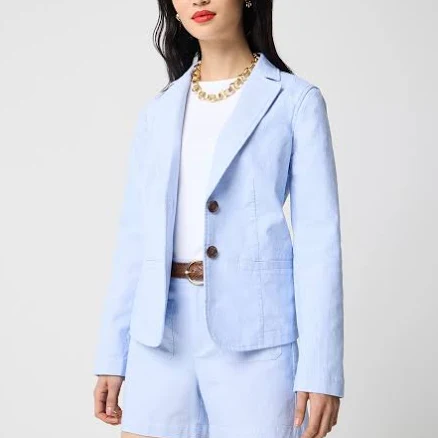
- Cotton-blend, unlined blazer
- We found no PFAS statement from the brand
- Azo dyes and colorant safety
3 hazards checked on this product, all on its full breakdown.
Find an alternative on Amazon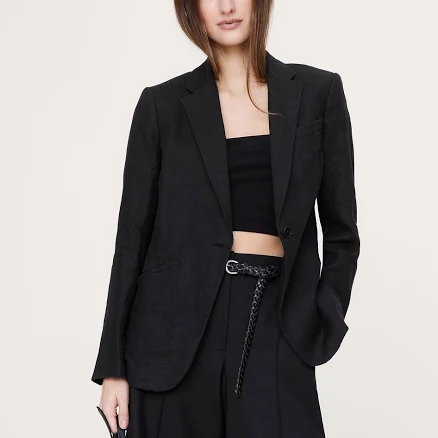
- 100% linen
- We found no PFAS statement from the brand
- Formaldehyde / VOCs
4 hazards checked on this product, all on its full breakdown.
Find an alternative on AmazonMore stain-resistant blazers & suits grades
How we score, every product runs through the same public 0-100 rubric based on materials, coatings, brand disclosure, lab findings, and recalls. See the full methodology → Spotted a mistake? Report an error.