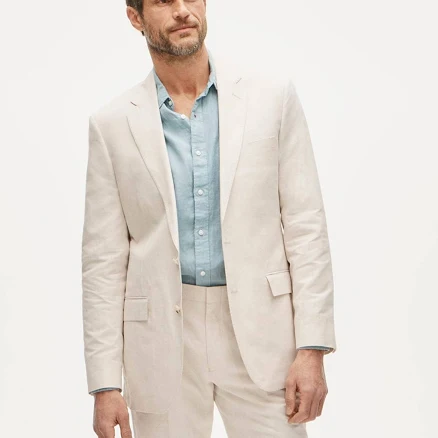
J.Crew · Stain-Resistant Blazers & Suits
J.Crew Men's Ludlow Slim-fit Suit Jacket
Wool with water-repellent coating finish likely contains PFAS; no brand transparency.
This wool blend jacket features a water-resistant coating that commonly contains PFAS. J.Crew won't say what chemicals they used.
Still want this one anyway? Check the price on Amazon. We’d swap it.
Material
wool blend with water-resistant finish
Brand disclosure
Brand is silent on PFAS
Lab data
No public lab test
You may also be interested in
Top-graded picks in the categories readers replace first, every one scored on the same rubric.

- polypropylene filter housing, carbon/sediment cartridge
- We found no PFAS statement from the brand
- Bacterial growth in spent cartridges
3 hazards checked on this product, all on its full breakdown.

Aquasure
Premier Series 75 GPD Under Sink Reverse Osmosis Water Filtration System
- RO membrane, carbon filters, stainless steel housing
- We found no PFAS statement from the brand
- Bacterial and microbial growth in housing and filters
4 hazards checked on this product, all on its full breakdown.

Avocado
Vegan Mattress
- organic cotton, natural latex, coconut coir, recycled steel coils
- The brand calls it PFAS-free, which we have not verified
- Heavy metals
2 hazards checked on this product, all on its full breakdown.
What J.Crew Men's Ludlow Slim-fit Suit Jacket is made of, ingredients and materials
The Ludlow jacket is wool blend (exact percentage not specified in public materials, typical J.Crew suiting is 80-95% wool with synthetics for durability). The water-resistant finish is the chemical wild card, most wool water-repellent coating treatments historically relied on fluorocarbon-based compounds (PFAS-family), though some brands have migrated to fluorine-free alternatives. Wool itself is a natural protein fiber and carries minimal inherent chemical risk; the finish and any synthetic blend component (likely polyester or nylon) are the exposure vectors.
What’s concerning
Category baseline
The starting point for this type of product, before anything specific to this product is counted.
No PFAS disclosure
No public statement from the brand about PFAS in this product.
Waterproof / stain-resistant treatment
Water-repellent coating treatments have historically used PFAS.
PFAS
If water-repellent coating uses fluorine-free alternatives (polyurethane, wax-based), low toxicity is likely; if older fluorocarbon chemistry, same PFAS profile applies. J.Crew provides no specification, making assessment impossible without lab analysis.
Source, ATSDR ↗Synthetic blend microfiber shedding
Polyester or nylon content in the blend sheds microfibers during washing and wear, particularly if water-resistant coating is degraded. Microplastics themselves are not acutely toxic but represent environmental and bioaccumulation concern.
Antimony in polyester
If synthetic blend includes polyester, antimony oxide may be present as a catalyst (regulatory limits exist in EU; US does not restrict). Exposure from wearing is negligible; risk is mainly occupational during manufacturing.
What’s reassuring
Azo dyes in wool or synthetic blend
No recalls or warnings specific to J.Crew Ludlow jackets. Wool and polyester can both be dyed with azo compounds (some banned in EU, permitted in US); no public evidence J.Crew sources restricted dyes, but no violation reported either.
Formaldehyde / VOCs
Wool blend suiting typically uses minimal formaldehyde resin finishing compared to cotton or synthetic wrinkle-resistant garments. Not a primary concern for this product category.
Source, ATSDR ↗How is this PFAS grade calculated?
The brand's record and disclosure
J.Crew has not published a PFAS commitment or material transparency report as of public record. The company does not certify its tailored clothing against bluesign, OEKO-TEX, or similar third-party standards that flag PFAS and dyes. This silence is typical for legacy American ready-to-wear brands; it does not confirm presence of hazardous chemicals but limits independent verification. No product recalls or contamination incidents specific to J.Crew suiting are established in public safety databases.
How it compares in its category
Men's wool business suiting as a category carries low baseline chemical risk compared to technical apparel or children's clothing. However, water-repellent finishes are nearly universal on retail-grade wool jackets, making PFAS exposure a shared industry concern, not a J.Crew anomaly. Certified alternatives (Patagonia, Allbirds wool offerings, some European tailors) disclose fluorine-free finishes but command price premiums. J.Crew's opacity places it in the middle-market norm, acceptable quality without the traceability assurance.
If you buy it
Dry cleaning is recommended per J.Crew care labels; this does not eliminate PFAS but prevents household water contact that might mobilize finish particles. Avoid hot water and high heat in home washing if you attempt it, as thermal stress on synthetic blends can increase microfiber shedding. The water-resistant coating will degrade over 3-5 years of regular wear and cleaning; reapplication via professional treatment is common and will again introduce unknown chemistry. If PFAS exposure is a concern for you personally, contact J.Crew directly or choose a brand with published fluorine-free certifications.
What is not known about PFAS in this product?
- Basis
- Model estimate, 45% confidence, not a lab result
- Lab test
- None on record for this exact product
- Brand statement
- J.Crew has made none
Formulations change between production runs, so check the current label. How we grade.
What are the PFAS-free alternatives to J.Crew Men's Ludlow Slim-fit Suit Jacket?
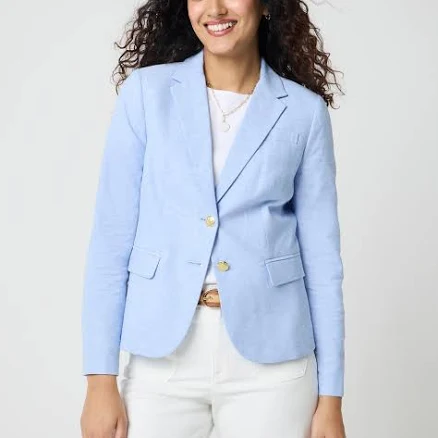
- linen-blend, likely cotton-linen mix, unfinished
- We found no PFAS statement from the brand
- Azo dyes and synthetic colorants
2 hazards checked on this product, all on its full breakdown.
Find an alternative on Amazon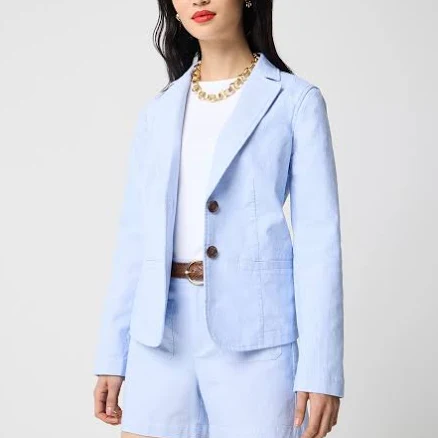
- Cotton-blend, unlined blazer
- We found no PFAS statement from the brand
- Azo dyes and colorant safety
3 hazards checked on this product, all on its full breakdown.
Find an alternative on Amazon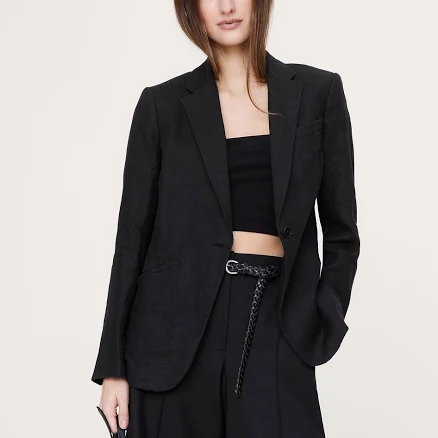
- 100% linen
- We found no PFAS statement from the brand
- Formaldehyde / VOCs
4 hazards checked on this product, all on its full breakdown.
Find an alternative on AmazonMore stain-resistant blazers & suits grades
How we score, every product runs through the same public 0-100 rubric based on materials, coatings, brand disclosure, lab findings, and recalls. See the full methodology → Spotted a mistake? Report an error.