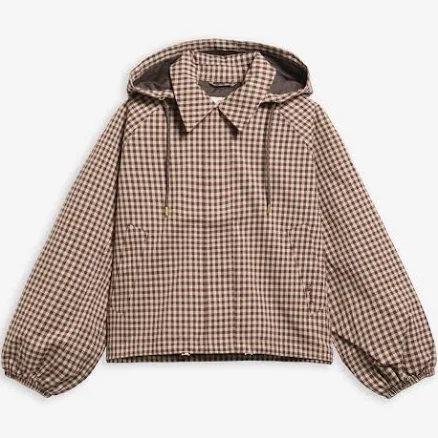
Barbour Women's Audrey Showerproof Jacket
water-repellent coating type unspecified; likely PFAS risk but no public data.
Barbour's Audrey jacket uses traditional water-repellent coating treatment on cotton, but the brand does not disclose coating chemistry. water-repellent coating fabrics often contain PFAS, though some alternatives exist. No third-party testing found.
Still want this one anyway? Check the price on Amazon. We’d swap it.
Material
Cotton blend with water-repellent coating water-resistant coating
Brand disclosure
Brand is silent on PFAS
Lab data
No public lab test
What Barbour Women's Audrey Showerproof Jacket is made of, ingredients and materials
The Audrey is a cotton-blend fabric treated with a water-repellent coating (water-repellent coating) coating to achieve its showerproof function. water-repellent coating finishes are typically applied to the fabric surface to shed water without sealing the fabric entirely, preserving breathability. Barbour does not publicly specify whether this jacket uses PFAS-free or PFAS-based water-repellent coating chemistry, which is the primary chemical concern for this product type.
What’s concerning
Waterproof / stain-resistant treatment
Water-repellent coating treatments have historically used PFAS.
Category baseline
The starting point for this type of product, before anything specific to this product is counted.
No PFAS disclosure
No public statement from the brand about PFAS in this product.
water-repellent coating durability and particulate shedding
As water-repellent coating coatings degrade with washing and wear, microscopic coating fragments may shed into wash water and ultimately into skin contact. No specific data exists for Barbour's Audrey formulation, but this is a known failure mode for fluorochemical and some non-fluorochemical water-repellent coating finishes.
Volatile organic compounds (VOCs) from coating application
Water-repellent coating-coated apparel sometimes exhibits off-gassing of residual solvents or treatment byproducts, particularly when new. This is typically temporary but can cause respiratory irritation or headache in sensitive individuals; Barbour does not publish VOC emissions data for this jacket.
Antimony in synthetic blend components
If the cotton-blend includes polyester or nylon (common in water-repellent hybrid constructions), those synthetics may contain antimony as a polymerization catalyst. Barbour does not disclose fiber composition percentages, so exact risk cannot be quantified.
What’s reassuring
Formaldehyde / VOCs
Cotton-blend fabrics may contain formaldehyde-releasing resins for wrinkle resistance or shape retention, but Barbour has no documented recalls or public warnings of formaldehyde in the Audrey line, and cotton-dominant blends typically carry lower formaldehyde risk than synthetics.
Source, ATSDR ↗Heavy metals
No specific concerns reported for Barbour women's jackets in this price range. Cotton-dominant textiles are generally compatible with lower-concern dye chemistry, and the brand has no documented dye-related safety incidents.
Source, FDA ↗The full breakdown
The brand's record and disclosure
Barbour is a heritage British outerwear brand known for waxed cotton jackets and does not publish transparency reports on chemical treatments or PFAS use in their collections. The company has not made public commitments to phase out PFAS-based water-repellent coatings, nor do they disclose water-repellent coating formulations for individual products. This silence on a well-known hazard class in technical apparel is notable given competitor transparency in this segment.
How it compares in its category
Women's showerproof jackets in this price and heritage category typically use either PFAS-based fluorochemical water-repellent coating or increasingly common alternatives not linked to PFAS (silicone, wax, or paraffin-based). Barbour's refusal to specify places the Audrey in an opaque middle ground; many competitors now explicitly advertise PFAS-free finishes as a market differentiator. The cotton-blend base itself is relatively low-hazard compared to synthetic technical fabrics.
If you buy it
Wash sparingly in cool water using mild detergent, as frequent washing degrades the water-repellent coating and may increase dermal contact with degraded finish particles. Do not dry-clean or use heat drying, which can damage the coating and potentially volatilize residual treatment chemicals. Re-proof every 1-2 seasons if water no longer beads on the surface, using a commercial water-repellent coating spray or wash-in treatment (verify the reproofing product is also PFAS-free if that is a concern). Avoid prolonged contact with the fabric if it smells strongly of chemical odor when new, which may indicate high VOC off-gassing from the coating application.
What we don’t know
- Basis
- Model estimate, 35% confidence, not a lab result
- Lab test
- None on record for this exact product
- Brand statement
- Barbour has made none
Formulations change between production runs, so check the current label. How we grade.
More rain jackets grades
How we score, every product runs through the same public 0-100 rubric based on materials, coatings, brand disclosure, lab findings, and recalls. See the full methodology → Spotted a mistake? Report an error.