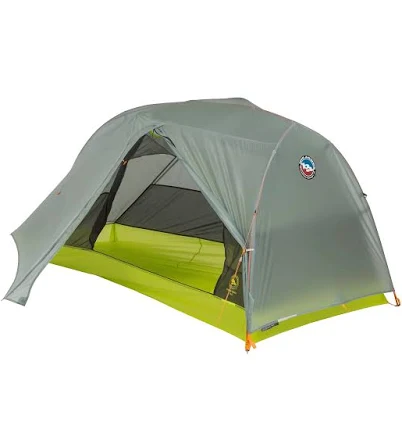
Big Agnes · Camping Tents & Tarps
Big Agnes Tiger Wall UL1 Backpacking Tent
Tent uses water-repellent coating; Big Agnes discloses nothing about PFAS content.
Big Agnes Tiger Wall UL1 has a water-repellent coating finish typical of backpacking tents, but the brand provides no transparency on PFAS use in the coating. Standard tent water-repellent coating treatments often contain PFAS, though some newer alternatives exist.
Still want this one anyway? Check the price on Amazon. We’d swap it.
Material
Nylon ripstop with water-repellent coating waterproof treatment
Brand disclosure
Brand is silent on PFAS
Lab data
No public lab test
You may also be interested in
Top-graded picks in the categories readers replace first, every one scored on the same rubric.

- polypropylene filter housing, carbon/sediment cartridge
- We found no PFAS statement from the brand
- Bacterial growth in spent cartridges
3 hazards checked on this product, all on its full breakdown.

Aquasure
Premier Series 75 GPD Under Sink Reverse Osmosis Water Filtration System
- RO membrane, carbon filters, stainless steel housing
- We found no PFAS statement from the brand
- Bacterial and microbial growth in housing and filters
4 hazards checked on this product, all on its full breakdown.

Avocado
Vegan Mattress
- organic cotton, natural latex, coconut coir, recycled steel coils
- The brand calls it PFAS-free, which we have not verified
- Heavy metals
2 hazards checked on this product, all on its full breakdown.
What Big Agnes Tiger Wall UL1 Backpacking Tent is made of, ingredients and materials
The Tiger Wall UL1 uses nylon ripstop fabric, a densely woven polyamide chosen for strength-to-weight ratio critical in backpacking tents. The water-repellent coating (water-repellent coating) coating applied to nylon is where chemical concern concentrates, historically these coatings have relied on fluorinated compounds (PFAS) to achieve water beading and repellency, though some manufacturers have shifted to fluorine-free alternatives. Nylon itself is stable under normal outdoor use; the coating is the variable element. UV exposure and mechanical wear progressively degrade any water-repellent coating, which is expected lifecycle behavior.
What’s concerning
Waterproof / stain-resistant treatment
Water-repellent coating treatments have historically used PFAS.
Category baseline
The starting point for this type of product, before anything specific to this product is counted.
No PFAS disclosure
No public statement from the brand about PFAS in this product.
PFAS
Nylon ripstop water-repellent coating treatments commonly use legacy PFOA/PFOS or long-chain PFAS to achieve water repellency; Big Agnes does not disclose whether this specific tent uses fluorine-free alternatives. Exposure occurs primarily during manufacturing and disposal, not typical user wear.
Source, ATSDR ↗Formaldehyde / VOCs
Nylon ripstop fabric may be treated with formaldehyde-based resins for shape retention or wrinkle resistance during manufacturing. No public testing or disclosure from Big Agnes on formaldehyde content in Tiger Wall UL1; typical nylon tent exposure is minimal if off-gassing occurs before purchase.
Source, ATSDR ↗Coating degradation and microparticle shedding
Water-repellent coating coatings on nylon tents naturally flake and shed over 3-5 years of use. Shed particles may contain residual fluorinated chemicals if PFAS-based coatings were used. This is not unique to Big Agnes but is a known lifecycle concern for all water-repellent coating-treated synthetic fabrics.
Volatile organic compound (VOC) off-gassing from sealed storage
New nylon tents may emit low levels of VOCs (including residual solvents from water-repellent coating application) if stored in warm, poorly ventilated spaces. Airing outdoors for 24-48 hours before first use reduces this exposure.
What’s reassuring
Heavy metals
Big Agnes tents are typically neutral or primary colors; no documented cases of azo dyes or heavy metal pigment contamination in Big Agnes nylon ripstop. Nylon dyes are generally well-regulated, and no industry-specific concern exists for this brand.
Source, FDA ↗How is this PFAS grade calculated?
The brand's record and disclosure
Big Agnes has not published transparent documentation about water-repellent coating chemistry in their tent lines, nor have they made public commitments to avoid PFAS in formulations. The company does not list certifications such as OEKO-TEX or bluesign that would signal rigorous chemical vetting. No recalls or safety incidents specific to Big Agnes tents are on record. The silent stance on water-repellent coating sourcing is consistent with many outdoor gear brands that have been slower to adopt full-chain transparency than, for example, some apparel-focused manufacturers.
How it compares in its category
Lightweight backpacking tents using nylon ripstop are an industry standard, and most carry similar water-repellent coating uncertainty. Competitors like MSR, REI Co-op, and some Hilleberg models similarly do not disclose water-repellent coating chemistry. Brands explicitly marketing fluorine-free or PFAS-free tents (e.g., certain Patagonia or Finisterre offerings) are the minority and often command premium pricing. The Tiger Wall UL1 sits in the mainstream on this spectrum, neither a leader in transparency nor an outlier in chemical risk relative to its peers.
If you buy it
Store the tent dry and well-ventilated to minimize off-gassing indoors; use it primarily outdoors. Avoid machine washing; hand rinse with cool water and mild soap only, as aggressive cleaning accelerates coating breakdown and may mobilize treatment chemicals. Inspect annually for tears or coating flaking, which signals end-of-life for that protective layer. Replace the tent when seams leak or coating visibly degrades, rather than pursuing heavy-duty recoating treatments that may introduce fresh chemical load.
What is not known about PFAS in this product?
- Basis
- Model estimate, 45% confidence, not a lab result
- Lab test
- None on record for this exact product
- Brand statement
- Big Agnes has made none
Formulations change between production runs, so check the current label. How we grade.
More camping tents & tarps grades
How we score, every product runs through the same public 0-100 rubric based on materials, coatings, brand disclosure, lab findings, and recalls. See the full methodology → Spotted a mistake? Report an error.