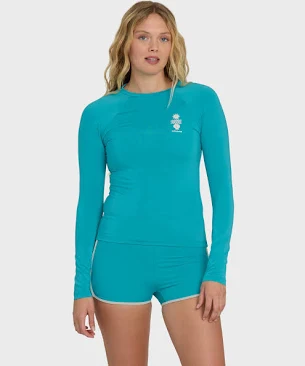
Billabong Women's Sol Searcher 50 UPF Long Sleeve Rashguard
Avoid until Billabong discloses water-repellent coating composition; UPF rashguards typically use PFAS.
This polyester UPF rashguard features water-repellent treatment common in swimwear, typically applied using PFAS-based water-repellent coating finishes. Billabong makes no PFAS disclosure or certification.
The better-graded swap
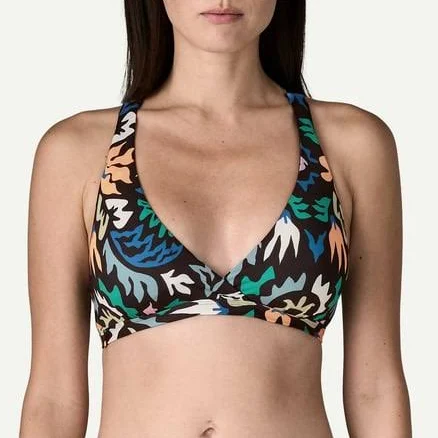
Patagonia
Patagonia Women's Bottom Turn Racerback Bikini Top
90/100 safety
Same rubric that flunked this product. The swap earned Excellent.
Still want this one anyway? Check the price on Amazon. We’d swap it.
Material
Polyester with UPF/water-repellent coating treatment
Brand disclosure
Brand is silent on PFAS
Lab data
No public lab test
You may also be interested in
Top-graded picks in the categories readers replace first, every one scored on the same rubric.

Aqua Pure
3M Aqua-Pure AP802B Whole House Filter Housing
- polypropylene filter housing, carbon/sediment cartridge
- We found no PFAS statement from the brand
- Bacterial growth in spent cartridges
3 hazards checked on this product. See all of them.

Aquasure
Premier Series 75 GPD Under Sink Reverse Osmosis Water Filtration System
- RO membrane, carbon filters, stainless steel housing
- We found no PFAS statement from the brand
- Bacterial and microbial growth in housing and filters
4 hazards checked on this product. See all of them.

Avocado
Vegan Mattress
- organic cotton, natural latex, coconut coir, recycled steel coils
- The brand calls it PFAS-free, which we have not verified
- Heavy metals
2 hazards checked on this product. See all of them.
What Billabong Women's Sol Searcher 50 UPF is made of, ingredients and materials
This rashguard is polyester with a UPF 50 sun-protection layer and a water-repellent coating (water-repellent coating) finish. The polyester itself is a stable synthetic polymer, but the water-repellent coating, applied to repel water and extend garment life, is where chemical risk concentrates. Billabong has not publicly disclosed whether this water-repellent coating uses PFAS (PFAS "forever chemicals") or fluorine-free alternatives. Without transparency, you cannot confirm the chemistry of the water-repellent layer.
What’s concerning
Category baseline
The starting point for this type of product, before anything specific to this product is counted.
No PFAS disclosure
No public statement from the brand about PFAS in this product.
Waterproof / stain-resistant treatment
Water-repellent coating treatments have historically used PFAS.
PFAS
The water-repellent coating on this rashguard is not disclosed. Most UPF swimwear in this price tier uses PFAS-based water-repellent coating; Billabong has not publicly disclosed their water-repellent coating treatment chemistry. Direct skin contact during wear and potential leaching during washing are the exposure routes.
Source, ATSDR ↗Microplastics
Polyester garments release microfibers when washed, particularly in the first few washes and if abrasive detergent or heat is used. This is a wear/laundering issue, not a manufacturing defect unique to Billabong. Using a mesh wash bag and cold water reduces shedding.
Source, EPA ↗What’s reassuring
Formaldehyde / VOCs
No recalls or reported formaldehyde contamination in Billabong rashguards. Polyester garments typically use formaldehyde-free dyes, but if this product underwent a resin-based wrinkle-resist finish, low residues are possible. Not flagged as a known issue for this brand or category.
Source, ATSDR ↗Azo dyes
Billabong is not known for use of banned azo dyes (those that cleave to release carcinogenic amines). The brand meets standard industry compliance. Polyester is less prone to azo-dye problems than natural fibers, and no specific incidents are on record for this product.
Antimony residues in polyester
Antimony (a catalyst used in polyester synthesis) can leave trace residues. Industry levels are typically very low and within safety margins. No documented issues with Billabong swimwear. Concern is theoretical and not specific to this brand.
The full breakdown
The brand's record and disclosure
Billabong has not made public commitments to PFAS-free manufacturing or disclosed water-repellent coating chemistry for individual products. The brand has faced no documented recalls or formal safety violations specific to this rashguard line, but silence on chemical composition is standard across many swimwear makers. Major competitors (Patagonia, some lines of RSVP) have begun disclosing or phasing PFAS, making Billabong's lack of transparency notable by contrast. For a water-focused brand, the absence of a published PFAS position is a gap.
How it compares in its category
Most UPF rashguards use some form of chemical finish for water repellency and durability; PFAS-based water-repellent coating (such as C8 or C6 fluorocarbons) remains common in mid-market swimwear because it is durable and inexpensive. Higher-end or certified sustainable brands are increasingly switching to fluorine-free water-repellent coating or wax-based finishes, though these may wash out faster. Billabong's positioning in the active-casual market means cost-effectiveness likely influences material choice, raising the likelihood of PFAS-containing water-repellent coating, but this is not confirmed. Polyester choice itself (vs. nylon) is neutral; the finish is the variable.
If you buy it
Wash separately from other fabrics on first use to rinse any loose finishes. Use cool water and mild detergent; hot water can degrade the water-repellent coating and potentially release chemicals. Avoid fabric softeners and bleach, which break down both UPF and water-repellent coating coatings. Expect the water-repellent layer to diminish after 30-50 washes; once performance drops, the garment is still wearable but no longer water-resistant. Hang dry to preserve the finish longer. If PFAS risk is a priority concern, contact Billabong directly to request water-repellent coating chemistry before purchase.
What we don’t know
- Basis
- Model estimate, 42% confidence, not a lab result
- Lab test
- None on record for this exact product
- Brand statement
- Billabong has made none
Formulations change between production runs, so check the current label. How we grade.
Better-graded alternatives in Swimwear
Patagonia
Women's Bottom Turn Racerback Bikini Top
- Nylon/polyester blend with elastane (standard swimwear)
- The brand calls it PFAS-free, which we have not verified
- Elastane (spandex) degradation under heat or chlorine
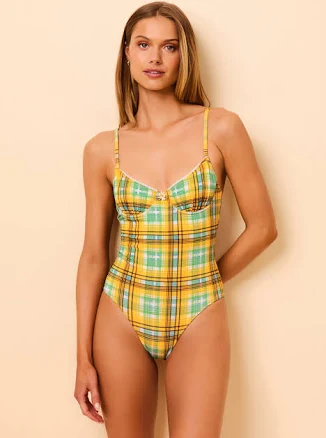
Solid & Striped
Taylor One Piece Seersucker Plaid
- Cotton/cotton-blend seersucker plaid
- We found no PFAS statement from the brand
- Azo dyes and colorfast stability
2 hazards checked on this product. See all of them.
Find an alternative on Amazon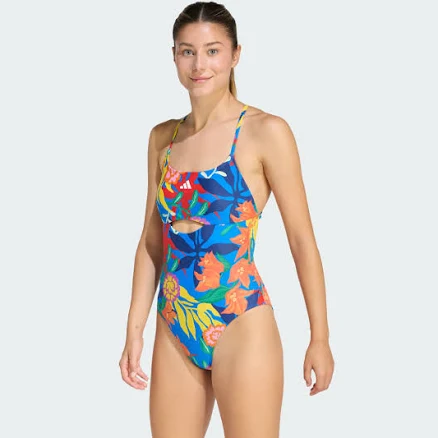
Adidas
Women's Mexicana Florals Tie-Back Swimsuit
- Polyester/nylon swimsuit fabric, likely uncoated or standard finish
- Azo dyes and synthetic colorants
4 hazards checked on this product. See all of them.
Find an alternative on AmazonMore swimwear grades
How we score, every product runs through the same public 0-100 rubric based on materials, coatings, brand disclosure, lab findings, and recalls. See the full methodology → Spotted a mistake? Report an error.