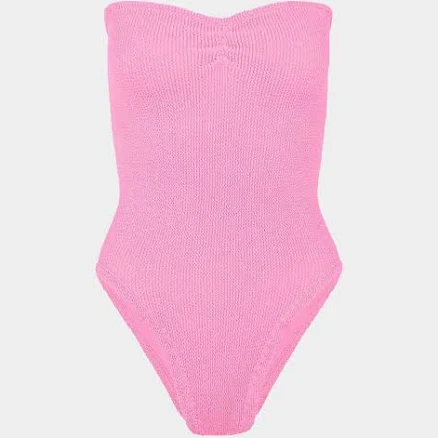
Hunza G Brooke Swimsuit
Elevated PFAS risk from waterproof treatment and complete brand silence.
Hunza G's signature design uses water-repellent finish standard in performance swimwear, a category commonly treated with fluorinated water-repellent coating containing PFAS. Brand says nothing about treatment or PFAS status.
The better-graded swap
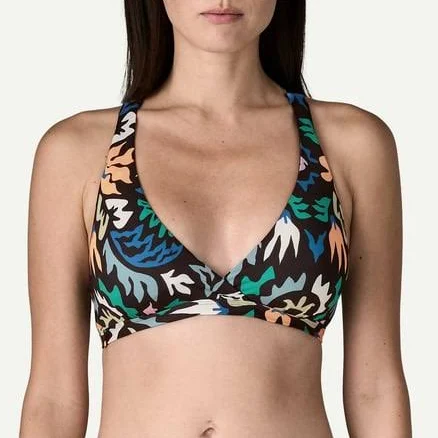
Patagonia
Patagonia Women's Bottom Turn Racerback Bikini Top
90/100 safety
Same rubric that flunked this product. The swap earned Excellent.
Still want this one anyway? Check the price on Amazon. We’d swap it.
Material
Nylon/polyamide blend swimwear with water-repellent coating finish
Brand disclosure
Brand is silent on PFAS
Lab data
No public lab test
What Hunza G Brooke Swimsuit is made of, ingredients and materials
Hunza G's Brooke is a nylon/polyamide blend with a water-repellent coating (water-repellent coating) finish. Nylon itself is a synthetic polymer that does not leach BPA or phthalates under normal wear, but the water-repellent coating is typically applied using fluorocarbon chemistry (PFAS compounds) to achieve water resistance. Polyamide manufacturing also commonly involves azo dyes and formaldehyde-based finishing resins to improve colorfastness and elastic recovery, which may leave residual chemicals in the finished fabric.
What’s concerning
Category baseline
The starting point for this type of product, before anything specific to this product is counted.
No PFAS disclosure
No public statement from the brand about PFAS in this product.
Waterproof / stain-resistant treatment
Water-repellent coating treatments have historically used PFAS.
PFAS
Nylon swimwear water-repellent coating treatments almost universally contain legacy or modern PFAS compounds (perfluorooctanoic acid precursors or similar). Hunza G's silence on this finish means no alternative or PFAS-free option is confirmed available. (Graded separately as 20/100.)
Source, ATSDR ↗Formaldehyde / VOCs
Nylon production typically involves azo dye colorants and formaldehyde-based cross-linking resins for dye fixation and elastic recovery. Residual formaldehyde or unreacted azo compounds may remain in untreated fabric; pre-wash reduces but does not eliminate this risk.
Source, ATSDR ↗Microplastic shedding from synthetic fiber
Nylon sheds microfibers during washing. While primarily an environmental concern, accumulation of synthetic microplastics in wastewater can concentrate persistent chemicals including residual PFAS or dyes.
Elastic degradation and chemical release over time
Nylon swimwear elasticity is maintained by synthetic elastane (spandex) blends, which can degrade with UV exposure, chlorine, and heat. Degradation may release uncrosslinked oligomers or residual dye intermediates into sweat or water.
The full breakdown
The brand's record and disclosure
Hunza G does not publicly disclose material sourcing, chemical finishes, or PFAS use on its website or care labels. The brand has not pursued third-party certifications such as OEKO-TEX or Bluesign that would verify restrictions on hazardous substances. This silence on chemical inputs is typical for luxury swimwear brands but limits transparency for consumers concerned about fluorinated water repellents and residual dyes.
How it compares in its category
Most conventional nylon swimwear uses water-repellent coating finishes, so the Brooke's chemical profile is not atypical for premium brands. Alternatives made from recycled nylon or polyester may still use PFAS-containing finishes unless explicitly stated otherwise. Brands that publish Bluesign or OEKO-TEX certification (e.g., some Patagonia or dedicated sustainable swimwear lines) offer clearer hazard disclosure; Hunza G does not compete on transparency.
If you buy it
Wash the swimsuit thoroughly in cool water before first wear to reduce residual dyes and chemical finishes. Avoid machine drying or direct heat, which can degrade nylon and potentially accelerate leaching of finish residues. Rinse after saltwater or chlorine exposure to extend fabric life and reduce chemical buildup. Replace every 1-2 years of regular use, as water-repellent coating coatings degrade and nylon elasticity diminishes over time.
What we don’t know
- Basis
- Model estimate, 55% confidence, not a lab result
- Lab test
- None on record for this exact product
- Brand statement
- Hunza G has made none
Formulations change between production runs, so check the current label. How we grade.
Better-graded alternatives in Swimwear
Patagonia
Women's Bottom Turn Racerback Bikini Top
- Nylon/polyester blend with elastane (standard swimwear)
- The brand calls it PFAS-free, which we have not verified
- Elastane (spandex) degradation under heat or chlorine
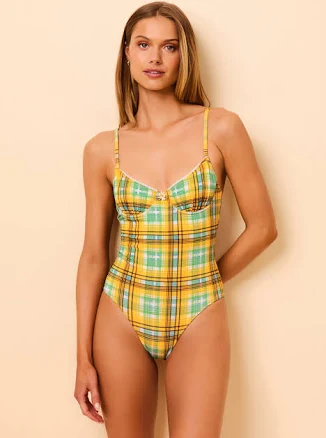
Solid & Striped
Taylor One Piece Seersucker Plaid
- Cotton/cotton-blend seersucker plaid
- We found no PFAS statement from the brand
- Azo dyes and colorfast stability
2 hazards checked on this product. See all of them.
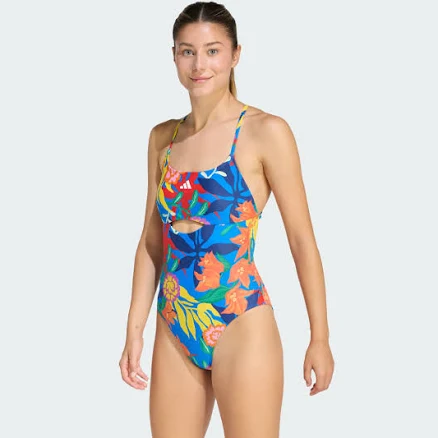
Adidas
Women's Mexicana Florals Tie-Back Swimsuit
- Polyester/nylon swimsuit fabric, likely uncoated or standard finish
- Azo dyes and synthetic colorants
4 hazards checked on this product. See all of them.
More swimwear grades
How we score, every product runs through the same public 0-100 rubric based on materials, coatings, brand disclosure, lab findings, and recalls. See the full methodology → Spotted a mistake? Report an error.