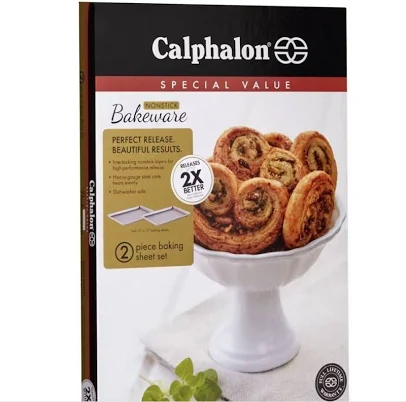
Calphalon Nonstick Bakeware 2-Pc Baking Sheet Set, Is It Non-Toxic?
Skip unless Calphalon reveals the nonstick formula.
Calphalon nonstick bakeware uses secret coating formulas with no PFAS-free claims or third-party verification. The coating chemistry stays unknown.
The better-graded swap
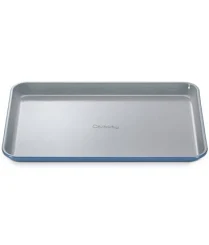
Caraway
Caraway Nonstick Ceramic Medium Baking Sheet
100/100 safety
Same rubric that flunked this product. The swap earned Excellent.
Still want this one anyway? Check the price on Amazon. We’d swap it.
Material
Nonstick coating, type unspecified
Lab data
No public lab test
You may also be interested in
Top-graded picks in the categories readers replace first, every one scored on the same rubric.

- polypropylene filter housing, carbon/sediment cartridge
- We found no PFAS statement from the brand
- Bacterial growth in spent cartridges
3 hazards checked on this product, all on its full breakdown.

Aquasure
Premier Series 75 GPD Under Sink Reverse Osmosis Water Filtration System
- RO membrane, carbon filters, stainless steel housing
- We found no PFAS statement from the brand
- Bacterial and microbial growth in housing and filters
4 hazards checked on this product, all on its full breakdown.

Avocado
Vegan Mattress
- organic cotton, natural latex, coconut coir, recycled steel coils
- The brand calls it PFAS-free, which we have not verified
- Heavy metals
2 hazards checked on this product, all on its full breakdown.
Is Calphalon Nonstick Baking Sheet Set non-toxic? What it is made of
This is a carbon steel baking sheet with an unspecified nonstick coating. Calphalon has historically used both Teflon-type coating-based (traditional Teflon-type) and newer ceramic-based nonstick formulations, but the product listing does not disclose which chemistry is in this set. The substrate (steel) is stable; the risk profile depends entirely on the coating composition and its durability under heat.
What’s concerning
Category baseline
The starting point for this type of product, before anything specific to this product is counted.
No PFAS disclosure
No public statement from the brand about PFAS in this product.
Non-stick, chemistry undisclosed
Marketed as non-stick without stating the coating chemistry.
Teflon-type coating fume and degradation risk
If this sheet uses Teflon-type coating-based nonstick, overheating above 500°F or use of metal utensils/abrasives can degrade the coating and release polymer fumes. Calphalon does not specify the nonstick chemistry, so you cannot rule this out. Degraded coating flakes may also be inadvertently ingested.
Coating flaking and ingestion
Nonstick bakeware coatings can flake with age, heavy use, or damage. This is reportable as a physical hazard rather than chemical toxicity, but repeated ingestion of coating particles is undesirable. Monitor for visible coating damage and replace if detected.
Thermal stability of unspecified coating
Nonstick bakeware in general shows reduced integrity after repeated heating cycles. Without disclosure of the specific coating, you cannot assess how many baking cycles this set will tolerate before degradation becomes a concern. Manufacturer guidance should specify maximum usable temperature and lifespan.
What’s reassuring
Lead
No recalls or test reports document lead or cadmium in Calphalon nonstick bakeware. Carbon steel substrate is inherently low-risk for these metals. However, the unspecified coating means trace heavy metals in colorants or additives cannot be ruled out without direct lab analysis.
Source, ATSDR ↗Aluminum leaching
This product is carbon steel, not aluminum, so aluminum leaching is not a concern. The nonstick coating acts as a barrier to the steel substrate.
How is this PFAS grade calculated?
The brand's record and disclosure
Calphalon does not publicly disclose nonstick chemistry for most consumer products and has not signed transparency pledges on PFAS alternatives. The brand has faced no major recalls or safety actions for this bakeware line based on available records. However, the silence on coating type means you cannot independently verify whether this uses legacy Teflon-type coating or alternatives with lower concern, limiting informed choice.
How it compares in its category
Standard nonstick bakeware sits in the middle of the market safety spectrum. Teflon-type coating-coated sheets are cheaper and durable but carry PFAS exposure risk if overheated or degraded. Ceramic-coated or uncoated (bare steel) alternatives eliminate that risk but require oil or parchment for non-stick performance. Calphalon's lack of labeling puts this product at a disadvantage versus brands that specify 'Teflon-type coating-free' or ceramic coating.
If you buy it
Keep oven temperature at or below 500°F (260°C); most nonstick coatings begin degrading above this point, increasing fume and flake risk. Hand wash rather than dishwashing to extend coating life. Replace if you see peeling, scratching, or discoloration. Do not use under a broiler or directly over flame. If the coating begins to flake, discontinue use to avoid ingestion of coating particles.
What is not known about PFAS in this product?
- Basis
- Model estimate, 35% confidence, not a lab result
- Lab test
- None on record for this exact product
- Brand statement
- Calphalon has made a specific claim
Formulations change between production runs, so check the current label. How we grade.
What are the PFAS-free alternatives to Calphalon Nonstick Bakeware 2-Pc Baking Sheet Set?
- ceramic nonstick coating
- A third party reports verifying it as PFAS-free
- Ceramic coating degradation over time
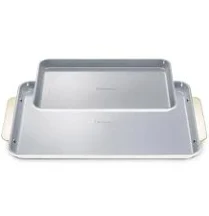
- ceramic nonstick coating
- A third party reports verifying it as PFAS-free
- Coating degradation and durability
2 hazards checked on this product, all on its full breakdown.

- ceramic nonstick coating
- The brand calls it PFAS-free, which we have not verified
- Ceramic coating degradation and particle shedding
3 hazards checked on this product, all on its full breakdown.
More bakeware grades
How we score, every product runs through the same public 0-100 rubric based on materials, coatings, brand disclosure, lab findings, and recalls. See the full methodology → Spotted a mistake? Report an error.