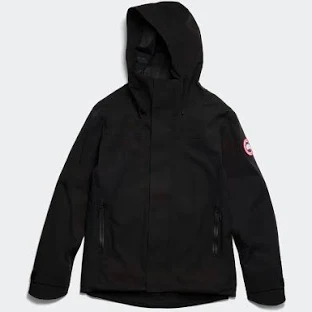
Canada Goose Rupert Rain Jacket Men
Uncertain risk. Canada Goose does not disclose water-repellent coating chemistry.
Rain jackets typically use water-repellent coating coatings that may contain PFAS, but Canada Goose provides no public detail on their treatment formulation. No lab data or PFAS-free certification available.
Still want this one anyway? Check the price on Amazon. We’d swap it.
Material
Nylon shell with water-repellent coating water-repellent finish
Brand disclosure
Brand is silent on PFAS
Lab data
No public lab test
You may also be interested in
Top-graded picks in the categories readers replace first, every one scored on the same rubric.

- polypropylene filter housing, carbon/sediment cartridge
- We found no PFAS statement from the brand
- Bacterial growth in spent cartridges
3 hazards checked on this product, all on its full breakdown.

Aquasure
Premier Series 75 GPD Under Sink Reverse Osmosis Water Filtration System
- RO membrane, carbon filters, stainless steel housing
- We found no PFAS statement from the brand
- Bacterial and microbial growth in housing and filters
4 hazards checked on this product, all on its full breakdown.

Avocado
Vegan Mattress
- organic cotton, natural latex, coconut coir, recycled steel coils
- The brand calls it PFAS-free, which we have not verified
- Heavy metals
2 hazards checked on this product, all on its full breakdown.
What Canada Goose Rupert Rain Jacket Men is made of, ingredients and materials
The Rupert Rain Jacket uses a nylon shell (likely 6.6 or 6 nylon) with a water-repellent coating (water-repellent coating) finish applied to the exterior. water-repellent coating coatings were historically formulated with long-chain PFAS (perfluorocarbons) to achieve water and oil repellency; many brands have migrated toward shorter-chain or non-fluorinated alternatives, but Canada Goose has not publicly disclosed what chemistry they use. Nylon itself is chemically stable and does not shed microplastics under normal wear, though abrasion of the water-repellent coating can occur over time.
What’s concerning
Waterproof / stain-resistant treatment
Water-repellent coating treatments have historically used PFAS.
Category baseline
The starting point for this type of product, before anything specific to this product is counted.
No PFAS disclosure
No public statement from the brand about PFAS in this product.
water-repellent coating degradation and chemical leaching
Canada Goose does not disclose the specific water-repellent coating chemistry (fluorinated vs. non-fluorinated, chain length). Washing and wear will gradually degrade the coating; leaching into water and skin contact is possible but exposure levels depend on formulation. This is a key source of uncertainty for this product.
What’s reassuring
Formaldehyde / VOCs
No public recalls or reports of formaldehyde contamination in Canada Goose nylon shells. Nylon typically requires minimal formaldehyde-based resin treatment compared to cotton, but quality control details are not disclosed.
Source, ATSDR ↗Azo dyes (color fastness)
Canada Goose does not disclose dye chemistry. Nylon is commonly dyed with azo compounds, which can release carcinogenic amines under certain conditions (sweat, abrasion, UV). No specific incidents documented for this brand, but testing is not public.
Antimony in polyester components (zippers, threading)
The Rupert is primarily nylon, but zipper sliders, seam tape, or lining may contain polyester. Antimony is used as a catalyst in polyester synthesis; residual antimony in apparel is not established as a health hazard at low levels, but migration is theoretically possible. No Canada Goose-specific data available.
Microplastic shedding from synthetic fabrics
Nylon does not shed microplastics significantly under normal wear. Degradation of the water-repellent coating itself could shed microscopic particles over years, but this is distinct from the fabric matrix and not well-characterized.
How is this PFAS grade calculated?
The brand's record and disclosure
Canada Goose has not published chemical disclosure statements, restricted substance lists, or third-party certifications (such as GOTS, Bluesign, or ZDHC Gateway) for their outerwear lines. The company markets durability and performance rather than chemical safety transparency. No public recalls or health warnings specific to Canada Goose rain jackets have been documented, but the absence of disclosure does not indicate absence of chemicals of concern.
How it compares in its category
Premium rain jackets in this price range rarely disclose full water-repellent coating chemistry; Canada Goose is not exceptional in this regard. Some competitors (Arc'teryx, Patagonia) publish more detailed chemical policies and PFAS commitments. Most nylon rain shells carry similar water-repellent coating uncertainty unless explicitly labeled PFC-free or certified by third parties. The Rupert's layering and construction quality are generally well-regarded, but chemical transparency lags behind mid-market alternatives from brands with public ZDHC or Bluesign involvement.
If you buy it
Wash infrequently in cool water with mild detergent to preserve the water-repellent coating finish and minimize leaching of coating chemicals into wastewater. Avoid dry cleaning, which uses solvents that may degrade nylon and mobilize water-repellent coating residues. Air-dry completely before storage; moisture retention can promote mold and microbial growth inside the jacket. If water-repellent coating performance degrades noticeably (water no longer beads), consider having it professionally retreated rather than applying home-use water-repellent coating sprays, which introduce additional chemical burden.
What is not known about PFAS in this product?
- Basis
- Model estimate, 42% confidence, not a lab result
- Lab test
- None on record for this exact product
- Brand statement
- Canada Goose has made none
Formulations change between production runs, so check the current label. How we grade.
More rain jackets grades
How we score, every product runs through the same public 0-100 rubric based on materials, coatings, brand disclosure, lab findings, and recalls. See the full methodology → Spotted a mistake? Report an error.