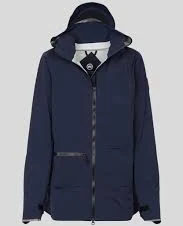
Canada Goose Women's Pacifica Jacket
Premium jacket with standard water-repellent coating; PFAS status undisclosed by brand.
Canada Goose does not publicly disclose PFAS content or water-repellent coating chemistry for the Pacifica. Down jackets typically use fluorocarbon-based water repellent coatings, raising concern absent explicit PFAS-free claims.
Still want this one anyway? Check the price on Amazon. We’d swap it.
Material
Down insulation with nylon shell, water-repellent coating (type unspecified)
Brand disclosure
Brand is silent on PFAS
Lab data
No public lab test
You may also be interested in
Top-graded picks in the categories readers replace first, every one scored on the same rubric.

- polypropylene filter housing, carbon/sediment cartridge
- We found no PFAS statement from the brand
- Bacterial growth in spent cartridges
3 hazards checked on this product, all on its full breakdown.

Aquasure
Premier Series 75 GPD Under Sink Reverse Osmosis Water Filtration System
- RO membrane, carbon filters, stainless steel housing
- We found no PFAS statement from the brand
- Bacterial and microbial growth in housing and filters
4 hazards checked on this product, all on its full breakdown.

Avocado
Vegan Mattress
- organic cotton, natural latex, coconut coir, recycled steel coils
- The brand calls it PFAS-free, which we have not verified
- Heavy metals
2 hazards checked on this product, all on its full breakdown.
What Canada Goose Women's Pacifica Jacket is made of, ingredients and materials
The Pacifica uses responsibly-sourced down insulation (Canada Goose's stated standard) wrapped in a nylon shell with a water-repellent coating (water-repellent coating) finish. The nylon shell itself is inert and stable; the concern centers on the water-repellent coating, which the brand does not specify as PFAS-free or fluorocarbon-free. Down itself is a natural protein fiber with no known chemical toxicity, but the manufacturing process and coating chemistry determine overall safety.
What’s concerning
Waterproof / stain-resistant treatment
Water-repellent coating treatments have historically used PFAS.
Category baseline
The starting point for this type of product, before anything specific to this product is counted.
No PFAS disclosure
No public statement from the brand about PFAS in this product.
water-repellent coating degradation and reapplication
The unspecified water-repellent coating finish will degrade with washing and wear over 1-3 years. Aftermarket water-repellent coating products are commonly fluorocarbon-based, potentially reintroducing PFAS exposure if the original coating is not. Brand silence on whether this is fluorocarbon makes end-of-life management unclear.
Down allergenicity and dust
Natural down can trigger allergic responses in sensitive individuals and generates fine particles during wear and washing. While Canada Goose uses responsibly-sourced down, the brand does not advertise hypoallergenic processing or dust-minimization. Pre-washing before first wear reduces this risk moderately.
Nylon microfiber shedding
Nylon textiles can shed microfibers, particularly if abraded or washed frequently in machines. This is not unique to Canada Goose; it is inherent to synthetic shell jackets. Hand-washing and gentle drying extend garment life and reduce shedding.
What’s reassuring
Formaldehyde / VOCs
Nylon shell fabrics can contain formaldehyde-based finishing resins for durability and wrinkle resistance. No specific recalls or reports for Canada Goose products; industry standard pre-treatment during manufacture means exposure is typically present but minimal on finished garment.
Source, ATSDR ↗Azo dyes in nylon shell
Dark-colored nylon shells (common on the Pacifica) may use azo dyes, some of which can release carcinogenic amines under certain conditions. No documented issues with Canada Goose; however, brand does not disclose dye standards or compliance with OEKO-TEX or equivalent.
How is this PFAS grade calculated?
The brand's record and disclosure
Canada Goose has not publicly committed to PFAS-free water-repellent coating or disclosed which treatments are used on their garments. The brand markets sustainability credentials around down sourcing and labor practices but remains silent on chemical composition of surface treatments. No major recalls for chemical contamination have been documented for this model. This opacity is typical of the premium outerwear sector but falls short of industry leaders like Patagonia, which disclose fluorocarbon use.
How it compares in its category
Premium down jackets routinely use fluorocarbon water-repellent coating; Canada Goose is not an outlier here. Brands explicitly offering PFAS-free alternatives (e.g., Patagonia Traceable Down, Arc'teryx with PFC-free water-repellent coating) do exist but are less common in the luxury segment. Standard nylon shells in this price and performance tier are chemically comparable across brands. The Pacifica is mainstream for high-end outerwear, not exceptionally hazardous or transparent.
If you buy it
Wash according to label instructions; avoid heat drying, which can degrade the water-repellent coating and potentially release volatiles. Do not dry-clean unless instructed, as solvents may interact with the coating. If you notice water no longer beading on the shell, the water-repellent coating is degraded and may be reapplied with commercial products (many also contain PFAS; water-based alternatives exist). Store in a dry, cool place; down can support mold and mildew if stored damp.
What is not known about PFAS in this product?
- Basis
- Model estimate, 42% confidence, not a lab result
- Lab test
- None on record for this exact product
- Brand statement
- Canada Goose has made none
Formulations change between production runs, so check the current label. How we grade.
More rain jackets grades
How we score, every product runs through the same public 0-100 rubric based on materials, coatings, brand disclosure, lab findings, and recalls. See the full methodology → Spotted a mistake? Report an error.