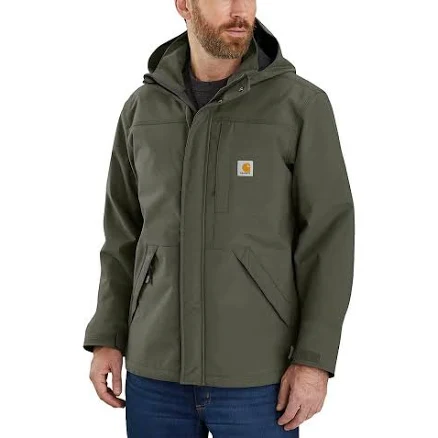
Carhartt Men's Loose Fit Heavyweight Storm Defender Jacket
Heavy workwear likely treated with water-repellent coating; coating details undisclosed.
Carhartt does not disclose PFAS status for this jacket. water-repellent coating coatings on workwear commonly use PFAS, but specific treatment unknown. Low transparency limits confidence.
Still want this one anyway? Check the price on Amazon. We’d swap it.
Material
Cotton/poly blend with water-repellent coating water-resistant coating
Brand disclosure
Brand is silent on PFAS
Lab data
No public lab test
You may also be interested in
Top-graded picks in the categories readers replace first, every one scored on the same rubric.

- polypropylene filter housing, carbon/sediment cartridge
- We found no PFAS statement from the brand
- Bacterial growth in spent cartridges
3 hazards checked on this product, all on its full breakdown.

Aquasure
Premier Series 75 GPD Under Sink Reverse Osmosis Water Filtration System
- RO membrane, carbon filters, stainless steel housing
- We found no PFAS statement from the brand
- Bacterial and microbial growth in housing and filters
4 hazards checked on this product, all on its full breakdown.

Avocado
Vegan Mattress
- organic cotton, natural latex, coconut coir, recycled steel coils
- The brand calls it PFAS-free, which we have not verified
- Heavy metals
2 hazards checked on this product, all on its full breakdown.
What Carhartt Men's Loose Fit Defender Jacket is made of, ingredients and materials
This jacket is a cotton-polyester blend (typical ratio around 60/40 or 65/35) with a water-repellent coating (water-repellent coating) finish applied to the outer surface. water-repellent coating coatings on workwear are almost always PFAS-based fluorochemicals that bond to fabric fibers to shed water and stains. The blend itself is stable, but the coating is the primary chemical concern because it can degrade, shed microfibers, and leach with repeated washing or body heat.
What’s concerning
Waterproof / stain-resistant treatment
Water-repellent coating treatments have historically used PFAS.
Category baseline
The starting point for this type of product, before anything specific to this product is counted.
No PFAS disclosure
No public statement from the brand about PFAS in this product.
PFAS
Carhartt does not disclose whether this jacket uses legacy PFOA/PFOS or newer short-chain PFAS alternatives. Standard heavy-duty workwear water-repellent coating is almost universally PFAS-based; coating degrades and leaches with washing and body heat, creating repeated low-level exposure.
Source, ATSDR ↗Formaldehyde / VOCs
Cotton-poly blends often receive formaldehyde-based resin treatments for wrinkle resistance and shrink control. Carhartt does not certify against formaldehyde in product specs. Levels in finished fabric are typically low but can release with heat and washing.
Source, ATSDR ↗Azo dyes in synthetic colorants
The dark colors typical of Carhartt workwear may use azo dyes, which can release carcinogenic aromatic amines under certain wear or washing conditions. No brand certification for azo-free alternatives is evident.
Coating degradation and microfiber shedding
Water-repellent coating coatings on textiles naturally degrade through washing and friction, releasing microplastics and residual PFAS into wash water. Carhartt jackets worn frequently will shed coating fibers, particularly after 50+ wash cycles.
What’s reassuring
Antimony in polyester component
Antimony is sometimes used as a catalyst in polyester production but is not a documented concern in Carhartt apparel. Modern polyester generally does not release measurable antimony after manufacturing.
How is this PFAS grade calculated?
The brand's record and disclosure
Carhartt has not publicly committed to PFAS-free alternatives or provided transparency on which PFAS chemicals are used in their water-repellent coating treatments. The company does not disclose coating composition on product labels or websites. Other major workwear brands (like Fjallraven and some Arc'teryx lines) have begun phasing to PFAS-free or low-fluorine options, making Carhartt's silence notable for a premium workwear maker in 2024.
How it compares in its category
Carhartt jackets are industry-standard for construction and outdoor labor. Most competing heavy workwear at this price point (Dickies, Walls, Key Apparel) also use PFAS-water-repellent coating coatings without disclosure. Untreated cotton canvas or waxed alternatives exist but sacrifice water-shedding performance and durability. This product sits in the mainstream workwear tier for PFAS exposure risk.
If you buy it
Wash separately from other clothes in cool to warm water (not hot) before first use and periodically to reduce PFAS residue and coating shedding. Avoid high heat from dryers or direct fire; air dry to preserve the water-repellent coating layer and minimize fume release. Replace when coating noticeably loses water-repellency (typically 2-4 years of regular wear) rather than retreating with aftermarket products. Limit wearing directly against bare skin if possible; use a base layer underneath.
What is not known about PFAS in this product?
- Basis
- Model estimate, 35% confidence, not a lab result
- Lab test
- None on record for this exact product
- Brand statement
- Carhartt has made none
Formulations change between production runs, so check the current label. How we grade.
More rain jackets grades
How we score, every product runs through the same public 0-100 rubric based on materials, coatings, brand disclosure, lab findings, and recalls. See the full methodology → Spotted a mistake? Report an error.