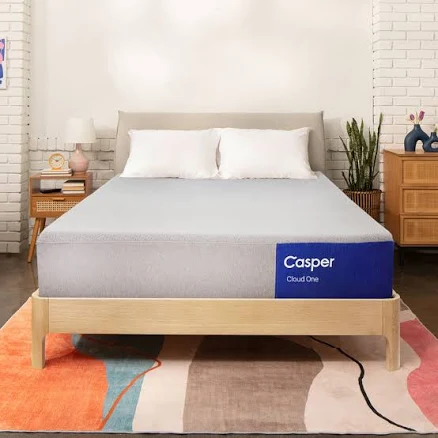
Casper Cloud One Mattress, Is It Non-Toxic?
Lower PFAS concern for core foam and fabric, though Casper doesn't disclose water-resistance treatment details.
Casper Cloud One uses standard polyurethane foam and fabric cover, materials carrying lower inherent PFAS risk. The brand does not publicly disclose whether the cover or seam treatments contain PFAS-based water repellents or finishes.
We flunk more products than we pass. This one earned its grade. How we grade
Material
Polyurethane foam, cotton/poly cover
Brand disclosure
Brand is silent on PFAS
Lab data
No public lab test
You may also be interested in
Top-graded picks in the categories readers replace first, every one scored on the same rubric.

- polypropylene filter housing, carbon/sediment cartridge
- We found no PFAS statement from the brand
- Bacterial growth in spent cartridges
3 hazards checked on this product, all on its full breakdown.

Aquasure
Premier Series 75 GPD Under Sink Reverse Osmosis Water Filtration System
- RO membrane, carbon filters, stainless steel housing
- We found no PFAS statement from the brand
- Bacterial and microbial growth in housing and filters
4 hazards checked on this product, all on its full breakdown.
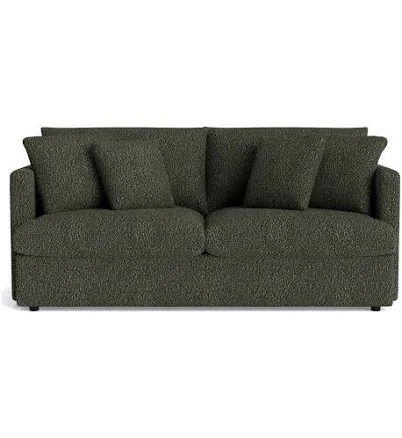
- polyurethane foam
- We found no PFAS statement from the brand
- Volatile Organic Compound (VOC) Off-Gassing
4 hazards checked on this product, all on its full breakdown.
Is Casper Cloud One Mattress non-toxic? What it is made of
The Casper Cloud One uses polyurethane foam as its core comfort layer with a cotton-polyester blend cover. Polyurethane foam is a well-established mattress material that does not off-gas Teflon-type coating (Teflon) or release lead/cadmium; its primary chemical concern is volatile organic compounds (VOCs) from the polyol and isocyanate synthesis, which typically dissipate over 48-72 hours of airing. The cotton-poly cover is a standard textile blend with no known flame retardant treatment specifics disclosed by Casper.
What’s concerning
Category baseline
The starting point for this type of product, before anything specific to this product is counted.
No PFAS disclosure
No public statement from the brand about PFAS in this product.
Volatile organic compounds (VOCs) from polyurethane foam
Polyurethane foam mattresses routinely release low-level VOCs (formaldehyde, toluene, benzene) during manufacturing off-gassing. These dissipate within 48-72 hours of airing and are not documented as a health risk for this product specifically, but sensitive individuals should allow extended ventilation.
Microplastic shedding from synthetic cover fibers
The polyester component of the cover may shed microfibers during use and washing, though this is primarily an environmental concern rather than acute consumer hazard. Regular vacuuming of the mattress surface can minimize loose fiber exposure.
Off-gassing from synthetic foam adhesives or glues
Polyurethane foam layers are often bonded using water-based or solvent-based adhesives; Casper does not specify adhesive chemistry. Initial odor and low-level VOC release are typical but should resolve after 72 hours of ventilation.
What’s reassuring
Base material not linked to PFAS
The main material recorded for this product is not one associated with PFAS.
Flame retardants
Casper does not disclose whether the cotton-polyester cover or foam core contains brominated or chlorinated flame retardants. Federal law (16 CFR 1633) requires mattresses to pass fire tests, but treatment chemicals are often proprietary and not disclosed; no evidence of hazardous flame retardant use is on record for Casper.
Source, EPA ↗BPA & bisphenols
Cotton-polyester blends used in mattress covers do not typically contain BPA, and phthalates are not documented in Casper mattress covers. However, without OEKO-TEX or similar certification, dye chemistry is unverified.
Source, FDA ↗How is this PFAS grade calculated?
The brand's record and disclosure
Casper does not publicly disclose PFAS treatment status for water-resistance or stain-guard coatings on their mattress covers, which is a notable gap in transparency. The company holds no third-party certifications (CertiPUR-US, OEKO-TEX) that would independently verify foam purity or chemical safety. No recall history or established chemical contamination incidents are on record for Casper mattresses as of public filings.
How it compares in its category
Most foam mattresses (Tempur-Pedic, Purple, Helix) do not disclose PFAS status either, placing Casper in the industry norm for opacity. Mattresses with third-party certifications (CertiPUR-US, GREENGUARD) offer more chemical assurance but command premium pricing. The Casper Cloud One is competitively positioned as a mid-market option with typical off-gassing expectations and no documented chemical hazard profile worse than peers.
If you buy it
Unwrap and air the mattress in a well-ventilated room or outdoors for 24-72 hours before use to minimize initial VOC exposure and odor. Do not expose the mattress to direct heat sources (space heaters, sunlight against plastic wrapping) during storage or setup. Rotate the mattress every 3-6 months to even wear and extend its usable life to 7-10 years. Use a mattress protector if concerned about stain-guard chemical contact with skin.
What is not known about PFAS in this product?
- Basis
- Model estimate, 68% confidence, not a lab result
- Lab test
- None on record for this exact product
- Brand statement
- Casper has made none
Formulations change between production runs, so check the current label. How we grade.
What are the PFAS-free alternatives to Casper Cloud One Mattress?

Avocado
Vegan Mattress
- organic cotton, natural latex, coconut coir, recycled steel coils
- The brand calls it PFAS-free, which we have not verified
- Heavy metals
2 hazards checked on this product, all on its full breakdown.
- natural latex, organic cotton cover
- A third party reports verifying it as PFAS-free
- Natural latex allergy (contact/respiratory)
3 hazards checked on this product, all on its full breakdown.
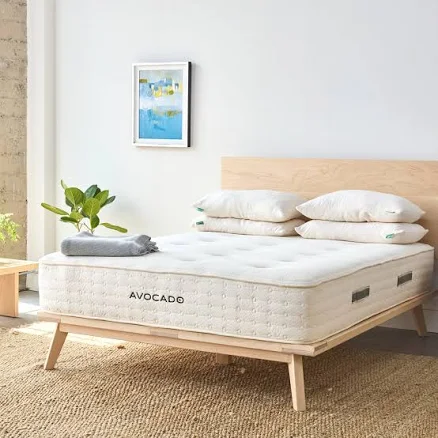
Avocado
Organic Hybrid Mattress
- organic cotton, natural latex, wool, innerspring coils
- We found no PFAS statement from the brand
- Volatile Organic Compound (VOC) off-gassing
3 hazards checked on this product, all on its full breakdown.
More mattresses grades
How we score, every product runs through the same public 0-100 rubric based on materials, coatings, brand disclosure, lab findings, and recalls. See the full methodology → Spotted a mistake? Report an error.