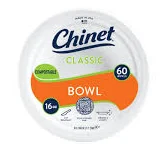
Chinet Classic Premium Disposable Paper Bowls
Medium-high PFAS risk; grease-resistant coating chemistry undisclosed.
These bowls feature grease-resistant coating, historically reliant on PFAS chemistry. Chinet provides no public disclosure of coating composition or PFAS alternatives.
The better-graded swap
Green Wave International
45 oz Round Sugarcane Bowl
85/100 safety
Same rubric that flunked this product. The swap earned Excellent.
Still want this one anyway? Check the price on Amazon. We’d swap it.
Material
Paper with grease-resistant coating (composition unspecified)
Brand disclosure
Brand is silent on PFAS
Lab data
No public lab test
You may also be interested in
Top-graded picks in the categories readers replace first, every one scored on the same rubric.

- polypropylene filter housing, carbon/sediment cartridge
- We found no PFAS statement from the brand
- Bacterial growth in spent cartridges
3 hazards checked on this product, all on its full breakdown.

Aquasure
Premier Series 75 GPD Under Sink Reverse Osmosis Water Filtration System
- RO membrane, carbon filters, stainless steel housing
- We found no PFAS statement from the brand
- Bacterial and microbial growth in housing and filters
4 hazards checked on this product, all on its full breakdown.

Avocado
Vegan Mattress
- organic cotton, natural latex, coconut coir, recycled steel coils
- The brand calls it PFAS-free, which we have not verified
- Heavy metals
2 hazards checked on this product, all on its full breakdown.
What Chinet Classic Premium Paper Bowls is made of, ingredients and materials
Chinet Classic Premium bowls are paper pulp with a grease-resistant (waterproof) coating applied to the interior surface. The specific coating chemistry is not publicly disclosed by Huhtamaki (Chinet's parent company), which is standard for this product class but prevents definitive safety assessment. Grease-resistant coatings on food-contact paper are historically formulated with fluorinated compounds (PFAS) or, less commonly, wax-based or silicone alternatives; Chinet's silence on this point is the primary concern. The paper substrate itself is not a material linked to PFAS, but the coating durability and migration risk under heat or acidic/fatty conditions remain unclear without chemical specification.
What’s concerning
Category baseline
The starting point for this type of product, before anything specific to this product is counted.
No PFAS disclosure
No public statement from the brand about PFAS in this product.
Waterproof / stain-resistant treatment
Water-repellent coating treatments have historically used PFAS.
PFAS
Undisclosed coating chemistry on food-contact surface; fluorinated polymers are standard in grease-resistant paper, and manufacturer silence on alternatives suggests possible PFAS use. Risk increases with heat, acidic foods, or fats.
Source, ATSDR ↗Coating degradation and microparticle shedding
Paper-coating interface can wear or flake with repeated moisture exposure or mechanical stress; no published data on Chinet coating durability or particle size risk, but degradation is typical for single-use water-resistant coatings over time.
Non-fluorinated coating leachates (if wax or silicone-based)
If Chinet uses wax or silicone instead of PFAS, these alternatives are generally lower-hazard but lack independent verification; silicone can shed microparticles under heat stress.
What’s reassuring
Ink or dye migration from printed branding
Chinet bowls are printed with brand logos and decorative patterns; food-contact inks are regulated in most markets, and no recalls are documented for Chinet, but ink composition is not disclosed.
Bleach residues or chlorine compounds in paper pulp
Paper manufacturing typically uses chlorine dioxide or peroxide bleaching; Chinet does not publish pulp sourcing or bleaching methods, but residues meeting regulatory limits are not a documented concern in this product class.
How is this PFAS grade calculated?
The brand's record and disclosure
Huhtamaki has not published a PFAS elimination timeline or ingredient transparency statement for Chinet disposable tableware as of available public records. The brand does not list PFAS-free certification (e.g., from environmental groups like CALPUFF or third-party testing) on packaging or marketing materials. Chinet competes in a market where some rivals (e.g., Eco-Products, World Centric) actively advertise PFAS-free status, making Chinet's non-disclosure a relative weakness in transparency. No product recalls or regulatory actions specific to Chinet bowls are documented in FDA or CPSC databases.
How it compares in its category
Chinet Classic Premium occupies the mid-market disposable bowl segment, cheaper than certified compostable/PFAS-free brands (Eco-Products, Bambu) but more expensive than basic white paper bowls. Most competing single-use paper bowls in this price tier use similar undisclosed fluorinated coatings, so Chinet is not an outlier in risk profile, though it is behind leaders in transparency. If PFAS exposure is a priority, labeled PFAS-free alternatives exist but cost 30-50% more; Chinet is a compromise choice for cost-conscious consumers willing to accept coating uncertainty.
If you buy it
Use Chinet bowls for room-temperature, cold, or warm (not steaming or microwaved) foods; prolonged contact with hot liquids or high heat increases risk of coating migration. Avoid microwaving, which can degrade the water-resistant layer and release coating residues into food. Do not reuse; these are single-use products and coating integrity decays after washing. For hot soups or stews, transfer to ceramic or glass immediately after serving, or switch to labeled PFAS-free paper bowls if heat exposure is routine.
What is not known about PFAS in this product?
- Basis
- Model estimate, 35% confidence, not a lab result
- Lab test
- None on record for this exact product
- Brand statement
- Chinet has made none
Formulations change between production runs, so check the current label. How we grade.
What are the PFAS-free alternatives to Chinet Classic Premium Disposable Paper Bowls?
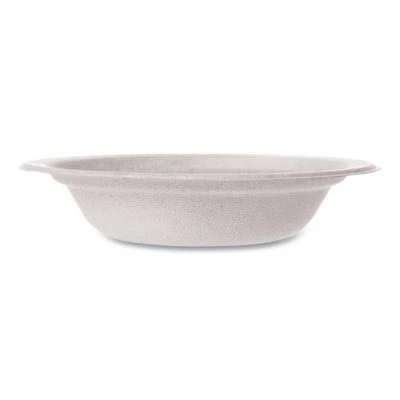
Bridge-Gate 12 oz. White Bagasse Bowl (1000 per Case)
- bagasse (sugarcane fiber), uncoated
- A third party reports verifying it as PFAS-free
- Mold or microbial growth during storage or use
3 hazards checked on this product, all on its full breakdown.
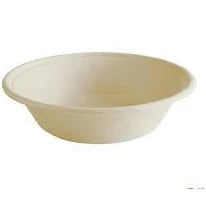
- Kraft molded fiber (uncoated or minimal treatment)
- A third party reports verifying it as PFAS-free
- Moisture absorption and microbial growth
3 hazards checked on this product, all on its full breakdown.
- sugarcane fiber, Kraft paper coating
- We found no PFAS statement from the brand
- Kraft paper coating migration (processing chemicals, sizing agents)
4 hazards checked on this product, all on its full breakdown.
More compostable bowls grades
How we score, every product runs through the same public 0-100 rubric based on materials, coatings, brand disclosure, lab findings, and recalls. See the full methodology → Spotted a mistake? Report an error.