Green Wave International · Compostable Bowls
12 oz Kraft Sugarcane Bowl
Lower concern; sugarcane bowls rarely use PFAS coatings.
Sugarcane fiber bowls are typically uncoated or use minimal food-contact coatings. Green Wave does not disclose PFAS status; standard molded fiber is lower concern but verify product specs.
We flunk more products than we pass. This one earned its grade. How we grade
Material
sugarcane fiber, Kraft paper coating
Brand disclosure
Brand is silent on PFAS
Lab data
No public lab test
You may also be interested in
Top-graded picks in the categories readers replace first, every one scored on the same rubric.

- polypropylene filter housing, carbon/sediment cartridge
- We found no PFAS statement from the brand
- Bacterial growth in spent cartridges
3 hazards checked on this product, all on its full breakdown.

Aquasure
Premier Series 75 GPD Under Sink Reverse Osmosis Water Filtration System
- RO membrane, carbon filters, stainless steel housing
- We found no PFAS statement from the brand
- Bacterial and microbial growth in housing and filters
4 hazards checked on this product, all on its full breakdown.

Avocado
Vegan Mattress
- organic cotton, natural latex, coconut coir, recycled steel coils
- The brand calls it PFAS-free, which we have not verified
- Heavy metals
2 hazards checked on this product, all on its full breakdown.
What 12 oz Kraft Sugarcane Bowl is made of, ingredients and materials
This bowl is composed of bagasse (sugarcane fiber residue) laminated with a Kraft paper coating. The fiber itself is a low-concern, renewable agricultural byproduct. The Kraft paper layer serves as a moisture and grease barrier, but its chemical composition (bleaching agents, sizing compounds, adhesives) depends on the specific mill process and is not typically disclosed by manufacturers. Green Wave does not publish detailed specifications on the Kraft coating formulation.
What’s concerning
Category baseline
The starting point for this type of product, before anything specific to this product is counted.
No PFAS disclosure
No public statement from the brand about PFAS in this product.
Kraft paper coating migration (processing chemicals, sizing agents)
The Kraft layer's bleaching residues, starch-based sizing, and adhesives may leach into hot or fatty foods. Green Wave does not publish migration testing data or identify the specific coating formulation.
Microbial growth on fiber substrate (mold, bacterial colonization)
Sugarcane fiber absorbs moisture and can harbor mold if stored in humid conditions or if bowl remains wet after washing. This is a storage and maintenance issue, not a manufacturing defect.
Formaldehyde / VOCs
Laminated fiber bowls often use urea-formaldehyde or melamine-formaldehyde resins to bind layers. Green Wave does not disclose adhesive chemistry; off-gassing risk is low for dried, cured coatings but increases with heat or aging.
Source, ATSDR ↗Coating integrity degradation over time or with use
Kraft coatings are inherently less durable than plastic or wax-based alternatives. User reports and industry observations document peeling, soft spots, and loss of water resistance after repeated washing or storage in humid conditions. This is not a recall-level defect but a product lifespan limitation.
What’s reassuring
Base material not linked to PFAS
The main material recorded for this product is not one associated with PFAS.
Heavy metals
No recalls or published safety warnings for Green Wave sugarcane bowls specify metal contamination. However, Kraft paper bleaching can introduce trace metals (chlorine residues, manganese); independent testing of this specific product is not on record.
Source, FDA ↗How is this PFAS grade calculated?
The brand's record and disclosure
Green Wave International markets compostable and sustainable foodservice products but does not publicly disclose material safety data sheets, coating ingredients, or third-party certifications for heavy metals or chemical residues. The brand has not faced major recalls or documented safety violations in public records, but transparency about Kraft coating chemistry remains absent. No evidence of formal material safety testing or independent lab verification is on record.
How it compares in its category
Sugarcane bowls occupy a middle ground between single-use plastic and virgin fiber alternatives. Unlike conventional paper bowls, they avoid bleached virgin pulp; unlike plastic, they avoid BPA and phthalate concerns. However, the Kraft coating introduces processing chemicals whose safety profile is less regulated than that of rigid plastic alternatives. Compostability claims are distinct from toxicity assurances and should not be conflated.
If you buy it
Use these bowls for room-temperature or warm (not hot) foods; extended contact with boiling liquids may degrade the Kraft layer and allow migration of coating compounds. Do not microwave or subject to direct heat. Replace if the coating shows visible wear, peeling, or discoloration. Store in a cool, dry place to prevent mold growth on the fiber substrate. Composting is appropriate only in industrial facilities; backyard composting may not break down the Kraft coating fully.
What is not known about PFAS in this product?
- Basis
- Model estimate, 72% confidence, not a lab result
- Lab test
- None on record for this exact product
- Brand statement
- Green Wave International has made none
Formulations change between production runs, so check the current label. How we grade.
What are the PFAS-free alternatives to 12 oz Kraft Sugarcane Bowl?
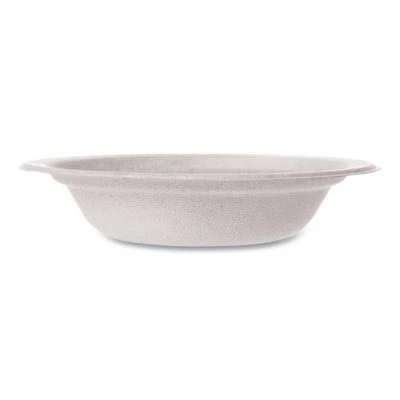
Bridge-Gate 12 oz. White Bagasse Bowl (1000 per Case)
- bagasse (sugarcane fiber), uncoated
- A third party reports verifying it as PFAS-free
- Mold or microbial growth during storage or use
3 hazards checked on this product, all on its full breakdown.
- Kraft molded fiber (uncoated or minimal treatment)
- A third party reports verifying it as PFAS-free
- Moisture absorption and microbial growth
3 hazards checked on this product, all on its full breakdown.
More compostable bowls grades
How we score, every product runs through the same public 0-100 rubric based on materials, coatings, brand disclosure, lab findings, and recalls. See the full methodology → Spotted a mistake? Report an error.