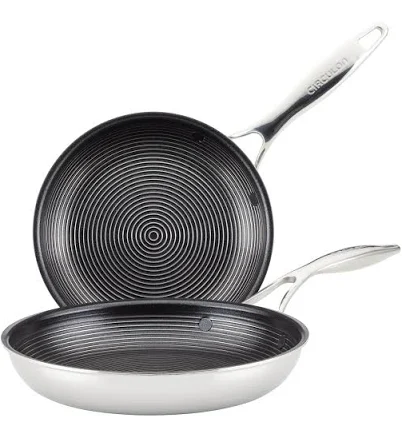
Circulon SteelShield C Series Tri Ply Clad Nonstick Saucepan with Lid, Is It Non-Toxic?
Pass until Circulon discloses nonstick coating chemistry or switch to bare tri-ply.
Circulon's SteelShield C won't disclose if its nonstick coating contains Teflon-type coating, PFOA, or other Teflon-family coating. No PFAS claims or third-party verification exist.
The better-graded swap
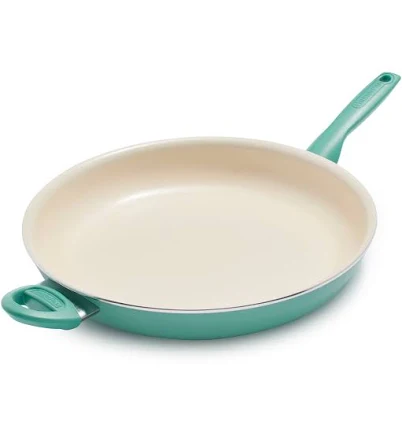
GreenPan
GreenPan Rio Ceramic Nonstick Frypan
70/100 safety
Same rubric that flunked this product. The swap earned Good.
Still want this one anyway? Check the price on Amazon. We’d swap it.
Material
Nonstick coating (unspecified type); stainless steel tri-ply clad base
Lab data
No public lab test
You may also be interested in
Top-graded picks in the categories readers replace first, every one scored on the same rubric.

- polypropylene filter housing, carbon/sediment cartridge
- We found no PFAS statement from the brand
- Bacterial growth in spent cartridges
3 hazards checked on this product, all on its full breakdown.

Aquasure
Premier Series 75 GPD Under Sink Reverse Osmosis Water Filtration System
- RO membrane, carbon filters, stainless steel housing
- We found no PFAS statement from the brand
- Bacterial and microbial growth in housing and filters
4 hazards checked on this product, all on its full breakdown.

Avocado
Vegan Mattress
- organic cotton, natural latex, coconut coir, recycled steel coils
- The brand calls it PFAS-free, which we have not verified
- Heavy metals
2 hazards checked on this product, all on its full breakdown.
Is Circulon SteelShield C Series Tri Ply Lid non-toxic? What it is made of
This saucepan combines a stainless steel tri-ply clad base (stainless steel outer and inner layers with aluminum core for heat distribution) with a nonstick coating of unspecified chemistry. The tri-ply construction itself is chemically stable and does not leach under normal use. The hazard sits entirely in the nonstick coating layer, whose formulation Circulon does not publicly disclose, leaving uncertainty about whether it contains legacy PFAS, newer fluorinated alternatives, or non-fluorinated polymers.
What’s concerning
Category baseline
The starting point for this type of product, before anything specific to this product is counted.
No PFAS disclosure
No public statement from the brand about PFAS in this product.
Non-stick, chemistry undisclosed
Marketed as non-stick without stating the coating chemistry.
Nonstick coating degradation and flaking
All nonstick coatings degrade over time with use and heat stress. Circulon's unspecified coating formulation and warranty coverage for this specific line are not detailed in public sources; flaked coating particles may be ingested if the pan is not replaced promptly.
Thermal fume release from nonstick coating
Overheating nonstick skillets can cause coating decomposition and release of volatile organic compounds. The specific thermal stability of Circulon's undisclosed coating is unknown; recommended safe use below 500F (260C) should be verified on the product manual.
Coating adhesion and delamination
Tri-ply clad bases are subject to thermal cycling stress where metal layers expand and contract at different rates. Poor nonstick coating adhesion could lead to flaking at edge or base seams; Circulon's manufacturing tolerances and warranty terms for delamination are not publicly detailed.
What’s reassuring
Aluminum core leaching
The tri-ply clad design encases the aluminum core between stainless steel layers, preventing direct contact with food. No aluminum leaching has been established for this design in normal cooking conditions.
Lead
Circulon does not use ceramic or enamel glazes on this nonstick model; the lid gasket and handle materials have not been tested publicly for heavy metals, but are typical of modern cookware and not flagged in available recalls.
Source, ATSDR ↗How is this PFAS grade calculated?
The brand's record and disclosure
Circulon has not published transparency statements regarding PFAS presence or phase-out commitments for its nonstick cookware lines. The brand does not list coating chemistry on product labels or marketing materials, which is common industry practice but hinders informed comparison. No major recalls specific to Circulon nonstick coating safety have been publicly documented in recent years. Without disclosure, buyer confidence depends on inference from parent company (Groupe SEB) policies, which vary by brand.
How it compares in its category
Among nonstick skillets, Circulon SteelShield occupies the mid-market segment with tri-ply construction (a safety advantage over single-layer nonstick). Competitors like GreenPan and Our Place explicitly market PFAS-free coatings and disclose formulations; T-fal and Calphalon (both Groupe SEB owned) similarly provide less transparency than dedicated PFAS-free brands. The tri-ply clad base is a genuine quality marker, comparable to higher-priced brands, but does not offset the nonstick coating opacity.
If you buy it
Use only on medium heat or below; nonstick coatings degrade faster under high heat, increasing flaking and fume risk. Avoid abrasive scrubbers; use soft sponges or wood utensils to preserve the coating. Replace the pan if the coating visibly flakes, peels, or becomes scratched and rough. Hand wash rather than dishwasher to extend coating life. Do not preheat empty; preheat with a small amount of oil or butter on low-medium heat.
What is not known about PFAS in this product?
- Basis
- Model estimate, 35% confidence, not a lab result
- Lab test
- None on record for this exact product
- Brand statement
- Circulon has made a specific claim
Formulations change between production runs, so check the current label. How we grade.
What are the PFAS-free alternatives to Circulon SteelShield C Series Tri Ply Clad Nonstick Saucepan with Lid?
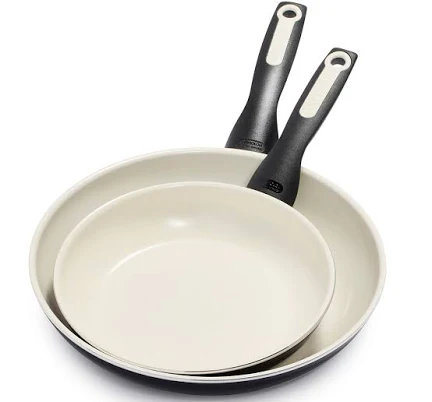
- ceramic nonstick coating
- The brand calls it PFAS-free, which we have not verified
- Coating degradation and particulate release
3 hazards checked on this product, all on its full breakdown.
- ceramic non-stick coating
- The brand calls it PFAS-free, which we have not verified
- Coating degradation and aluminum leaching
3 hazards checked on this product, all on its full breakdown.
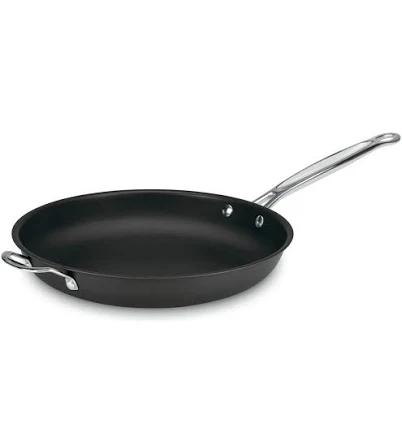
- anodized aluminum (hard-coat anodic oxidation)
- Coating degradation and leachables from breakdown
More nonstick skillets grades
How we score, every product runs through the same public 0-100 rubric based on materials, coatings, brand disclosure, lab findings, and recalls. See the full methodology → Spotted a mistake? Report an error.