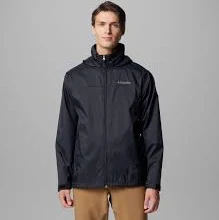
Columbia Men's Glennaker Lake II Rain Jacket
Rain jacket with water-repellent coating of unspecified chemistry.
This nylon rain jacket has a water-repellent coating, but the chemistry is not stated. Columbia has no PFAS statement on record for this product. Water-repellent treatments have historically used PFAS compounds.
Still want this one anyway? Check the price on Amazon. We’d swap it.
Material
Nylon with water-repellent coating water-repellent coating (composition unspecified)
Lab data
No public lab test
You may also be interested in
Top-graded picks in the categories readers replace first, every one scored on the same rubric.

- polypropylene filter housing, carbon/sediment cartridge
- We found no PFAS statement from the brand
- Bacterial growth in spent cartridges
3 hazards checked on this product, all on its full breakdown.

Aquasure
Premier Series 75 GPD Under Sink Reverse Osmosis Water Filtration System
- RO membrane, carbon filters, stainless steel housing
- We found no PFAS statement from the brand
- Bacterial and microbial growth in housing and filters
4 hazards checked on this product, all on its full breakdown.

Avocado
Vegan Mattress
- organic cotton, natural latex, coconut coir, recycled steel coils
- The brand calls it PFAS-free, which we have not verified
- Heavy metals
2 hazards checked on this product, all on its full breakdown.
What Columbia Men's Glennaker II Rain Jacket is made of, ingredients and materials
The Glennaker Lake II uses nylon fabric with a water-repellent coating (water-repellent coating) coating applied to the surface. water-repellent coating coatings are critical to function but the specific chemistry here is not published by Columbia. Nylon itself is stable, but the applied coating's formulation determines whether PFAS, silicones, or other compounds are present. Without disclosure, the coating composition remains a black box.
What’s concerning
Category baseline
The starting point for this type of product, before anything specific to this product is counted.
No PFAS disclosure
No public statement from the brand about PFAS in this product.
Waterproof / stain-resistant treatment
Water-repellent coating treatments have historically used PFAS.
PFAS
Columbia has not disclosed whether the water-repellent coating formulation contains long-chain or short-chain PFAS. Most nylon rain jackets of this generation rely on fluorinated coatings; non-fluorinated alternatives exist but are not standard in this price tier.
Source, ATSDR ↗water-repellent coating peeling or flaking
Rain jacket coatings can delaminate or flake over time, especially if machine dried or exposed to heat. This is cosmetic and functional loss, not a health hazard, but signals end-of-life for the product.
What’s reassuring
Nylon degradation and microfiber shedding
No recalls or adverse reports exist for Glennaker Lake II nylon integrity. Nylon itself does not degrade into toxic compounds under normal wear, though all synthetic textiles shed microfibers when laundered; this is a general environmental concern, not a product-specific hazard.
Formaldehyde / VOCs
Nylon rain jackets do not typically require formaldehyde-releasing resins for water resistance (unlike cotton or cellulose fabrics). No public evidence of formaldehyde use in Glennaker Lake II construction.
Source, ATSDR ↗Heavy metals
Columbia products are not subject to known heavy metal contamination issues in standard outdoor apparel dyeing. No recalls or reports specific to this jacket exist.
Source, FDA ↗How is this PFAS grade calculated?
The brand's record and disclosure
Columbia does not publicly disclose the chemical composition of its water-repellent coating treatments across product lines and has not signed onto PFAS phase-out commitments like the Outdoor Industry Association's restricted substances list. The company has faced no major recalls or controversies specific to rain jacket coatings, but the absence of transparency is notable for an outdoor brand targeting consumers increasingly aware of PFAS in technical apparel. No third-party certifications (such as Bluesign or GOTS) are marketed for this product.
How it compares in its category
Most nylon rain jackets in this price range (typically USD 80-150) use similar undisclosed water-repellent coating systems; it is industry-standard practice. Competitors like The North Face and Patagonia also rarely disclose water-repellent coating chemistry on entry-level products, though Patagonia has committed to phasing PFAS by 2025. This jacket occupies the middle ground, functional, widely trusted, but offering no competitive advantage in chemical transparency. Higher-end brands or PFAS-free alternatives (using wax or silicone-based water-repellent coating) exist but command premium pricing.
If you buy it
Wash separately in cold water without fabric softeners, which can degrade the water-repellent coating. Do not machine dry; air dry only. Avoid heat near the coating to preserve water repellency. Expect to reapply water-repellent coating treatment every 1-2 years with commercial products (which may themselves contain PFAS unless marketed as PFAS-free). Monitor for coating degradation (uneven water beading); this signals when replacement becomes practical.
What is not known about PFAS in this product?
- Basis
- Model estimate, 35% confidence, not a lab result
- Lab test
- None on record for this exact product
- Brand statement
- Columbia has made a specific claim
Formulations change between production runs, so check the current label. How we grade.
More rain jackets grades
How we score, every product runs through the same public 0-100 rubric based on materials, coatings, brand disclosure, lab findings, and recalls. See the full methodology → Spotted a mistake? Report an error.