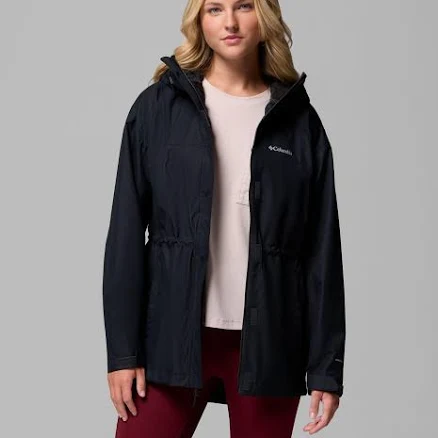
Columbia Women's Hikebound II Long Jacket
Contact Columbia directly. water-repellent coating jackets often use PFAS.
The jacket uses a polyester shell with water-repellent finish, historically based on fluorinated compounds. Columbia hasn't stated whether it uses PFAS-free water repellency or published a phase-out commitment. No certification exists.
Still want this one anyway? Check the price on Amazon. We’d swap it.
Material
Polyester shell with water-repellent coating water-repellent finish
Lab data
No public lab test
You may also be interested in
Top-graded picks in the categories readers replace first, every one scored on the same rubric.

- polypropylene filter housing, carbon/sediment cartridge
- We found no PFAS statement from the brand
- Bacterial growth in spent cartridges
3 hazards checked on this product, all on its full breakdown.

Aquasure
Premier Series 75 GPD Under Sink Reverse Osmosis Water Filtration System
- RO membrane, carbon filters, stainless steel housing
- We found no PFAS statement from the brand
- Bacterial and microbial growth in housing and filters
4 hazards checked on this product, all on its full breakdown.

Avocado
Vegan Mattress
- organic cotton, natural latex, coconut coir, recycled steel coils
- The brand calls it PFAS-free, which we have not verified
- Heavy metals
2 hazards checked on this product, all on its full breakdown.
What Columbia Women's Hikebound II Long Jacket is made of, ingredients and materials
The Hikebound II uses a polyester shell, a synthetic petroleum-derived fiber, paired with a water-repellent coating (water-repellent coating) finish. water-repellent coating treatments are the primary PFAS vector in rain jackets, as manufacturers historically rely on fluorocarbon chemistry to achieve water-shedding properties. Polyester itself is stable under normal wear and does not readily leach chemicals, but the water-repellent coating is the unknown variable here. Without Columbia's disclosure of their specific water-repellent coating chemistry (fluorocarbon-based, fluorocarbon-free, or hybrid), the PFAS risk cannot be ruled out.
What’s concerning
Category baseline
The starting point for this type of product, before anything specific to this product is counted.
No PFAS disclosure
No public statement from the brand about PFAS in this product.
Waterproof / stain-resistant treatment
Water-repellent coating treatments have historically used PFAS.
PFAS
Water-repellent coating finishes on rain jackets commonly use fluorocarbon chemistry; Columbia has not disclosed their treatment. PFAS exposure during wear is minimal, but manufacturing, washing, and disposal may release compounds into water.
Source, ATSDR ↗water-repellent coating degradation and re-application hazard
If the water-repellent coating wears off, users may apply aftermarket water-repellent products, some of which contain PFAS or other fluorochemicals. This creates a secondary exposure pathway not present at purchase.
What’s reassuring
Microplastics
Polyester textiles release microfibers during washing and wear. This is a general concern for synthetic jackets but not specific to Columbia's Hikebound II or documented as a health hazard in field use.
Source, EPA ↗Formaldehyde / VOCs
No recalls or public incidents tie Columbia's Hikebound II to formaldehyde finishes or azo-dye residues. Polyester typically does not retain these chemicals post-manufacture, though small amounts may persist if sizing agents are not fully removed.
Source, ATSDR ↗Heavy metals
No evidence of heavy metal contamination in Columbia rain jackets. Standard synthetic polyester dyes used in mainstream outerwear are not known to harbor lead, cadmium, or arsenic.
Source, FDA ↗How is this PFAS grade calculated?
The brand's record and disclosure
Columbia Sportswear has not publicly committed to PFAS-free water-repellent coating treatments across their rain jacket line and does not disclose specific water-repellent coating chemistries on product pages or labels. The company has faced no major recalls or public controversies tied to PFAS in outerwear, but their silence on this issue is notable given the industry trend toward transparency. No third-party certifications (such as Bluesign or GOTS) are typically associated with Columbia's mainstream rain jackets, limiting independent verification. Direct contact with Columbia customer service is the only way to confirm whether this specific model uses legacy fluorocarbon water-repellent coating or a newer alternative.
How it compares in its category
Rain jackets across most mainstream brands (North Face, Patagonia, REI Co-op) share the same PFAS uncertainty unless they explicitly market PFAS-free water-repellent coating. Patagonia has committed to phasing out fluorocarbon water-repellent coating, while REI's house brand offers PFAS-free options, making them more transparent peers. Columbia's Hikebound II sits in the mid-market price range without the added disclosure that justifies that positioning. For buyers prioritizing PFAS avoidance, this jacket offers no assurance over generic competitors.
If you buy it
Wash infrequently to preserve the water-repellent coating finish and avoid multiple re-applications that would increase cumulative chemical exposure. Use cool water and mild detergent, never dry-clean, and do not tumble dry at high heat (polyester can degrade above 140°F, potentially compromising the coating). Do not iron directly; hang dry in shade. If the water-repellency degrades noticeably after one or two seasons, evaluate whether re-treating with a commercial water-repellent coating product or replacing the jacket aligns with your PFAS tolerance.
What is not known about PFAS in this product?
- Basis
- Model estimate, 45% confidence, not a lab result
- Lab test
- None on record for this exact product
- Brand statement
- Columbia has made a specific claim
Formulations change between production runs, so check the current label. How we grade.
More rain jackets grades
How we score, every product runs through the same public 0-100 rubric based on materials, coatings, brand disclosure, lab findings, and recalls. See the full methodology → Spotted a mistake? Report an error.