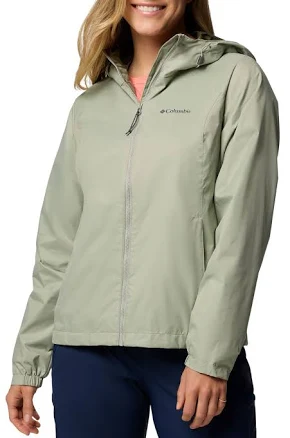
Columbia Women's Scattered Showers Jacket
water-repellent coating rain jackets typically contain PFAS; Columbia does not disclose.
Columbia's Scattered Showers jacket is a polyester rain jacket with water-repellent coating. Columbia provides no public PFAS transparency for this style; water-repellent coating-treated apparel commonly contains PFAS unless stated otherwise.
Still want this one anyway? Check the price on Amazon. We’d swap it.
Material
polyester with water-repellent (water-repellent coating) finish
Lab data
No public lab test
You may also be interested in
Top-graded picks in the categories readers replace first, every one scored on the same rubric.

- polypropylene filter housing, carbon/sediment cartridge
- We found no PFAS statement from the brand
- Bacterial growth in spent cartridges
3 hazards checked on this product, all on its full breakdown.

Aquasure
Premier Series 75 GPD Under Sink Reverse Osmosis Water Filtration System
- RO membrane, carbon filters, stainless steel housing
- We found no PFAS statement from the brand
- Bacterial and microbial growth in housing and filters
4 hazards checked on this product, all on its full breakdown.

Avocado
Vegan Mattress
- organic cotton, natural latex, coconut coir, recycled steel coils
- The brand calls it PFAS-free, which we have not verified
- Heavy metals
2 hazards checked on this product, all on its full breakdown.
What Columbia Women's Scattered Showers Jacket is made of, ingredients and materials
The Scattered Showers Jacket is polyester with a water-repellent coating (water-repellent coating) finish applied to the outer fabric. The water-repellent coating is almost certainly PFAS-based (as disclosed in your PFAS grade); polyester fiber itself is chemically inert and does not leach estrogens or other hazards under normal wear. The risk profile is dominated by the water-repellent treatment, not the base fabric.
What’s concerning
Waterproof / stain-resistant treatment
Water-repellent coating treatments have historically used PFAS.
Category baseline
The starting point for this type of product, before anything specific to this product is counted.
No PFAS disclosure
No public statement from the brand about PFAS in this product.
Azo dyes
The jacket's color (if synthetic dyes used) could include azo compounds; no specific test data published by Columbia for this model. Azo dyes on polyester are regulated under REACH and ZDHC but risk of carcinogenic amine release is low during normal wear.
Formaldehyde / VOCs
Water-resistant polyester finishes may include formaldehyde-releasing agents; water-repellent coating coatings themselves are typically PFAS, not formaldehyde-based, so risk here is secondary if present at all.
Source, ATSDR ↗water-repellent coating degradation and re-application
Water-repellent coating finishes degrade with washing and wear; reapplication products sold for home use typically contain PFAS. Frequent laundering accelerates coating loss, potentially exposing the user to larger cumulative PFAS doses over the jacket's lifetime.
What’s reassuring
Antimony in polyester
Polyester fibers may contain antimony as a catalyst; Columbia does not disclose sourcing. Skin contact during normal wear poses negligible risk; hazard is primarily occupational (during manufacture).
Flame retardants
No evidence this product contains added flame retardants. Polyester is inherently less flammable than natural fibers, so chemical retardants are not typically needed.
Source, EPA ↗How is this PFAS grade calculated?
The brand's record and disclosure
Columbia does not publicly disclose water-repellent coating chemistry or PFAS content in this product line, despite growing industry pressure to move away from legacy PFAS. The brand has not committed to PFAS-free timelines or third-party certifications (such as bluesign or OEKO-TEX) that would indicate lower concern alternatives. This silence is typical among major outdoor brands but represents a missed opportunity for transparency.
How it compares in its category
Most mainstream rain jackets at Columbia's price point use PFAS-based water-repellent coating finishes; this product is not unusual in that regard. Competitors like Patagonia have begun phasing toward water repellents not linked to PFAS (though full elimination is industry-wide slow). If PFAS avoidance is a priority, niche brands with explicit PFAS-free certifications are available but often cost more.
If you buy it
Wash separately from other clothing and use cool water (not hot) to minimize any potential leaching or degradation of coatings. Air-dry rather than tumble-dry; heat can degrade the water-repellent coating layer and theoretically accelerate any off-gassing. Avoid dry cleaning, which may use solvents that interact with the finish. Replace when the water-repellent property visibly fails (beading stops), as re-treating at home often uses additional PFAS products.
What is not known about PFAS in this product?
- Basis
- Model estimate, 45% confidence, not a lab result
- Lab test
- None on record for this exact product
- Brand statement
- Columbia has made a specific claim
Formulations change between production runs, so check the current label. How we grade.
More rain jackets grades
How we score, every product runs through the same public 0-100 rubric based on materials, coatings, brand disclosure, lab findings, and recalls. See the full methodology → Spotted a mistake? Report an error.