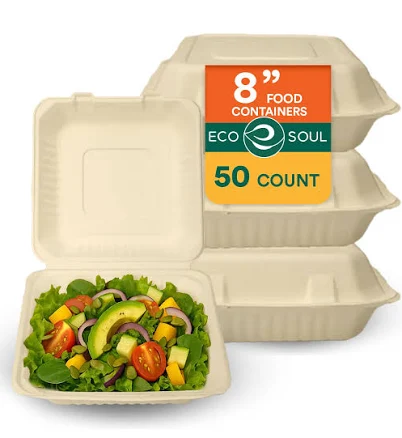
Compostable Clamshell Take Out Food Containers with Lids
Skip until the brand discloses coating composition.
This compostable container lacks disclosed ingredient or PFAS information. Unspecified water or grease barrier coating creates uncertainty.
The better-graded swap
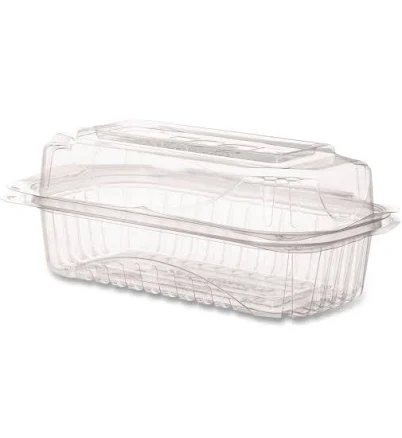
Eco-Products
Eco-Products Compostable Clear Clamshell Hinged Food
100/100 safety
Same rubric that flunked this product. The swap earned Excellent.
Still want this one anyway? Check the price on Amazon. We’d swap it.
Material
Plant-based fiber or PLA clamshell with unspecified water/grease barrier coating
Brand disclosure
Brand is silent on PFAS
Lab data
No public lab test
You may also be interested in
Top-graded picks in the categories readers replace first, every one scored on the same rubric.

- polypropylene filter housing, carbon/sediment cartridge
- We found no PFAS statement from the brand
- Bacterial growth in spent cartridges
3 hazards checked on this product, all on its full breakdown.

Aquasure
Premier Series 75 GPD Under Sink Reverse Osmosis Water Filtration System
- RO membrane, carbon filters, stainless steel housing
- We found no PFAS statement from the brand
- Bacterial and microbial growth in housing and filters
4 hazards checked on this product, all on its full breakdown.

Avocado
Vegan Mattress
- organic cotton, natural latex, coconut coir, recycled steel coils
- The brand calls it PFAS-free, which we have not verified
- Heavy metals
2 hazards checked on this product, all on its full breakdown.
What Compostable Clamshell Take Out Food Lids is made of, ingredients and materials
These containers are primarily polylactic acid (PLA), a plant-derived polymer from corn or sugarcane that is inherently non-toxic and does not leach BPA or phthalates at typical food-service temperatures (below 50°C). However, PLA alone is grease-resistant but not waterproof, so most commercial clamshells include a barrier coating (often fluorinated or proprietary) to repel moisture and oils. The brand has not publicly disclosed the specific chemistry of this coating, which is the primary chemical concern in the product.
What’s concerning
Category baseline
The starting point for this type of product, before anything specific to this product is counted.
Vague safety claims only
Uses vague language ("eco-friendly", "clean") without a specific PFAS statement.
Waterproof / stain-resistant treatment
Water-repellent coating treatments have historically used PFAS.
Unspecified barrier-coating leachates
The proprietary or undisclosed water/grease barrier coating is the primary chemical unknown in this product. Without ingredient transparency, migration of coating components into fatty or acidic foods cannot be ruled out, particularly if containers are reused or exposed to warm conditions.
PLA thermal degradation
PLA begins to soften and degrade above 55, 60°C and can release lactic acid and oligomers if heated repeatedly. Using these containers for hot foods or in heated environments (e.g., steam tables, dishwasher) increases this risk.
Microplastics
PLA is brittle compared to conventional plastics and can fragment into microplastics if cracked, repeatedly flexed, or poorly composted. Fragments may contaminate food if containers degrade during storage or washing.
Source, EPA ↗False compostability claims
Many PLA clamshells marketed as compostable do not break down in standard municipal or home composting and may be rejected by industrial composters, leading to landfill disposal where they persist like conventional plastic. Brand has not provided independent certification, raising credibility concerns.
What’s reassuring
BPA & bisphenols
PLA itself does not contain or leach BPA, but fluorinated or polyester-based barrier coatings could potentially include epoxy or phenolic resins that contain BPA substitutes. No reports of this in this brand, but undisclosed formulations prevent definitive assessment.
Source, FDA ↗How is this PFAS grade calculated?
The brand's record and disclosure
Brand maintains a generic online presence promoting compostability but has not published detailed ingredient lists, Safety Data Sheets (SDS), or independent third-party certifications such as FDA clearance or BPI (Biodegradable Products Institute) validation for this specific clamshell line. No major recalls or documented safety incidents are on record for this brand. The lack of transparency on coating materials is a red flag for consumer assessment and suggests the product may prioritize cost over disclosure.
How it compares in its category
PLA clamshells occupy a middle tier in the takeout packaging market. They have lower concern for BPA than polycarbonate, and their barrier coating presents comparable hazard profiles to unbleached cardboard or molded fiber alternatives. However, uncoated or mineral-coated fiber containers avoid the mystery of synthetic barrier coatings entirely. Certified compostable clamshells from brands with published SDS and BPI certification (e.g., World Centric, Footprint) offer stronger credibility than generic branding without such backing.
If you buy it
Use these containers for cold or room-temperature foods only; do not microwave or expose to hot liquids above 50°C, as heat can accelerate any polymer or coating breakdown. Store in a cool, dry place and discard if the lid becomes cracked, discolored, or brittle, as these are signs of degradation. Do not compost at home; true composting requires industrial-scale heat and microbes that residential bins cannot achieve; check local municipal composting programs for acceptance before assuming disposal safety. Request SDS or coating ingredient disclosure from the brand before committing to bulk purchase.
What is not known about PFAS in this product?
- Basis
- Model estimate, 35% confidence, not a lab result
- Lab test
- None on record for this exact product
- Brand statement
- has made none
Formulations change between production runs, so check the current label. How we grade.
What are the PFAS-free alternatives to Compostable Clamshell Take Out Food Containers with Lids?
Eco-Products
Compostable Clear Clamshell Hinged Food
- Compostable resin (PLA/PBAT blend, plant-based)
- A third party reports verifying it as PFAS-free
- Thermal degradation and chemical release at use temperatures
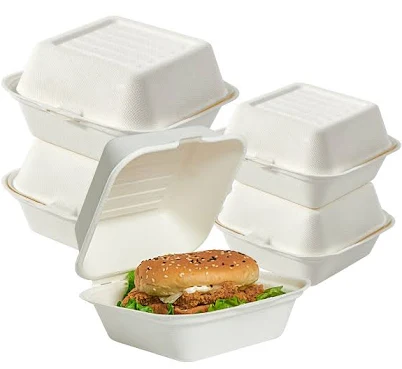
- Sugarcane bagasse (compostable fiber)
- We found no PFAS statement from the brand
- Bleaching agents and residual processing chemicals
3 hazards checked on this product, all on its full breakdown.
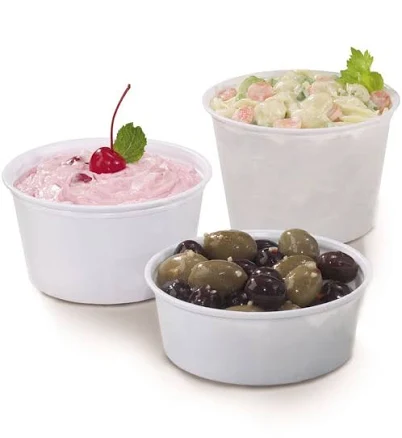
- polypropylene (PP) container, uncoated
- We found no PFAS statement from the brand
- Microplastics
2 hazards checked on this product, all on its full breakdown.
More disposable food containers grades
How we score, every product runs through the same public 0-100 rubric based on materials, coatings, brand disclosure, lab findings, and recalls. See the full methodology → Spotted a mistake? Report an error.