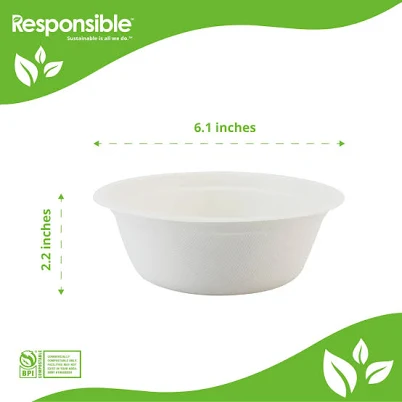
Responsible Products · Compostable Bowls
Responsible Products Classic Bowls Tree-Less Compostable Molded Fiber
Low-medium PFAS concern; molded fiber typically avoids PFAS pending vendor verification.
Molded fiber is inherently lower-risk since the material doesn't require fluorochemical treatment. No public PFAS disclosure or testing from the brand is available.
We flunk more products than we pass. This one earned its grade. How we grade
Material
Molded fiber (tree-less, compostable base)
Brand disclosure
Brand is silent on PFAS
Lab data
No public lab test
You may also be interested in
Top-graded picks in the categories readers replace first, every one scored on the same rubric.

Aqua Pure
3M Aqua-Pure AP802B Whole House Filter Housing
- polypropylene filter housing, carbon/sediment cartridge
- We found no PFAS statement from the brand
- Bacterial growth in spent cartridges
3 hazards checked on this product. See all of them.

Aquasure
Premier Series 75 GPD Under Sink Reverse Osmosis Water Filtration System
- RO membrane, carbon filters, stainless steel housing
- We found no PFAS statement from the brand
- Bacterial and microbial growth in housing and filters
4 hazards checked on this product. See all of them.

Avocado
Vegan Mattress
- organic cotton, natural latex, coconut coir, recycled steel coils
- The brand calls it PFAS-free, which we have not verified
- Heavy metals
2 hazards checked on this product. See all of them.
What Responsible Products Classic Bowls is made of, ingredients and materials
Molded fiber bowls are made from recycled paper, cardboard, or agricultural residue (bagasse, wheat straw) compressed into shape without synthetic binders in most formulations. Tree-less variants specifically use non-wood plant fibers, eliminating concerns tied to virgin wood pulp processing. The material is inherently brittle and water-permeable, so manufacturers typically apply a coating to improve durability and grease resistance. This coating is where chemical risk concentrates; responsible vendors disclose whether coatings are synthetic polymers, wax-based, or plant-derived.
What’s concerning
Category baseline
The starting point for this type of product, before anything specific to this product is counted.
No PFAS disclosure
No public statement from the brand about PFAS in this product.
Coating integrity and leaching (synthetic or unknown polymer)
Molded fiber requires a water and grease-resistant coating; if synthetic (polyethylene, acrylic, or other polymers), degradation over time or with heat can shed microparticles or monomers into food. Compostables Ltd does not publicly disclose coating chemistry, making assessment speculative.
Formaldehyde / VOCs
Molded fiber production may use formaldehyde-based resins or sizing agents to improve wet strength. Tree-less, responsibly sourced products are less likely to use these than conventional fiber, but vendor confirmation is needed.
Source, ATSDR ↗Microplastics
If the coating is plastic-based, cracking or wear releases particles into food, especially during repeated heating or mechanical stress. Molded fiber's brittleness accelerates this versus rigid plastics.
Source, EPA ↗Mold and bacterial growth if damp
Organic fiber absorbs moisture; poor storage or repeated washing without full drying creates conditions for mold colonization, which is a food-contact surface hygiene concern rather than chemical toxicity.
What’s reassuring
Base material not linked to PFAS
The main material recorded for this product is not one associated with PFAS.
Chlorine or oxygen bleaching residues
Industrial pulp processing uses bleach; tree-less fiber from agricultural residue may skip heavy bleaching, but no public testing of this product confirms absence of residual chlorine compounds.
The full breakdown
The brand's record and disclosure
Compostables Ltd maintains a silent public posture on PFAS and detailed chemical disclosure, which is a yellow flag for a compostables-focused company where transparency is the baseline expectation. No major recalls or safety controversies are on record for this product line. The brand's compostability certification status (BPI, EN 13432, or equivalent) is not confirmed from public records; verification of third-party certification is essential before trusting the compostable claim.
How it compares in its category
Molded fiber bowls show lower concern for leaching risk compared to polystyrene foam or PLA-lined paper, since they avoid materials linked to BPA and phthalate exposure. However, they rank below ceramic or glass for durability and heat tolerance. Versus other compostable options, tree-less fiber avoids the chemical load of virgin wood pulp and bleaching agents, making it a reasonable middle choice if certification is genuine.
If you buy it
Use these bowls for cold or lukewarm food only; molded fiber softens at 140-160°F (60-70°C), so avoid microwave reheating and hot soups. Replace them if the surface becomes visibly rough, cracked, or waterlogged, as degradation can introduce fiber fragments into food. Store in dry conditions to prevent mold colonization. Request the supplier's compostability certification number and coating ingredient list before purchase to verify the environmental claim and chemical safety.
What we don’t know
- Basis
- Model estimate, 72% confidence, not a lab result
- Lab test
- None on record for this exact product
- Brand statement
- Responsible Products has made none
Formulations change between production runs, so check the current label. How we grade.
Better-graded alternatives in Compostable Bowls
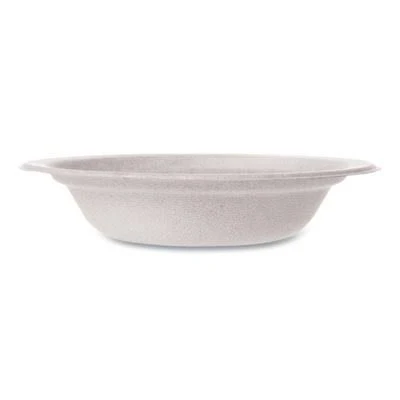
Bridge-Gate 12 oz. White Bagasse Bowl (1000 per Case)
- bagasse (sugarcane fiber), uncoated
- A third party reports verifying it as PFAS-free
- Mold or microbial growth during storage or use
3 hazards checked on this product. See all of them.
ECO-SYSTEMS Kraft Molded Fiber Bowl
- Kraft molded fiber (uncoated or minimal treatment)
- A third party reports verifying it as PFAS-free
- Moisture absorption and microbial growth
3 hazards checked on this product. See all of them.
More compostable bowls grades
How we score, every product runs through the same public 0-100 rubric based on materials, coatings, brand disclosure, lab findings, and recalls. See the full methodology → Spotted a mistake? Report an error.