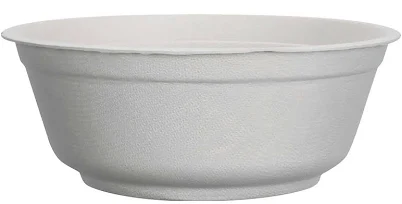
Responsible Products · Compostable Bowls
Responsible Products Multipurpose Bowls Tree-Less Compostable Molded Fiber
Low-medium PFAS concern; molded fiber category typically avoids PFAS without confirmation.
Molded fiber bowls don't inherently require PFAS coatings, but some manufacturers add fluorinated water-repellent treatments for grease resistance. Brand makes no PFAS disclosure.
We flunk more products than we pass. This one earned its grade. How we grade
Material
molded fiber (tree-less, compostable)
Brand disclosure
Brand is silent on PFAS
Lab data
No public lab test
You may also be interested in
Top-graded picks in the categories readers replace first, every one scored on the same rubric.

Aqua Pure
3M Aqua-Pure AP802B Whole House Filter Housing
- polypropylene filter housing, carbon/sediment cartridge
- We found no PFAS statement from the brand
- Bacterial growth in spent cartridges
3 hazards checked on this product. See all of them.

Aquasure
Premier Series 75 GPD Under Sink Reverse Osmosis Water Filtration System
- RO membrane, carbon filters, stainless steel housing
- We found no PFAS statement from the brand
- Bacterial and microbial growth in housing and filters
4 hazards checked on this product. See all of them.

Avocado
Vegan Mattress
- organic cotton, natural latex, coconut coir, recycled steel coils
- The brand calls it PFAS-free, which we have not verified
- Heavy metals
2 hazards checked on this product. See all of them.
What Responsible Products Multipurpose Bowls is made of, ingredients and materials
Molded fiber (also called molded pulp) is made from recycled paper, cardboard, or plant fibers compressed into shape without synthetic binders or coatings in most commercial versions. Tree-less variants use agricultural waste (bagasse, wheat straw, bamboo pulp) instead of virgin wood, reducing forestry impact. Unlike plastic or ceramic bowls, molded fiber avoids polymer leaching and heavy metal pigments because the material itself is the structural component, not a glaze or coating applied on top.
What’s concerning
Category baseline
The starting point for this type of product, before anything specific to this product is counted.
No PFAS disclosure
No public statement from the brand about PFAS in this product.
Microbial growth in porous fiber
Molded fiber's cellular structure can trap moisture and harbor mold or bacteria if stored damp or used for wet foods repeatedly before disposal. Risk is low for single-use applications but increases with reuse.
Fiber shedding or ingestion during use
Repeated flexing, heating, or contact with acidic foods may cause small fibers to break off and mix into food. This is a mechanical rather than chemical hazard but warrants use at room temperature.
Inadequate compost facility breakdown
Molded fiber labeled compostable may persist in home or municipal composting if temperatures do not reach 55-60°C. Users in cool climates or with weak compost infrastructure risk sending these bowls to landfills where they slowly biodegrade, defeating the compostable claim.
What’s reassuring
Base material not linked to PFAS
The main material recorded for this product is not one associated with PFAS.
Formaldehyde / VOCs
Most tree-less molded fiber products use starch or casein adhesives, not formaldehyde resins. No published test results for this brand confirm binder composition; assume low risk absent evidence of synthetic glue.
Source, ATSDR ↗Heavy metals
Recycled paper and agricultural waste can theoretically carry trace metals or residual inks from prior use. No recalls or contamination events tied to this product line; risk is below ceramic glazes but unquantified by the brand.
Source, FDA ↗The full breakdown
The brand's record and disclosure
Compostables Ltd has not issued public safety data sheets, third-party certifications (e.g., TUV OK Compost), or explicit PFAS avoidance statements on available record. The brand's silence on chemical composition is typical for small compostable-goods manufacturers but limits transparency. No recalls, contamination incidents, or regulatory warnings associated with this brand or product line have been published.
How it compares in its category
Molded fiber bowls are chemically simpler than plastic (no BPA, phthalates, or microplastic risk) and ceramic (no lead glaze or cadmium risk). They rank lower than polystyrene foam or PLA plastic for chemical leaching hazards. The trade-off is structural, molded fiber is weaker when wet and degrades faster, so it is not a drop-in replacement for durable dishes but rather a designed single-use or short-term compost product.
If you buy it
Use these bowls for cold or room-temperature food only; heat softens the fibers and may cause fiber fragments. Store in a dry place to prevent mold or bacterial growth in the porous matrix. Discard if they show visible mold, punctures, or saturation. Compost them in a commercial or hot-pile system (not backyard bins) to ensure proper breakdown, as home conditions often fail to reach the 58°C/14-week standard for certified compostable products.
What we don’t know
- Basis
- Model estimate, 72% confidence, not a lab result
- Lab test
- None on record for this exact product
- Brand statement
- Responsible Products has made none
Formulations change between production runs, so check the current label. How we grade.
Better-graded alternatives in Compostable Bowls
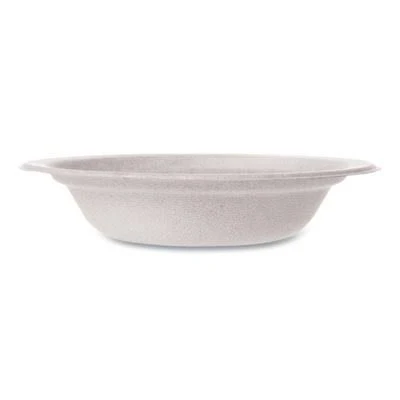
Bridge-Gate 12 oz. White Bagasse Bowl (1000 per Case)
- bagasse (sugarcane fiber), uncoated
- A third party reports verifying it as PFAS-free
- Mold or microbial growth during storage or use
3 hazards checked on this product. See all of them.
ECO-SYSTEMS Kraft Molded Fiber Bowl
- Kraft molded fiber (uncoated or minimal treatment)
- A third party reports verifying it as PFAS-free
- Moisture absorption and microbial growth
3 hazards checked on this product. See all of them.
More compostable bowls grades
How we score, every product runs through the same public 0-100 rubric based on materials, coatings, brand disclosure, lab findings, and recalls. See the full methodology → Spotted a mistake? Report an error.