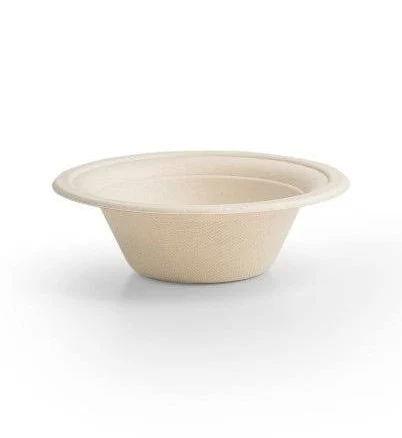
Vegware Nourish Molded Fiber Tableware
BPI Certified Compostable certification on record, alongside a water-repellent or grease-resistant treatment of unstated chemistry.
This product carries BPI Certified Compostable certification, whose criteria restrict PFAS, which we record as third-party verification. Vegware says its Nourish molded fibre is made with no added PFAS. Its record describes a water-repellent or grease-resistant treatment of unstated chemistry, which is still counted.
Brand says: “Vegware says its Nourish molded fibre is made with no added PFAS.”
We flunk more products than we pass. This one earned its grade. How we grade
Material
Molded fiber with aqueous coating
Brand disclosure
Third-party verified PFAS-free
Lab data
No public lab test
You may also be interested in
Top-graded picks in the categories readers replace first, every one scored on the same rubric.

- polypropylene filter housing, carbon/sediment cartridge
- We found no PFAS statement from the brand
- Bacterial growth in spent cartridges
3 hazards checked on this product, all on its full breakdown.

Aquasure
Premier Series 75 GPD Under Sink Reverse Osmosis Water Filtration System
- RO membrane, carbon filters, stainless steel housing
- We found no PFAS statement from the brand
- Bacterial and microbial growth in housing and filters
4 hazards checked on this product, all on its full breakdown.

Avocado
Vegan Mattress
- organic cotton, natural latex, coconut coir, recycled steel coils
- The brand calls it PFAS-free, which we have not verified
- Heavy metals
2 hazards checked on this product, all on its full breakdown.
What Vegware Nourish Molded Fiber Tableware is made of, ingredients and materials
Vegware Nourish tableware is molded fiber (wood pulp or sugarcane bagasse base) with an aqueous coating for water and grease resistance. Molded fiber itself is non-toxic and biodegradable, but the coating chemistry determines food safety. Aqueous coatings are generally lower-risk than wax or synthetic polymer alternatives, though the specific formulation here is not publicly disclosed.
What’s concerning
Category baseline
The starting point for this type of product, before anything specific to this product is counted.
Waterproof / stain-resistant treatment
Water-repellent coating treatments have historically used PFAS.
Coating formulation and leaching
The aqueous coating composition is not publicly disclosed. While aqueous systems are typically lower-risk than synthetic alternatives, without specification (e.g., starch-based, cellulose derivative, or hybrid), unknown additives or crosslinkers cannot be ruled out. BPI certification includes leaching tests but does not guarantee zero migration of all compounds.
Thermal degradation and coating breakdown
Molded fiber coatings degrade under sustained heat, particularly with fatty or acidic foods. Progressive coating loss can lead to fiber exposure and potential particulate ingestion. The thermal limit for this specific product is not publicly specified.
Mold and bacterial growth if stored improperly
Molded fiber is hygroscopic and can retain moisture if stored in humid conditions, creating a substrate for mold growth. Proper dry storage is essential before use and after opening packaging.
What’s reassuring
Third-party PFAS-free verification
A third party reports verifying this product as PFAS-free.
Microplastics
No established risk of microplastic generation from molded fiber tableware; the material is natural cellulose-based, not plastic. However, mechanical wear or aggressive abrasion can liberate fiber particles into food.
Source, EPA ↗Heavy metals
Vegware Nourish tableware is typically uncolored or naturally brown; no dyes or pigments are noted in publicly available product information. BPI certification includes testing for heavy metal leaching, which serves as a secondary control.
Source, FDA ↗How is this PFAS grade calculated?
The brand's record and disclosure
Vegware holds BPI (Biodegradable Products Institute) certification for compostability, a third-party standard that includes testing for leaching of regulated substances. The brand emphasizes sustainable sourcing and compostability but does not publicly specify the coating chemistry beyond 'aqueous,' limiting independent assessment of additives. No major recalls or toxicity allegations are on record for this product line.
How it compares in its category
Molded fiber with aqueous coating sits between bare paper (less water-resistant, shorter lifespan) and plastic-lined or wax-coated alternatives (higher persistent chemical risk). BPI certification is a meaningful differentiator in the compostable tableware market and carries weight in commercial composting systems. This product is broadly aligned with industry best practices for single-use food service ware.
If you buy it
Use for ambient and moderately warm foods; avoid prolonged contact with very hot liquids or greasy foods at high temperatures, which can compromise the coating. Discard if coating flakes, cracks, or softens excessively, as this reduces barrier integrity. These bowls are designed for industrial composting facilities; home composting may be slower or incomplete. Store in a cool, dry place to extend shelf life and prevent moisture-driven degradation.
What is not known about PFAS in this product?
- Basis
- Model estimate, 72% confidence, not a lab result
- Lab test
- None on record for this exact product
- Brand statement
- Vegware has made a specific claim
Formulations change between production runs, so check the current label. How we grade.
What are the PFAS-free alternatives to Vegware Nourish Molded Fiber Tableware?
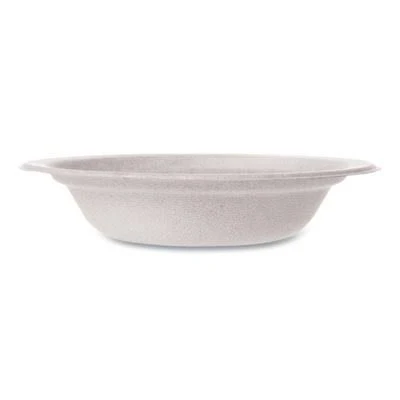
Bridge-Gate 12 oz. White Bagasse Bowl (1000 per Case)
- bagasse (sugarcane fiber), uncoated
- A third party reports verifying it as PFAS-free
- Mold or microbial growth during storage or use
3 hazards checked on this product, all on its full breakdown.
- Kraft molded fiber (uncoated or minimal treatment)
- A third party reports verifying it as PFAS-free
- Moisture absorption and microbial growth
3 hazards checked on this product, all on its full breakdown.
- sugarcane fiber, Kraft paper coating
- We found no PFAS statement from the brand
- Kraft paper coating migration (processing chemicals, sizing agents)
4 hazards checked on this product, all on its full breakdown.
More compostable bowls grades
How we score, every product runs through the same public 0-100 rubric based on materials, coatings, brand disclosure, lab findings, and recalls. See the full methodology → Spotted a mistake? Report an error.