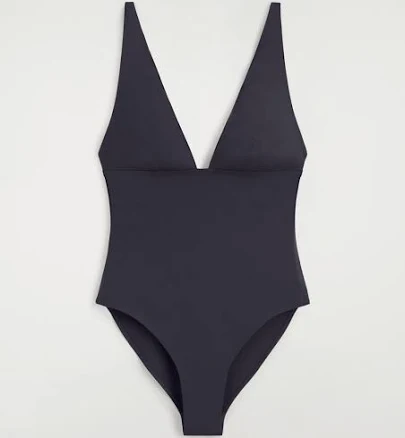
COS Women's Bonded-Scuba V-Neck Swimsuit
Skip until COS discloses water-repellent coating chemistry or certifies PFAS-free.
Bonded polyester scuba knit likely receives water-repellent coating finish, a common PFAS source in swimwear. COS discloses no treatment chemistry.
The better-graded swap
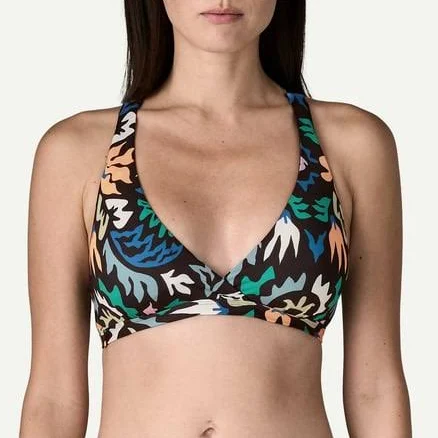
Patagonia
Patagonia Women's Bottom Turn Racerback Bikini Top
90/100 safety
Same rubric that flunked this product. The swap earned Excellent.
Still want this one anyway? Check the price on Amazon. We’d swap it.
Material
Polyester scuba-knit bonded fabric with likely water-repellent coating finishing
Brand disclosure
Brand is silent on PFAS
Lab data
No public lab test
What COS Women's Bonded-Scuba V-Neck Swimsuit is made of, ingredients and materials
This swimsuit is bonded polyester scuba-knit, a dense double-layer fabric common in performance swimwear. The 'bonded' structure uses adhesives to fuse two fabric layers, and the water-repellent coating (water-repellent coating) finish applied to the surface is almost certainly fluorinated (PFAS-based), though COS has not disclosed the chemistry. Polyester itself is stable and does not leach; the concern lies entirely in the water-repellent coating and any adhesive residues.
What’s concerning
Category baseline
The starting point for this type of product, before anything specific to this product is counted.
No PFAS disclosure
No public statement from the brand about PFAS in this product.
Waterproof / stain-resistant treatment
Water-repellent coating treatments have historically used PFAS.
PFAS
Standard for bonded scuba-knit swimwear unless explicitly marketed otherwise. COS has not disclosed whether their water-repellent coating is fluorine-free or PFAS-based, so assume conventional fluorinated chemistry unless proven otherwise.
Source, ATSDR ↗Adhesive leachables from bonded layers
The adhesive bonding the two polyester layers is typically polyurethane-based. Residual monomers or plasticizers can migrate into water during laundering or extended wear, though no specific contamination has been reported for COS products.
Azo dyes in polyester
Most polyester swimwear uses synthetic azo dyes, which can break down into aromatic amines under UV exposure or when repeatedly washed. COS does not certify Oeko-Tex or BLUESIGN standards, which would restrict the most hazardous azo colorants.
Microplastic shedding from wear and wash
Bonded polyester scuba-knit is durable but will shed microfibers when laundered, especially in early wears. Washing in a microfiber-catching bag (e.g. Guppy Friend) can reduce environmental release but does not eliminate it.
Degradation of bonded structure over time
Bonded swimwear commonly shows adhesive separation or peeling after 1-3 years of use, particularly in chlorinated pools. This is a durability issue rather than an acute safety hazard, but degraded adhesive may shed adhesive particles into water.
The full breakdown
The brand's record and disclosure
COS is owned by H&M Group, which has published broad sustainability commitments but remains silent on PFAS phase-out timelines and water-repellent coating chemistry for individual products. No recalls or safety controversies specific to COS swimwear are on public record. The brand does not offer PFAS-free or BLUESIGN-certified product lines marketed to consumers, which is a transparency gap versus competitors like Patagonia.
How it compares in its category
This bonded-scuba style is standard for mid-market contemporary swimwear. Competitors like Athleta and Outdoor Voices have begun disclosing fluorine-free water-repellent coating alternatives, while luxury brands like Eres avoid heavy water-repellent coating finishes altogether. COS pricing and styling sit between fast-fashion (H&M, Shein) and premium segments; its silence on water-repellent coating chemistry is less defensible than budget competitors but more common than certified alternatives.
If you buy it
Wash in cool water before first wear to reduce surface residue migration. Hand wash or gentle cycle thereafter; machine drying is acceptable but avoid high heat. The bonded adhesive can degrade after 2-3 years of regular use, particularly if exposed to chlorine or sun damage. Replace the suit once you notice peeling at seams or loss of shape, as degraded adhesive may shed microparticles.
What we don’t know
- Basis
- Model estimate, 45% confidence, not a lab result
- Lab test
- None on record for this exact product
- Brand statement
- COS has made none
Formulations change between production runs, so check the current label. How we grade.
Better-graded alternatives in Swimwear
Patagonia
Women's Bottom Turn Racerback Bikini Top
- Nylon/polyester blend with elastane (standard swimwear)
- The brand calls it PFAS-free, which we have not verified
- Elastane (spandex) degradation under heat or chlorine

Solid & Striped
Taylor One Piece Seersucker Plaid
- Cotton/cotton-blend seersucker plaid
- We found no PFAS statement from the brand
- Azo dyes and colorfast stability
2 hazards checked on this product. See all of them.
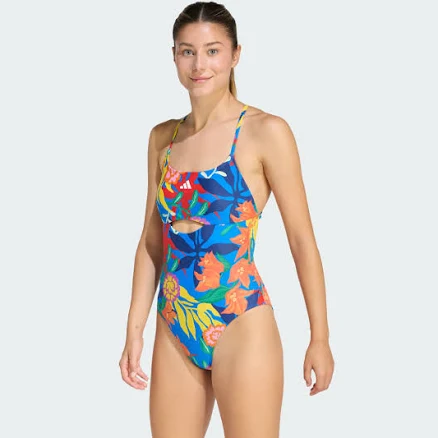
Adidas
Women's Mexicana Florals Tie-Back Swimsuit
- Polyester/nylon swimsuit fabric, likely uncoated or standard finish
- Azo dyes and synthetic colorants
4 hazards checked on this product. See all of them.
More swimwear grades
How we score, every product runs through the same public 0-100 rubric based on materials, coatings, brand disclosure, lab findings, and recalls. See the full methodology → Spotted a mistake? Report an error.