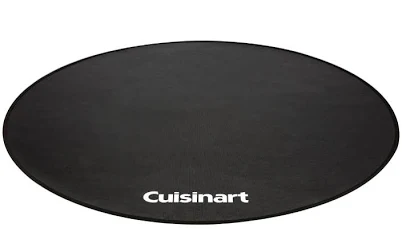
Cuisinart · Silicone Cutting & Prep Boards
Cuisinart 36-in Silicone-Coated Mat, Is It Non-Toxic?
Skip; silicone coating PFAS content undisclosed by brand.
No public PFAS details on this silicone-coated mat's coating or base. Silicone coatings can contain PFAS, and lack of disclosure limits confidence.
The better-graded swap
Fiskars
Functional Form Cutting Board Set, 3-Piece
85/100 safety
Same rubric that flunked this product. The swap earned Excellent.
Still want this one anyway? Check the price on Amazon. We’d swap it.
Material
silicone-coated (unspecified base and coating details)
Lab data
No public lab test
You may also be interested in
Top-graded picks in the categories readers replace first, every one scored on the same rubric.

- polypropylene filter housing, carbon/sediment cartridge
- We found no PFAS statement from the brand
- Bacterial growth in spent cartridges
3 hazards checked on this product, all on its full breakdown.

Aquasure
Premier Series 75 GPD Under Sink Reverse Osmosis Water Filtration System
- RO membrane, carbon filters, stainless steel housing
- We found no PFAS statement from the brand
- Bacterial and microbial growth in housing and filters
4 hazards checked on this product, all on its full breakdown.

Avocado
Vegan Mattress
- organic cotton, natural latex, coconut coir, recycled steel coils
- The brand calls it PFAS-free, which we have not verified
- Heavy metals
2 hazards checked on this product, all on its full breakdown.
Is Cuisinart 36-in Silicone-Coated Mat non-toxic? What it is made of
This product is described as silicone-coated but lacks public specification of the underlying substrate (fiberglass, polyester, or other material) and the exact silicone formulation. Silicone itself is generally regarded as food-safe when pure, but the base layer and any additives in the coating determine actual safety profile. Without Cuisinart's detailed material disclosure, the durability and leaching risk of both layers remain unclear.
What’s concerning
Category baseline
The starting point for this type of product, before anything specific to this product is counted.
No PFAS disclosure
No public statement from the brand about PFAS in this product.
Non-stick, chemistry undisclosed
Marketed as non-stick without stating the coating chemistry.
Silicone coating degradation and leaching
As silicone ages or is exposed to high heat cycles, the coating can degrade, peel, or leach oligomers (small silicone molecules) into food. Cuisinart does not disclose whether their formulation includes reinforcing additives or plasticizers that could amplify this risk.
Base layer composition and leaching
The unspecified substrate material (likely fiberglass or polyester blend) may leach fibers, adhesive residues, or reinforcing compounds if the silicone coating fails. This is a particular concern during extended contact with hot or oily foods.
Off-gassing or odor during first use
New silicone mats often release volatile organic compounds or odors, especially when first heated. While typically not acutely toxic, this reflects incomplete curing or residual manufacturing solvents; Cuisinart provides no pre-use care guidance.
What’s reassuring
Lack of food-contact certification
No public FDA clearance or NSF certification for this specific mat is recorded. Silicone itself may be FDA-approved in principle, but unverified products lack official vetting of the complete assembly and additives.
Thermal conductivity and hotspot risk
Silicone mats can create uneven heat distribution on baking surfaces; this is a performance rather than toxicity issue, but poor heat transfer may lead to user compensation (higher temps) that stresses the coating.
How is this PFAS grade calculated?
The brand's record and disclosure
Cuisinart has not published detailed material safety data sheets or third-party certifications (such as FDA clearance or NSF approval) for this specific mat in publicly accessible sources. The brand's silence on PFAS content in silicone products is consistent with industry-wide lack of transparency; few cookware brands voluntarily disclose fluorine-based additives in coatings. No major recalls or safety actions against Cuisinart silicone mats are on record, but absence of disclosure is itself a transparency gap.
How it compares in its category
Silicone baking mats occupy a middle ground in cookware safety, they avoid the Teflon-type coating fume and metal-leaching risks of nonstick coatings and traditional enameled pans. However, they lack the transparency and third-party certification common to higher-end alternatives like glass or stainless steel substrates. Budget silicone mats from lesser-known brands carry similar disclosure gaps; premium brands (e.g., Silpat, made in France with certified silicone) typically provide more material transparency.
If you buy it
Use only for temperatures up to the brand's stated maximum (typically 480-500F for silicone mats); do not exceed this to avoid degradation and potential leaching. Inspect the mat regularly for cracks, peeling, discoloration, or odor; replace immediately if any occur. Hand wash in warm soapy water and dry completely; avoid dishwasher unless explicitly approved by Cuisinart. Store flat or loosely rolled to prevent permanent creasing, which can compromise coating integrity over time.
What is not known about PFAS in this product?
- Basis
- Model estimate, 35% confidence, not a lab result
- Lab test
- None on record for this exact product
- Brand statement
- Cuisinart has made a specific claim
Formulations change between production runs, so check the current label. How we grade.
What are the PFAS-free alternatives to Cuisinart 36-in Silicone-Coated Mat?
- Polypropylene or similar plastic; no nonstick or waterproof coating disclosed
- We found no PFAS statement from the brand
- Microplastic shedding from cutting action
4 hazards checked on this product, all on its full breakdown.
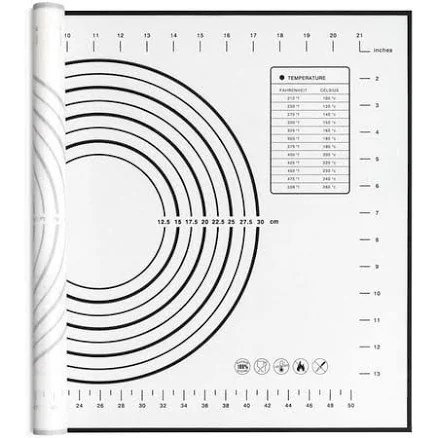
Silicone Cutting and Prep Board
- borosilicate glass
- Thermal shock fracture and cutting hazard
2 hazards checked on this product, all on its full breakdown.
Find an alternative on Amazon
- silicone (food-grade)
- We found no PFAS statement from the brand
- Silicone thermal degradation and off-gassing
2 hazards checked on this product, all on its full breakdown.
Find an alternative on AmazonMore silicone cutting & prep boards grades
How we score, every product runs through the same public 0-100 rubric based on materials, coatings, brand disclosure, lab findings, and recalls. See the full methodology → Spotted a mistake? Report an error.