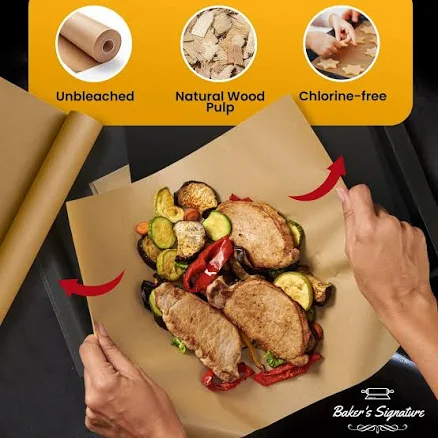
· Parchment Paper & Baking Liners
Baking Paper Roll
Find a different brand that discloses what makes the paper grease-resistant.
The brand's baking paper makes no statement about PFAS or coating composition. Standard baking papers historically use PFAS-based water and grease treatments.
The better-graded swap
If You Care
If You Care Baking Paper, Parchment, 70 Square Feet
90/100 safety
Same rubric that flunked this product. The swap earned Excellent.
Still want this one anyway? Check the price on Amazon. We’d swap it.
Material
Paper with unspecified grease-resistant coating
Brand disclosure
Brand is silent on PFAS
Lab data
No public lab test
You may also be interested in
Top-graded picks in the categories readers replace first, every one scored on the same rubric.

- polypropylene filter housing, carbon/sediment cartridge
- We found no PFAS statement from the brand
- Bacterial growth in spent cartridges
3 hazards checked on this product, all on its full breakdown.

Aquasure
Premier Series 75 GPD Under Sink Reverse Osmosis Water Filtration System
- RO membrane, carbon filters, stainless steel housing
- We found no PFAS statement from the brand
- Bacterial and microbial growth in housing and filters
4 hazards checked on this product, all on its full breakdown.

Avocado
Vegan Mattress
- organic cotton, natural latex, coconut coir, recycled steel coils
- The brand calls it PFAS-free, which we have not verified
- Heavy metals
2 hazards checked on this product, all on its full breakdown.
What Baking Paper Roll is made of, ingredients and materials
Baking paper is a cellulose-based sheet coated with an unspecified grease-resistant formulation. The coating's composition is the critical unknown, it may contain PFAS (fluorochemicals), non-fluorinated wax blends, or silicone derivatives, each with different migration risks when heated. Without disclosure, consumers cannot assess whether the coating will leach into food or release fumes during high-temperature baking. The base paper itself is stable, but the coating determines actual safety.
What’s concerning
Category baseline
The starting point for this type of product, before anything specific to this product is counted.
No PFAS disclosure
No public statement from the brand about PFAS in this product.
Waterproof / stain-resistant treatment
Water-repellent coating treatments have historically used PFAS.
Unspecified grease-resistant coating chemistry
The coating formulation is not publicly identified, leaving open the possibility of PFAS, silicones, or other fluorochemicals that may migrate into food under heat or extended contact. Without manufacturer transparency, the actual risk cannot be quantified.
Thermal degradation and off-gassing
Unspecified coatings may release volatile compounds or particulates when heated above their design temperature. Standard parchment paper typically performs to 420F, but the brand's specific coating stability is unknown and untested in public data.
Coating migration into food
Fatty or acidic foods can accelerate leaching of coating components. With no chemical disclosure, the likelihood and identity of migrating substances cannot be assessed. This is a standard concern for all coated papers but is heightened by lack of transparency.
What’s reassuring
Microplastic or particle shedding
No specific reports of degradation or particle release from baking paper exist in public records, but older or poorly bonded coatings can flake or shed under mechanical stress.
Bleaching residues in pulp
The brand does not specify whether the base paper is bleached or unbleached. If chlorine-bleached, trace dioxin residues are theoretically possible but fall well below regulatory limits in food-contact paper; this is a minor concern relative to the coating chemistry question.
How is this PFAS grade calculated?
The brand's record and disclosure
The brand has not publicly disclosed the chemical identity of its grease-resistant coating, which is a red flag in an industry where major competitors (If You Care, Unbleached, some store brands) now volunteer PFAS-free or fluorochemical-free claims. The brand's silence suggests either a legacy formulation or unwillingness to differentiate on safety. No major recalls or safety controversies are on record for this specific product, but lack of transparency is itself a disclosure failure.
How it compares in its category
Many modern parchment papers now market PFAS-free or fluorochemical-free coatings using plant-based waxes or silicone. The brand does not make this claim, placing it in the middle-to-lower tier of the category for transparency. Budget brands and eco-focused labels have moved ahead; The brand appears to offer no distinct safety or performance advantage that justifies the information gap.
If you buy it
Do not use above 420F, as unspecified coatings may degrade or off-gas at high temperatures. Replace the roll if you see discoloration, peeling, or odor. Store in a cool, dry place away from strong heat sources, as coatings can migrate more readily in warm conditions. Avoid prolonged contact with acidic or fatty foods if possible. Better option, switch to a brand that discloses its coating chemistry.
What is not known about PFAS in this product?
- Basis
- Model estimate, 35% confidence, not a lab result
- Lab test
- None on record for this exact product
- Brand statement
- has made none
Formulations change between production runs, so check the current label. How we grade.
What are the PFAS-free alternatives to Baking Paper Roll?
- silicone-coated parchment paper
- The brand calls it PFAS-free, which we have not verified
- Paper degradation and particulate shedding
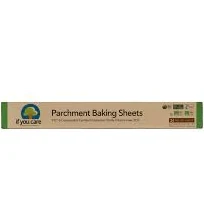
- unbleached paper with silicone coating
- The brand calls it PFAS-free, which we have not verified
- Silicone coating degradation at high heat
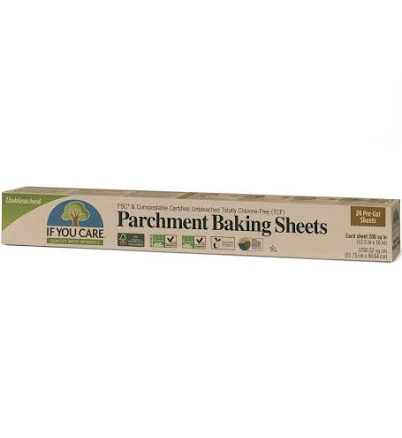
- bleached paper with silicone coating
- The brand calls it PFAS-free, which we have not verified
- Paper degradation and fragmentation
More parchment paper & baking liners grades
How we score, every product runs through the same public 0-100 rubric based on materials, coatings, brand disclosure, lab findings, and recalls. See the full methodology → Spotted a mistake? Report an error.