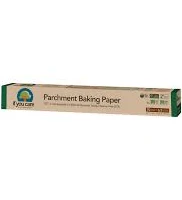
· Parchment Paper & Baking Liners
Parchment Baking Paper
Coating chemistry not stated, no PFAS test results on record.
This parchment paper has an unspecified water and grease-resistant coating. The brand has no PFAS statement on record. The coating chemistry is not publicly disclosed.
The better-graded swap
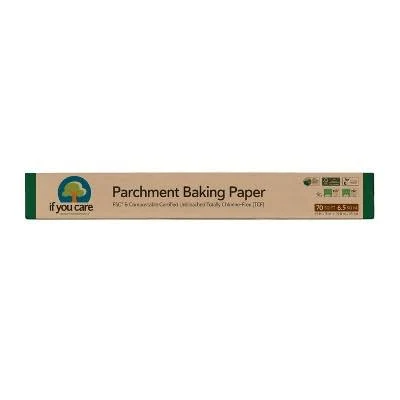
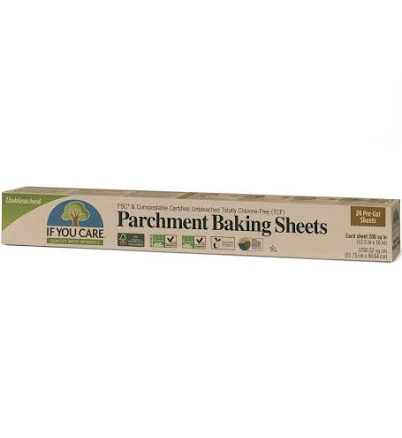
If You Care
If You Care Parchment Baking Paper
90/100 safety
Same rubric that flunked this product. The swap earned Excellent.
Still want this one anyway? Check the price on Amazon. We’d swap it.
Material
Cellulose-based paper with unspecified water/grease-resistant coating
Brand disclosure
Brand is silent on PFAS
Lab data
No public lab test
You may also be interested in
Top-graded picks in the categories readers replace first, every one scored on the same rubric.

- polypropylene filter housing, carbon/sediment cartridge
- We found no PFAS statement from the brand
- Bacterial growth in spent cartridges
3 hazards checked on this product, all on its full breakdown.

Aquasure
Premier Series 75 GPD Under Sink Reverse Osmosis Water Filtration System
- RO membrane, carbon filters, stainless steel housing
- We found no PFAS statement from the brand
- Bacterial and microbial growth in housing and filters
4 hazards checked on this product, all on its full breakdown.

Avocado
Vegan Mattress
- organic cotton, natural latex, coconut coir, recycled steel coils
- The brand calls it PFAS-free, which we have not verified
- Heavy metals
2 hazards checked on this product, all on its full breakdown.
What Parchment Baking Paper is made of, ingredients and materials
Parchment is cellulose paper treated with a water and grease-resistant coating of undisclosed chemistry. The coating is the critical unknown, traditional parchment uses silicone or wax, but many manufacturers apply fluorinated compounds (PFAS) to achieve higher heat resistance and non-stick performance. Without specification, you cannot know whether this product contains legacy PFAS like PFOA or newer replacements that may carry similar persistence concerns. Cellulose itself is food-safe when uncoated, but the coating's thermal stability and migration potential under heat define the actual safety profile.
What’s concerning
Category baseline
The starting point for this type of product, before anything specific to this product is counted.
No PFAS disclosure
No public statement from the brand about PFAS in this product.
Waterproof / stain-resistant treatment
Water-repellent coating treatments have historically used PFAS.
PFAS
Unspecified coating chemistry creates unknown PFAS risk. The brand has not tested or disclosed, so legacy PFAS (PFOA/PFOS) or replacement variants (PFBS, GenX-type) may be present. Migration to food, especially fatty or acidic items, increases under heat.
Source, ATSDR ↗Coating degradation and microparticle shedding
Cellulose-based paper degrades over time or when exposed to high heat; coating may flake or shed into food if worn, cracked, or overheated. No published durability or shelf-life data from the brand is available.
Off-gassing of volatile compounds from coating
Unknown coating chemistry cannot rule out VOC release during heating. Silicone-coated parchment is generally stable; fluorinated coatings may emit volatile byproducts if degraded by high oven temperature.
Migration of coating components into fatty/acidic foods
High-fat foods (butter, oil, cheese) and acidic items (tomato-based dishes) increase coating component solubility and transfer. Without coating identification, migration rates cannot be assessed or ruled out.
What’s reassuring
Chlorine residues in cellulose bleaching
The brand does not specify whether the cellulose is chlorine-bleached or oxygen-bleached. Chlorine-bleached pulp can contain trace chlorine and dioxin precursors; unbleached alternatives eliminate this concern. No specific contamination reports exist for this brand.
How is this PFAS grade calculated?
The brand's record and disclosure
The brand has not published independent PFAS testing results or disclosed the specific coating chemistry used in their baking paper, representing a significant transparency gap. No major recalls or documented safety incidents have been linked to this brand's parchment products in publicly available sources. The company's silence on coating composition is inconsistent with competitors (such as If You Care and some mainstream retailers) who explicitly market PFAS-free or silicone-coated alternatives. Until voluntarily tests or discloses, customers must treat the PFAS risk as unverified rather than confirmed absent.
How it compares in its category
Parchment papers vary widely in coating strategy, premium brands market silicone-only or food-grade wax formulations with full disclosure; budget and mid-range products often remain vague about coating type, creating the same uncertainty as the brand. Competing cellulose-based liners from If You Care, Unbleached Company, and some store brands explicitly label PFAS-free status. The brand's positioning appears to be conventional mid-market without the cost savings of generic options or the transparency premium of certified alternatives. If PFAS content turns out to be present, the brand would fall into a less desirable category than labeled PFAS-free rivals.
If you buy it
Store in a cool, dry place away from direct sunlight to prevent coating degradation before use. Do not expose to temperatures above 420F (210C) unless the brand confirms higher ratings; cellulose-based products with unknown coatings can break down or off-gas when overheated. Cut and discard any charred or visibly damaged sections before food contact. Replace rolls every 6-12 months depending on storage conditions; older parchment may develop brittleness or coating separation, increasing contamination risk. If you detect any chemical smell or unusual discoloration during use, discontinue and switch to a brand with verified PFAS-free certification.
What is not known about PFAS in this product?
- Basis
- Model estimate, 35% confidence, not a lab result
- Lab test
- None on record for this exact product
- Brand statement
- has made none
Formulations change between production runs, so check the current label. How we grade.
What are the PFAS-free alternatives to Parchment Baking Paper?
- silicone-coated parchment paper
- The brand calls it PFAS-free, which we have not verified
- Paper degradation and particulate shedding
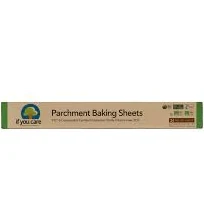
- unbleached paper with silicone coating
- The brand calls it PFAS-free, which we have not verified
- Silicone coating degradation at high heat
- bleached paper with silicone coating
- The brand calls it PFAS-free, which we have not verified
- Paper degradation and fragmentation
More parchment paper & baking liners grades
How we score, every product runs through the same public 0-100 rubric based on materials, coatings, brand disclosure, lab findings, and recalls. See the full methodology → Spotted a mistake? Report an error.