Darn Tough · Waterproof Hiking Socks
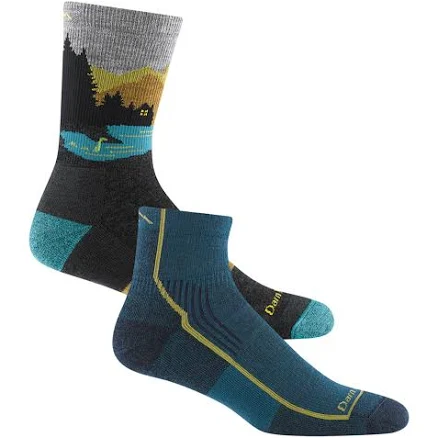
Darn Tough Men's Hiker Encounter 2-Pack
Lower concern. No water-repellent finish on record.
These socks are merino wool blend without a water-repellent treatment applied. The brand has no PFAS statement on record.
Still want this one anyway? Check the price on Amazon. We’d swap it.
Material
Merino wool blend, no water-repellent treatment applied
Brand disclosure
Brand is silent on PFAS
Lab data
No public lab test
You may also be interested in
Top-graded picks in the categories readers replace first, every one scored on the same rubric.

- polypropylene filter housing, carbon/sediment cartridge
- We found no PFAS statement from the brand
- Bacterial growth in spent cartridges
3 hazards checked on this product, all on its full breakdown.

Aquasure
Premier Series 75 GPD Under Sink Reverse Osmosis Water Filtration System
- RO membrane, carbon filters, stainless steel housing
- We found no PFAS statement from the brand
- Bacterial and microbial growth in housing and filters
4 hazards checked on this product, all on its full breakdown.

Avocado
Vegan Mattress
- organic cotton, natural latex, coconut coir, recycled steel coils
- The brand calls it PFAS-free, which we have not verified
- Heavy metals
2 hazards checked on this product, all on its full breakdown.
What Darn Tough Men's Hiker Encounter 2-Pack is made of, ingredients and materials
Darn Tough Hiker Encounter socks are a merino wool blend (likely 80%+ wool with nylon reinforcement in high-wear zones). Merino wool is naturally antimicrobial and moisture-wicking, requiring no chemical water-repellent (water-repellent coating) finish that would introduce PFAS. The nylon component is a synthetic reinforcement for durability in the heel and toe but does not contain Teflon-type coating or Teflon-family coating coatings. No water-proofing treatment means minimal chemical processing beyond standard textile finishing.
What’s concerning
Category baseline
The starting point for this type of product, before anything specific to this product is counted.
No PFAS disclosure
No public statement from the brand about PFAS in this product.
Antimony in synthetic fibers (nylon reinforcement)
Nylon heel and toe reinforcement may contain trace antimony as a polymerization catalyst, a standard textile industry practice. Levels in finished socks are generally not bioavailable through skin contact; no exposure risk is established for this application.
Microfiber shedding (synthetic blend durability)
Nylon-reinforced areas may shed microfibers during early wash cycles as loose fibers escape. This is a general textile concern, not specific to Darn Tough, but merino wool's durability and nylon's limited surface area (reinforcement only) reduce total shed volume compared to 100% synthetic socks.
What’s reassuring
Base material not linked to PFAS
The main material recorded for this product is not one associated with PFAS.
Azo dyes (synthetic dye residues)
Merino wool is typically dyed with acid dyes (lower concern than azo dyes used in some synthetics) or natural dyes. No azo-dye controversies or recalls are on record for Darn Tough or merino wool socks in this category.
Formaldehyde / VOCs
Wool requires minimal resin finishing compared to synthetic fabrics. Darn Tough does not list formaldehyde-releasing finishes in public material specs, and wool socks are not a known formaldehyde hazard category.
Source, ATSDR ↗Heavy metals
Wool acid dyes can include trace metals (copper, chromium) if poorly sourced or applied, but Darn Tough's Vermont production and brand reputation suggest quality control. No test data or recalls for heavy metal contamination exist for this product line.
Source, FDA ↗How is this PFAS grade calculated?
The brand's record and disclosure
Darn Tough Vermont is a US-based, family-owned manufacturer with a lifetime replacement guarantee and strong reputation for transparency on materials and manufacturing. The company does not publicly disclose PFAS use or formal sustainability certifications, and maintains a largely silent stance on chemical testing. No established recalls, formaldehyde controversies, or azo-dye issues are on record for this brand. The company's warranty program and Vermont production suggest quality control, though third-party testing data on finished products is not publicly available.
How it compares in its category
Most competitive waterproof hiking socks use water-repellent coating-treated synthetics (polyester, nylon) coated with PFOA or PFOS-based repellents, while this product has no water-repellent treatment applied. Merino wool blends without water-repellent coating treatment are uncommon in the hiking category because they require more frequent laundering, but they eliminate fluorochemical exposure entirely. Standard acrylic or polyester hiking socks may carry azo-dye residues or formaldehyde from resin finishes; wool-dominant blends like this one have lower chemical finishing loads. Price-to-safety ratio is competitive; Darn Tough's durability and warranty reduce replacement frequency.
If you buy it
Wash in cool water and hang dry to preserve merino's elasticity and antimicrobial properties; hot water can degrade wool fibers and nylon reinforcement. Replace when heel or toe nylon shows visible wear or pilling compromises water resistance, typically after 2-3 years of regular use. Because there is no water-repellent coating, these socks will absorb water more readily than treated alternatives; use in wet conditions may require more frequent drying. Darn Tough's lifetime replacement policy means defects are covered; take advantage for color or structural failures.
What is not known about PFAS in this product?
- Basis
- Model estimate, 78% confidence, not a lab result
- Lab test
- None on record for this exact product
- Brand statement
- Darn Tough has made none
Formulations change between production runs, so check the current label. How we grade.
More waterproof hiking socks grades
How we score, every product runs through the same public 0-100 rubric based on materials, coatings, brand disclosure, lab findings, and recalls. See the full methodology → Spotted a mistake? Report an error.