Smartwool · Waterproof Hiking Socks
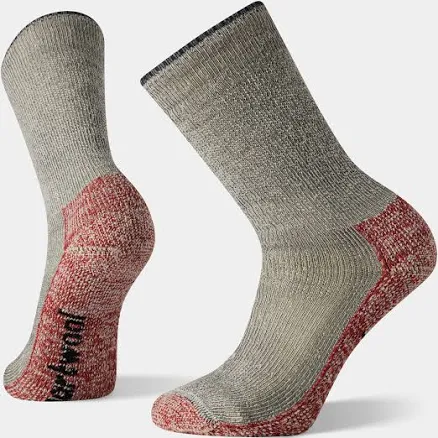
Smartwool Men's Mountaineer Classic Edition Maximum Cushion Crew Socks
Lower PFAS concern. Natural wool fiber with no waterproofing treatment flagged. No explicit PFAS disclosure.
Smartwool's Mountaineer socks are primarily merino wool, a natural fiber with intrinsically low PFAS risk. The brand doesn't market these as water-resistant or water-repellent coating-treated.
Still want this one anyway? Check the price on Amazon. We’d swap it.
Material
Merino wool blend (primary natural fiber)
Brand disclosure
Brand is silent on PFAS
Lab data
No public lab test
You may also be interested in
Top-graded picks in the categories readers replace first, every one scored on the same rubric.

- polypropylene filter housing, carbon/sediment cartridge
- We found no PFAS statement from the brand
- Bacterial growth in spent cartridges
3 hazards checked on this product, all on its full breakdown.

Aquasure
Premier Series 75 GPD Under Sink Reverse Osmosis Water Filtration System
- RO membrane, carbon filters, stainless steel housing
- We found no PFAS statement from the brand
- Bacterial and microbial growth in housing and filters
4 hazards checked on this product, all on its full breakdown.

Avocado
Vegan Mattress
- organic cotton, natural latex, coconut coir, recycled steel coils
- The brand calls it PFAS-free, which we have not verified
- Heavy metals
2 hazards checked on this product, all on its full breakdown.
What Smartwool Men's Mountaineer Crew Socks is made of, ingredients and materials
Smartwool Mountaineer socks are primarily merino wool, a natural protein fiber with inherent antimicrobial and moisture-wicking properties, blended with synthetic nylon for durability and elasticity. Merino does not require chemical flame retardants or heavy pesticide residues in finished products, unlike conventional wool. This product carries no advertised waterproofing membrane coating, eliminating the usual source of fluorinated compounds (PFAS) or other chemical durable-water-repellent treatments in technical socks. The dye chemistry and elastic reinforcements are the main chemical exposure vectors.
What’s concerning
Category baseline
The starting point for this type of product, before anything specific to this product is counted.
No PFAS disclosure
No public statement from the brand about PFAS in this product.
Synthetic dyes and colorants
Merino socks are dyed using industrial textile processes; azo dyes and heavy-metal mordants are regulated in the EU (REACH) but not uniformly tested or disclosed by Smartwool for this product. No specific dye contamination recalls are on record for this line.
Elastic and nylon polymer additives
Spandex or elastane in the blend may contain residual catalysts or plasticizers; typical use in performance apparel poses low migration risk at skin temperature, but manufacturing processes are not disclosed by the brand.
Microplastics
Nylon blend components may shed microfibers when washed; merino wool itself biodegrades but nylon does not. Regular washing will release small quantities of synthetic microfibers into wastewater.
Source, EPA ↗What’s reassuring
Base material not linked to PFAS
The main material recorded for this product is not one associated with PFAS.
Formaldehyde / VOCs
Merino wool does not typically require formaldehyde-based shrink-resistance or antimicrobial finishes because merino's protein structure naturally resists microbial growth. No evidence this product uses such treatments.
Source, ATSDR ↗Antimony in polyester content
This sock is merino-primary, not polyester-primary; antimony catalysts are a concern in polyester-dominant textiles but unlikely significant in a wool-blend composition.
How is this PFAS grade calculated?
The brand's record and disclosure
Smartwool (owned by Timberland Company, VF Corp) does not publicly disclose PFAS content or waterproofing chemistry for this sock line, nor does it certify against harmful textile dyes. The brand has no published third-party safety recalls or dye-contamination incidents on record for men's crew socks. VF Corporation has faced pressure on PFAS use in outerwear but has not announced elimination commitments specific to hosiery. Smartwool markets itself as performance merino without explicit toxicant-free or chemical-disclosure positioning.
How it compares in its category
Most waterproof hiking socks use Teflon-type coating membrane liners or fluorocarbon durable-water-repellent finishes; this Smartwool product avoids those by relying on merino's natural moisture management, placing it in the lower-chemical segment of technical socks. Competitors using Gore-Tex or similar membranes introduce additional PFAS exposure, whereas merino-only or wool-blend alternatives (e.g., Darn Tough, Farm to Feet) often carry similar dye and synthetic-blend risks without brand transparency. Smartwool's mainstream market position and established supply chains offer consistency but do not guarantee independent chemical testing.
If you buy it
Wash in cool or warm water with mild detergent; high heat or harsh chemicals may degrade elasticity and accelerate pilling. Merino wool is durable but can felt if tumble-dried on high; air-dry or low heat is standard. Replace socks when cushioning compresses or moisture-wicking noticeably declines, typically after 1-2 years of regular use. No special chemical concerns for skin contact, but individuals with wool sensitivity or fragrance allergies to dyes should patch-test first.
What is not known about PFAS in this product?
- Basis
- Model estimate, 72% confidence, not a lab result
- Lab test
- None on record for this exact product
- Brand statement
- Smartwool has made none
Formulations change between production runs, so check the current label. How we grade.
More waterproof hiking socks grades
How we score, every product runs through the same public 0-100 rubric based on materials, coatings, brand disclosure, lab findings, and recalls. See the full methodology → Spotted a mistake? Report an error.