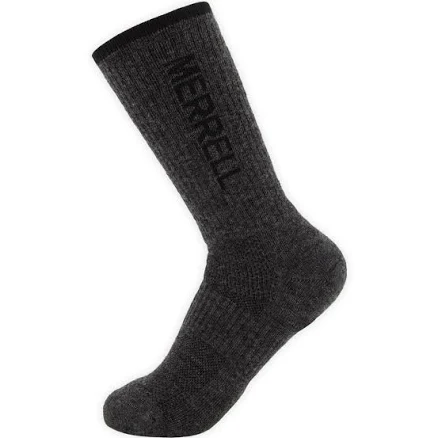
Merrell · Waterproof Hiking Socks
Merrell Premium Wool Trail Crew Socks
Lower PFAS risk, wool socks without disclosed treatments carry minimal concern.
Premium wool naturally sheds water and resists odor without chemical help. Merrell makes no PFAS claims and discloses no water-repellent coating or stain treatment, suggesting minimal chemical processing.
Still want this one anyway? Check the price on Amazon. We’d swap it.
Material
Merino/premium wool blend, no water-resistant coating mentioned
Brand disclosure
Brand is silent on PFAS
Lab data
No public lab test
You may also be interested in
Top-graded picks in the categories readers replace first, every one scored on the same rubric.

- polypropylene filter housing, carbon/sediment cartridge
- We found no PFAS statement from the brand
- Bacterial growth in spent cartridges
3 hazards checked on this product, all on its full breakdown.

Aquasure
Premier Series 75 GPD Under Sink Reverse Osmosis Water Filtration System
- RO membrane, carbon filters, stainless steel housing
- We found no PFAS statement from the brand
- Bacterial and microbial growth in housing and filters
4 hazards checked on this product, all on its full breakdown.

Avocado
Vegan Mattress
- organic cotton, natural latex, coconut coir, recycled steel coils
- The brand calls it PFAS-free, which we have not verified
- Heavy metals
2 hazards checked on this product, all on its full breakdown.
What Merrell Premium Wool Trail Crew Socks is made of, ingredients and materials
Merrell Premium Wool Trail Crew Socks are a Merino wool blend, which is a natural protein fiber with minimal chemical processing compared to synthetic socks. Merino wool naturally resists moisture and odor without requiring water-repellent chemical coatings like Teflon-type coating or PFAS-based finishes. The blend likely includes synthetic reinforcement (typically nylon or polyester) in high-wear zones (heel, toe) to improve durability; these synthetics carry minimal hazard in sock form since they are not heated or degraded during normal use.
What’s concerning
Category baseline
The starting point for this type of product, before anything specific to this product is counted.
No PFAS disclosure
No public statement from the brand about PFAS in this product.
Azo dyes (synthetic reinforcement and color)
Nylon or polyester heel/toe patches and any dyes may include azo compounds if not sourced from restricted suppliers. No testing data exists for this specific product; however, azo dyes in socks pose negligible risk since they are not in direct contact with sensitive skin and do not migrate significantly during normal wear or washing.
Microplastics
The nylon or polyester reinforcement zones may shed microfibers during washing and wear. Washing socks in machine cycles generates more shedding than hand-wash; Merrell does not specify fiber-shedding rates or microplastic mitigation strategies for this product line.
Source, EPA ↗Wool allergies and skin irritation
Merino wool is hypoallergenic compared to coarser wool, but individuals with wool sensitivity or lanolin allergy may still experience itching or dermatitis. This is a biological/contact hazard rather than a chemical one; Merrell does not label this product as suitable for sensitive skin.
What’s reassuring
Base material not linked to PFAS
The main material recorded for this product is not one associated with PFAS.
Formaldehyde / VOCs
Merino wool may be treated with formaldehyde-based wrinkle or shrink-resistance resins during manufacture. Merrell has not disclosed such treatments for this product; wool socks are not typically subjected to harsh formaldehyde curing unlike some performance apparel, so residual exposure is minimal if present at all.
Source, ATSDR ↗Antimony in polyester (if present)
Polyester in heel patches may contain antimony (Sb) as a catalyst, though used polyester typically contains very low residual levels. Direct contact exposure through socks is negligible; no documented antimony contamination incidents have been reported for Merrell socks.
How is this PFAS grade calculated?
The brand's record and disclosure
Merrell (owned by Wolverine Worldwide) does not publicly disclose detailed chemical treatment information for individual sock products, nor does it publish formal PFAS phase-out commitments specific to apparel. The brand has faced broader scrutiny around waterproof footwear coatings but has not issued recalls or documented safety incidents tied to socks specifically. No independent certifications (such as Bluesign or OEKO-TEX) have been identified for this product line, limiting third-party verification of chemical inputs.
How it compares in its category
Untreated Merino wool socks sit at the lower-risk end of the hiking sock spectrum; synthetic or cotton alternatives often receive durable-water-repellent (water-repellent coating) finishes that may contain PFAS or other fluorochemicals. Merino's natural moisture-wicking reduces the need for chemical enhancement, making it chemically simpler than performance synthetics marketed as waterproof. The trade-off is reduced water resistance and shorter lifespan than heavily treated competitors, though Merino still performs adequately for most hiking conditions.
If you buy it
Wash in cool water and avoid fabric softeners or bleach, which can degrade wool structure and potentially liberate trace finishing agents. Do not machine-dry or expose to direct heat; air-dry flat to preserve elasticity and prevent accelerated wear in synthetic reinforcement zones. Replace when heel or toe areas show thinning or holes, typically after 12-24 months of regular use depending on washing frequency. Store in a dry, cool place away from direct sunlight to prevent wool yellowing and mildew growth.
What is not known about PFAS in this product?
- Basis
- Model estimate, 78% confidence, not a lab result
- Lab test
- None on record for this exact product
- Brand statement
- Merrell has made none
Formulations change between production runs, so check the current label. How we grade.
More waterproof hiking socks grades
How we score, every product runs through the same public 0-100 rubric based on materials, coatings, brand disclosure, lab findings, and recalls. See the full methodology → Spotted a mistake? Report an error.