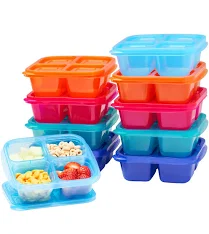
Easylunchboxes Bento Snack Boxes Reusable 4-Compartment Food Containers and
Lower concern. PP containers with silicone lids unlikely to contain PFAS.
EasyLunchboxes bento boxes are polypropylene plastic with silicone components. Brand makes no PFAS claims. Neither material typically requires PFAS for function.
We flunk more products than we pass. This one earned its grade. How we grade
Material
Polypropylene (PP) plastic containers and silicone lids
Brand disclosure
Brand is silent on PFAS
Lab data
No public lab test
What Easylunchboxes Bento Snack Boxes Reusable is made of, ingredients and materials
EasyLunchboxes bento containers are polypropylene (PP, #5 plastic), a thermoplastic polymer chosen for its rigidity, impact resistance, and temperature tolerance. Silicone lids provide a gasket seal rather than a coating that could degrade. PP does not naturally contain BPA or BPS, and the resin itself is not a known leaching concern at typical food-storage temperatures. The compartmented design means food separation without shared surface area, reducing cross-contamination risk.
What’s concerning
Category baseline
The starting point for this type of product, before anything specific to this product is counted.
No PFAS disclosure
No public statement from the brand about PFAS in this product.
Microplastics
Repeated dishwashing, thermal stress, or scratching can cause PP to shed microscopic particles, particularly if lids weaken. Risk is lower than single-use plastics but increases over years of use; replacement of cracked or cloudy lids mitigates this.
Source, EPA ↗Silicone lid degradation and seal loss
Silicone lids can harden, tear, or lose elasticity over 1-2 years of regular use, particularly if stored in sunlight or high heat. Loss of seal compromises leak prevention and increases food exposure to air and contaminants, though the silicone itself does not typically leach into food.
What’s reassuring
Base material not linked to PFAS
The main material recorded for this product is not one associated with PFAS.
BPA & bisphenols
Polypropylene does not require BPA or BPS as processing aids or plasticizers. No evidence links PP containers from reputable manufacturers to BPA or BPS migration.
Source, FDA ↗Phthalates
PP is not formulated with phthalate plasticizers; silicone does not require phthalates. No recalls or testing failures on record for EasyLunchboxes.
Source, ATSDR ↗Migration from dyes or UV stabilizers in PP resin
EasyLunchboxes containers are typically opaque or translucent, indicating the presence of pigments or additives, but no published recalls or testing failures point to leaching. FDA regulations limit allowed additives in food-contact PP resins.
The full breakdown
The brand's record and disclosure
EasyLunchboxes does not publish detailed material sourcing, manufacturing, or third-party safety certifications on their website. The brand has not issued public statements on BPA or phthalate avoidance. No recalls or safety warnings have been issued by FDA or CPSC for this product line as of available records. The brand's silence on chemical disclosure is typical for reusable food-container manufacturers but limits independent verification.
How it compares in its category
Polypropylene bento boxes occupy the middle tier of reusable lunch-container safety profiles. They are less prone to leaching than mixed-plastic lunchboxes with vinyl gaskets or recycled plastic bases, and more chemically inert than polycarbonate (#7) alternatives. Glass bento boxes eliminate leaching risk entirely but sacrifice durability and weight. Stainless-steel compartmented boxes avoid plastic altogether but cost more and are heavier.
If you buy it
Hand-wash or use the top rack of the dishwasher; microwave use is low concern for PP but avoid prolonged exposure to oils or acidic foods, which can increase polymer stress over time. Inspect lids regularly for cracks, cloudiness, or loss of seal integrity, and replace them if visible wear appears. Store lids separately in cool, dry conditions to extend silicone lifespan. Do not use for hot liquids above 50 degrees Celsius, as PP softens near 70 degrees Celsius.
What we don’t know
- Basis
- Model estimate, 72% confidence, not a lab result
- Lab test
- None on record for this exact product
- Brand statement
- EasyLunchboxes has made none
Formulations change between production runs, so check the current label. How we grade.
Better-graded alternatives in Lunch Boxes
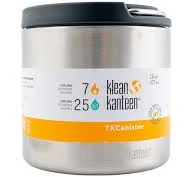
Klean Kanteen
Double Wall Vacuum Insulated Stainless Steel Food Canister Container with Leak Proof Lid
- Stainless steel body, silicone gasket lid seal
- The brand calls it PFAS-free, which we have not verified
- Silicone gasket degradation
3 hazards checked on this product. See all of them.
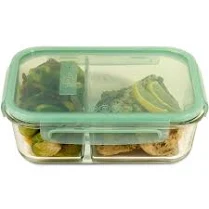
Snapware
Meal Box Glass
- borosilicate glass
- We found no PFAS statement from the brand
- Leaching from glass matrix or lid seals
2 hazards checked on this product. See all of them.
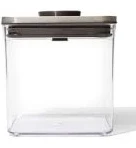
OXO
Steel Pop Big Square Short - 2.8 Qt/2.6 l
- Stainless steel container, no surface treatment
- Lid/gasket polymer leaching
3 hazards checked on this product. See all of them.
More lunch boxes grades
How we score, every product runs through the same public 0-100 rubric based on materials, coatings, brand disclosure, lab findings, and recalls. See the full methodology → Spotted a mistake? Report an error.