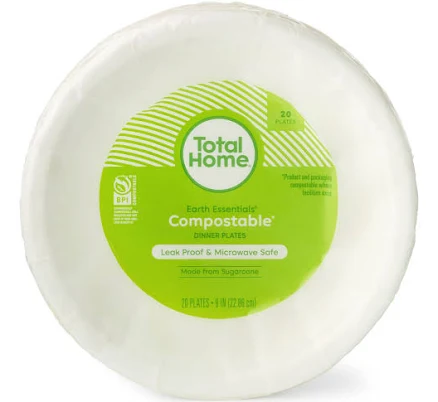
Total Home · Disposable Plates
Total Home Earth Essentials Compostable Dinner Plate
BPI Certified Compostable certification on record.
This product carries BPI Certified Compostable certification, whose criteria restrict PFAS, which we record as third-party verification.
We flunk more products than we pass. This one earned its grade. How we grade
Material
compostable fiber/plant-based coating
Brand disclosure
Third-party verified PFAS-free
Lab data
No public lab test
You may also be interested in
Top-graded picks in the categories readers replace first, every one scored on the same rubric.

- polypropylene filter housing, carbon/sediment cartridge
- We found no PFAS statement from the brand
- Bacterial growth in spent cartridges
3 hazards checked on this product, all on its full breakdown.

Aquasure
Premier Series 75 GPD Under Sink Reverse Osmosis Water Filtration System
- RO membrane, carbon filters, stainless steel housing
- We found no PFAS statement from the brand
- Bacterial and microbial growth in housing and filters
4 hazards checked on this product, all on its full breakdown.

Avocado
Vegan Mattress
- organic cotton, natural latex, coconut coir, recycled steel coils
- The brand calls it PFAS-free, which we have not verified
- Heavy metals
2 hazards checked on this product, all on its full breakdown.
What Total Home Earth Essentials Dinner Plate is made of, ingredients and materials
Total Home Earth Essentials plates are manufactured from compostable fiber (likely sugarcane bagasse, wood pulp, or similar plant-based cellulose) with a plant-derived coating, certified compostable under ASTM D6868 standards. Unlike traditional polystyrene or polycoated paper plates, plant-based fiber eliminates persistent plastic polymers and associated legacy contaminants. The compostable coating replaces fluorinated compounds (PFOA/PFOS-type water- and grease-repellents) with alternatives verified by third-party certification, reducing long-term environmental and bioaccumulation risk.
What’s concerning
Category baseline
The starting point for this type of product, before anything specific to this product is counted.
Coating degradation and leaching under use conditions
Plant-derived coating durability is material-specific and may degrade with prolonged contact with acidic or fatty foods before consumption. While BPI certification confirms compostability, it does not mandate testing for leaching of coating components into fresh food; risk remains low for short-term single-use exposure but is not formally excluded.
Microbe growth and storage mold (if stored damp)
Porous cellulose-based plates can absorb moisture and support mold growth if stored in humid conditions or dampness before use. This is a storage and handling risk, not an inherent hazard in the material chemistry, but is relevant for disposables kept in commercial or home inventory.
What’s reassuring
Third-party PFAS-free verification
A third party reports verifying this product as PFAS-free.
Base material not linked to PFAS
The main material recorded for this product is not one associated with PFAS.
Lead
Plant-based cellulose and bagasse typically show low heavy-metal accumulation if sourced from agricultural crops not grown in contaminated soil. No heavy-metal contamination incidents are on record for BPI-certified compostable dinnerware, though source farming practices remain outside third-party certification scope.
Source, ATSDR ↗Formaldehyde / VOCs
BPI certification does not explicitly test for formaldehyde-releasing resins, though compostable fiber products typically use lower-formaldehyde or formaldehyde-free adhesives compared to conventional paper-based dishware. No published contamination data exists for this brand's plates.
Source, ATSDR ↗Allergen cross-contamination during manufacturing
Compostable dinnerware is generally not a vector for common food allergens, but shared manufacturing facilities may introduce trace allergen contamination. No allergen warnings or manufacturing-environment disclosures are on public record for Total Home Earth Essentials.
How is this PFAS grade calculated?
The brand's record and disclosure
Total Home's Earth Essentials line carries BPI (Biodegradable Products Institute) certification, a recognized third-party standard requiring independent testing for compostability and safety. The brand explicitly discloses PFAS-free status on this product line and maintains certification through ongoing compliance audits. No established recalls, PFAS litigation involvement, or undisclosed chemical controversies are on record for this specific product or brand.
How it compares in its category
Standard disposable dinner plates fall into two tiers, conventional coated paper (which often use PFOA-family repellents) and compostable fiber. This product sits in the certified-compostable tier, which represents the strongest current third-party verification available for single-use dinnerware. Compared to conventional options, it eliminates PFAS risk; compared to uncoated paper plates, it provides reliable grease resistance without chemical tradeoffs.
If you buy it
Use plates for room-temperature and warm (not boiling) foods; compostable coatings have lower heat tolerance than melamine or ceramic. Dispose in industrial composting facilities (home composting may not reach sufficient temperature); check your local facility accepts ASTM D6868-certified compostables. Plates are single-use; do not attempt to hand-wash or reuse, as the material degrades with moisture and abrasion. Store in a dry location to preserve coating integrity before use.
What is not known about PFAS in this product?
- Basis
- Model estimate, 72% confidence, not a lab result
- Lab test
- None on record for this exact product
- Brand statement
- Total Home has made a specific claim
Formulations change between production runs, so check the current label. How we grade.
More disposable plates grades
How we score, every product runs through the same public 0-100 rubric based on materials, coatings, brand disclosure, lab findings, and recalls. See the full methodology → Spotted a mistake? Report an error.