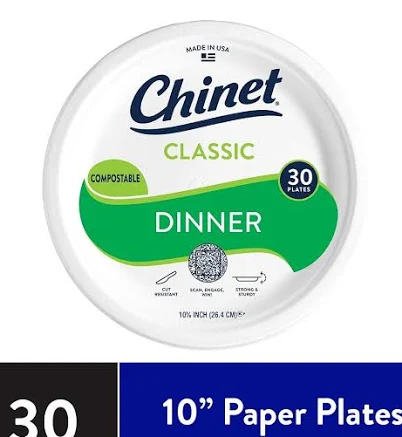
Chinet Classic Premium Dinner Paper Plates
Avoid or call Chinet directly; the grease-resistant treatment may hide PFAS.
Coated paper plates designed to repel water and grease, but Chinet doesn't disclose the coating formula. Premium plates commonly use fluorinated compounds for liquid repellency.
The better-graded swap
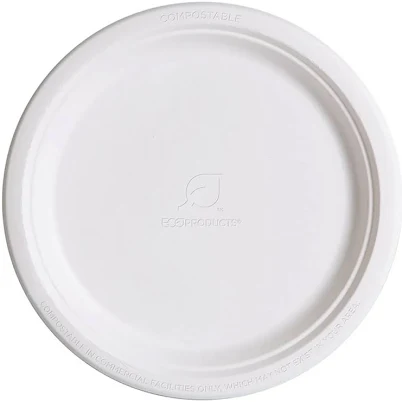
Eco-Products
Eco Products Sugarcane Plates
100/100 safety
Same rubric that flunked this product. The swap earned Excellent.
Still want this one anyway? Check the price on Amazon. We’d swap it.
Material
Coated paper with grease-resistant treatment (composition unspecified)
Brand disclosure
Brand is silent on PFAS
Lab data
No public lab test
You may also be interested in
Top-graded picks in the categories readers replace first, every one scored on the same rubric.

- polypropylene filter housing, carbon/sediment cartridge
- We found no PFAS statement from the brand
- Bacterial growth in spent cartridges
3 hazards checked on this product, all on its full breakdown.

Aquasure
Premier Series 75 GPD Under Sink Reverse Osmosis Water Filtration System
- RO membrane, carbon filters, stainless steel housing
- We found no PFAS statement from the brand
- Bacterial and microbial growth in housing and filters
4 hazards checked on this product, all on its full breakdown.

Avocado
Vegan Mattress
- organic cotton, natural latex, coconut coir, recycled steel coils
- The brand calls it PFAS-free, which we have not verified
- Heavy metals
2 hazards checked on this product, all on its full breakdown.
What Chinet Classic Premium Dinner Paper Plates is made of, ingredients and materials
Chinet Classic Premium plates are bleached paper coated with a proprietary grease-resistant finish. The coating's chemical composition is not disclosed by the manufacturer, which is the core safety issue, grease resistance in single-use food service ware is traditionally achieved with fluorinated compounds (PFAS), though non-fluorinated alternatives exist. Paper itself is inert; the risk lies entirely in the coating's migration into food, especially fatty or hot items.
What’s concerning
Category baseline
The starting point for this type of product, before anything specific to this product is counted.
No PFAS disclosure
No public statement from the brand about PFAS in this product.
Waterproof / stain-resistant treatment
Water-repellent coating treatments have historically used PFAS.
Coating migration (unspecified composition)
The grease-resistant coating is proprietary and undisclosed. If fluorinated (PFAS), migration into fatty foods is well documented; if non-fluorinated, risk is lower but unconfirmed by the brand.
Microplastic or fiber shedding
Coated paper plates can shed microscopic fibers or coating particles when wet or handled roughly, particularly as the coating degrades. Risk is minimal for short-term use but increases if plates are reused or stored improperly.
Thermal stability of coating
Coated paper plates are designed for single-use at ambient to warm temperatures. Heating can cause coating degradation or migration. Manufacturer explicitly warns against microwave use, signaling thermal limits.
What’s reassuring
Bleached paper residues
Food-grade bleached paper plates are regulated for chlorine residue levels; Chinet plates meet FDA standards for this, and no contamination has been reported.
Chemical off-gassing from coating
No reports of volatile organic compound (VOC) release from Chinet plates at room temperature. Heat exposure (microwave, oven) is not recommended by the manufacturer, partly to avoid potential coating breakdown.
How is this PFAS grade calculated?
The brand's record and disclosure
Huhtamaki (Chinet's parent company) has made limited public commitments on PFAS elimination in disposable foodware. The company does not publish ingredient lists or certifications (like PFAS-free claims) for this product line. No major recalls or safety controversies specific to Chinet plates are on record, but the silence on coating chemistry reflects an industry-wide reluctance to disclose PFAS use in grease-resistant products.
How it compares in its category
Most coated paper plates (Dixie, AmazonBasics, store brands) use similar opaque grease treatments and rarely disclose PFAS status. Chinet's 'Premium' positioning does not correlate with transparency or lower PFAS concern chemistry. Alternatives with no hazard of this kind on record (uncoated molded fiber or ceramic) are available but less convenient. Among conventional coated paper plates, Chinet's hazard profile is typical, not exceptional.
If you buy it
Use for room-temperature or warm (not hot) foods; limit contact with fatty or acidic foods if possible, as these increase coating migration. Do not microwave or use in ovens. Replace plates after each use rather than stacking leftovers. If PFAS exposure is a priority, contact Chinet directly to request coating composition, or switch to uncoated fiber or washable ceramic to eliminate the unknown.
What is not known about PFAS in this product?
- Basis
- Model estimate, 45% confidence, not a lab result
- Lab test
- None on record for this exact product
- Brand statement
- Chinet has made none
Formulations change between production runs, so check the current label. How we grade.
What are the PFAS-free alternatives to Chinet Classic Premium Dinner Paper Plates?
- molded sugarcane fiber (bagasse), uncoated
- A third party reports verifying it as PFAS-free
- Microplastic or fiber fragmentation during heating
2 hazards checked on this product, all on its full breakdown.
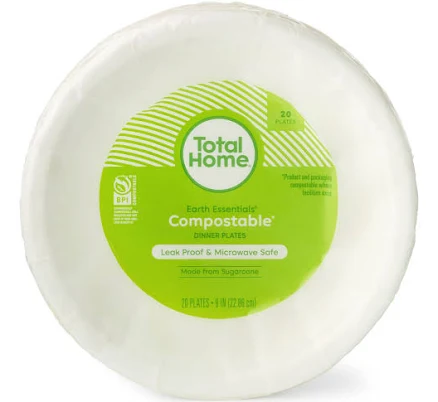
Total Home
Earth Essentials Compostable Dinner Plate
- compostable fiber/plant-based coating
- A third party reports verifying it as PFAS-free
- Coating degradation and leaching under use conditions
2 hazards checked on this product, all on its full breakdown.
- Bamboo fiber composite
- We found no PFAS statement from the brand
- Formaldehyde / VOCs
3 hazards checked on this product, all on its full breakdown.
More disposable plates grades
How we score, every product runs through the same public 0-100 rubric based on materials, coatings, brand disclosure, lab findings, and recalls. See the full methodology → Spotted a mistake? Report an error.