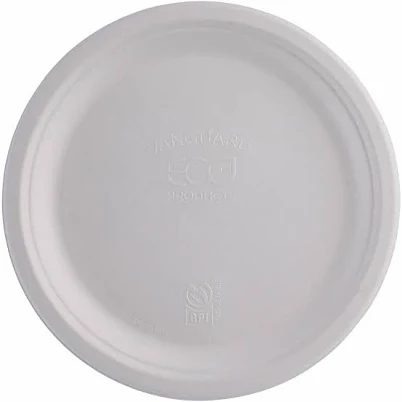
Eco-Products · Disposable Plates
Eco Products Vanguard Renewable and Compostable Sugarcane Plates
Lower PFAS risk; plant fiber plates seldom use fluorinated coatings, though brand silence limits confidence.
Sugarcane bagasse fiber without fluorinated water or grease barriers. Plant-based pulp rarely needs PFAS-based finishes compared to bleached paper or coated polymers.
We flunk more products than we pass. This one earned its grade. How we grade
Material
Sugarcane bagasse fiber (compostable plant-based pulp)
Brand disclosure
Brand is silent on PFAS
Lab data
No public lab test
You may also be interested in
Top-graded picks in the categories readers replace first, every one scored on the same rubric.

- polypropylene filter housing, carbon/sediment cartridge
- We found no PFAS statement from the brand
- Bacterial growth in spent cartridges
3 hazards checked on this product, all on its full breakdown.

Aquasure
Premier Series 75 GPD Under Sink Reverse Osmosis Water Filtration System
- RO membrane, carbon filters, stainless steel housing
- We found no PFAS statement from the brand
- Bacterial and microbial growth in housing and filters
4 hazards checked on this product, all on its full breakdown.

Avocado
Vegan Mattress
- organic cotton, natural latex, coconut coir, recycled steel coils
- The brand calls it PFAS-free, which we have not verified
- Heavy metals
2 hazards checked on this product, all on its full breakdown.
What Eco Products Vanguard Sugarcane Plates is made of, ingredients and materials
Eco-Products Vanguard plates are molded from sugarcane bagasse fiber, a cellulose-rich agricultural residue left after juice extraction. This pulp-based material requires minimal chemical processing compared to conventional disposables and does not inherently require fluorinated water-repellent coatings (a major PFAS source in paper foodware). The plates are compostable under commercial conditions (typically 180 days in certified facilities), meaning they break down into organic matter rather than persisting as microplastics.
What’s concerning
Category baseline
The starting point for this type of product, before anything specific to this product is counted.
No PFAS disclosure
No public statement from the brand about PFAS in this product.
Microfiber shedding
Bagasse fiber plates can shed small cellulose fragments during use, especially if the molding process or aging weakens structural integrity. Risk is low for occasional use but increases with heavy handling or repeated washing.
Mold and bacterial growth if stored improperly
High-cellulose, porous bagasse absorbs moisture readily. Mold or microbial colonization can occur if plates are stored in humid conditions before use or if residual moisture remains after washing.
Heat-induced breakdown and volatiles
While bagasse is less prone to melting than plastic, prolonged high-temperature exposure (microwave >2-3 min, oven >180°C) can degrade the fiber structure and release volatile organics. Short, moderate use presents lower concern; extreme heating is not recommended.
What’s reassuring
Base material not linked to PFAS
The main material recorded for this product is not one associated with PFAS.
Adhesive or ink residues from printing
No established safety incidents reported for Eco-Products plates, but some manufacturers use soy-based or petroleum-derived inks and adhesives for branding. Eco-Products does not widely disclose ink formulations; assume food-contact-compliant inks unless otherwise stated.
Pesticide residue
Bagasse is a byproduct of industrial sugarcane processing. Pesticide or fungicide residues in the raw fiber are theoretically possible but no recalls or test failures are on record for Eco-Products plates. Washing and fiber processing are assumed to minimize contact.
Source, EPA ↗How is this PFAS grade calculated?
The brand's record and disclosure
Eco-Products holds third-party compostability certifications (BPI certified) and markets a sustainability-first brand identity, but public disclosure of specific chemical testing or PFAS testing protocols is limited or absent from readily available sources. The company has not faced major recall notices or published safety violations in the conventional sense, though like many compostable-product makers, they have not volunteered independent PFAS testing reports. Transparency on post-manufacturing coatings or additives in the Vanguard line is vague.
How it compares in its category
Sugarcane-bagasse plates have lower concern than conventional polystyrene foam or polyethylene-lined paper plates, which often contain legacy PFAS coatings or degradation-prone polymer liners. They compare favorably to ceramic or melamine plates in terms of chemical leaching risk, since bagasse requires no heavy-metal glazes or formaldehyde resins. However, they are less durable than reusable ceramics and may shed microfibers during use if the molding process left weak structural points.
If you buy it
Use plates for room-temperature or moderately warm foods; avoid prolonged microwave heating (>2 minutes) or direct contact with boiling liquids, as high heat can weaken the fiber matrix and release fines. Replace plates if visible cracks, softening, or discoloration occurs, as these indicate fiber degradation. Dispose in commercial compost facilities if available; home composting may be too cool to fully break them down. Store in a dry environment to prevent mold colonization before use.
What is not known about PFAS in this product?
- Basis
- Model estimate, 82% confidence, not a lab result
- Lab test
- None on record for this exact product
- Brand statement
- Eco-Products has made none
Formulations change between production runs, so check the current label. How we grade.
What are the PFAS-free alternatives to Eco Products Vanguard Renewable and Compostable Sugarcane Plates?
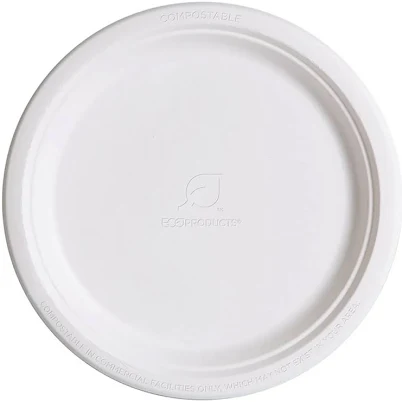
- molded sugarcane fiber (bagasse), uncoated
- A third party reports verifying it as PFAS-free
- Microplastic or fiber fragmentation during heating
2 hazards checked on this product, all on its full breakdown.
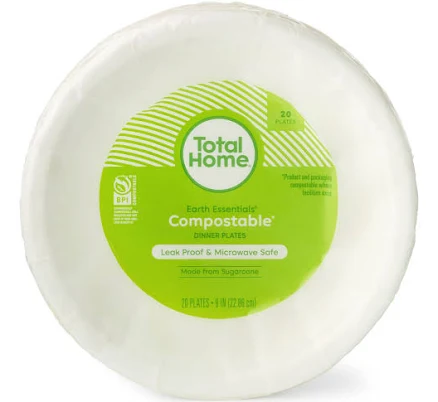
Total Home
Earth Essentials Compostable Dinner Plate
- compostable fiber/plant-based coating
- A third party reports verifying it as PFAS-free
- Coating degradation and leaching under use conditions
2 hazards checked on this product, all on its full breakdown.
- Bamboo fiber composite
- We found no PFAS statement from the brand
- Formaldehyde / VOCs
3 hazards checked on this product, all on its full breakdown.
More disposable plates grades
How we score, every product runs through the same public 0-100 rubric based on materials, coatings, brand disclosure, lab findings, and recalls. See the full methodology → Spotted a mistake? Report an error.