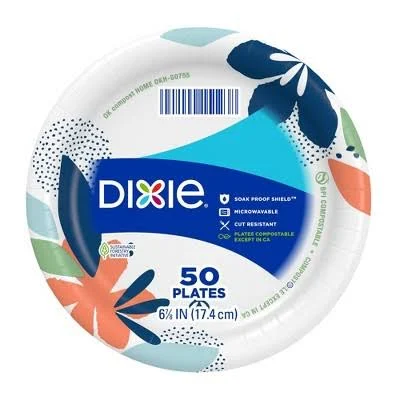
Dixie Everyday Heavy Duty Disposable Plates
Avoid or contact Dixie directly; grease-resistant coatings frequently use PFAS without disclosure.
Paperboard plates treated to shed water and grease, as disposable serviceware typically is. Dixie doesn't reveal the coating formula, and these products historically relied on PFAS.
The better-graded swap
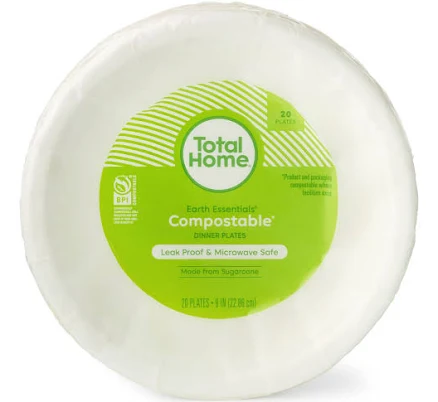
Total Home
Total Home Earth Essentials Compostable Dinner Plate
100/100 safety
Same rubric that flunked this product. The swap earned Excellent.
Still want this one anyway? Check the price on Amazon. We’d swap it.
Material
Paperboard with grease-resistant coating (composition undisclosed)
Brand disclosure
Brand is silent on PFAS
Lab data
No public lab test
You may also be interested in
Top-graded picks in the categories readers replace first, every one scored on the same rubric.

- polypropylene filter housing, carbon/sediment cartridge
- We found no PFAS statement from the brand
- Bacterial growth in spent cartridges
3 hazards checked on this product, all on its full breakdown.

Aquasure
Premier Series 75 GPD Under Sink Reverse Osmosis Water Filtration System
- RO membrane, carbon filters, stainless steel housing
- We found no PFAS statement from the brand
- Bacterial and microbial growth in housing and filters
4 hazards checked on this product, all on its full breakdown.

Avocado
Vegan Mattress
- organic cotton, natural latex, coconut coir, recycled steel coils
- The brand calls it PFAS-free, which we have not verified
- Heavy metals
2 hazards checked on this product, all on its full breakdown.
What Dixie Everyday Heavy Duty Plates is made of, ingredients and materials
Dixie Everyday plates are paperboard (recycled or virgin wood fiber) coated with an undisclosed grease-resistant finish. This coating is the critical unknown, grease-resistant coatings on foodservice disposables historically rely on PFAS (PFAS "forever chemicals") or newer fluorine-free alternatives, but Dixie does not publicly specify which. The paperboard substrate itself has no hazard of this kind on record when uncoated, but the proprietary coating's composition and migration potential cannot be verified from available information.
What’s concerning
Category baseline
The starting point for this type of product, before anything specific to this product is counted.
No PFAS disclosure
No public statement from the brand about PFAS in this product.
Waterproof / stain-resistant treatment
Water-repellent coating treatments have historically used PFAS.
PFAS
Grease-resistant coatings on paperboard typically use PFAS (PFOA, PFOS, or newer variants). Dixie's refusal to disclose coating chemistry suggests possible PFAS use. Migration into fatty or hot foods is documented in peer-reviewed studies of similar products.
Source, ATSDR ↗PFAS
If Dixie has switched to PFAS alternatives (e.g., GenX, PFPrA), limited toxicity data exists for long-term dietary exposure. These are marketed as lower concern but are less studied than legacy PFAS.
Source, ATSDR ↗Coating adhesion and particle shedding
Repeated handling, folding, or abrasion can cause coating delamination. Microparticles of coating material may be ingested, though toxicity of swallowed coating flakes is not well-documented for this specific product.
What’s reassuring
Ink or dyes on printed surface
Dixie plates carry printed logos and text. Food-contact inks are regulated, and no specific contamination or heavy metal issues are on record for this brand's printing. Standard compliance is assumed but not verified by independent testing.
Leaching of paperboard additives (bleach, sizing agents)
Paperboard may contain chlorine-based bleach and size resins. Migration into aqueous foods is minimal at room temperature but not formally tested for Dixie's specific formulation. No recalls or complaints are documented.
How is this PFAS grade calculated?
The brand's record and disclosure
Dixie (owned by Georgia-Pacific) has not published ingredient lists, safety certifications, or PFAS-free claims for this product line. No independent third-party certifications (e.g., Cradle to Cradle, Green Guard) are listed on packaging or product pages reviewed. The company's silence on fluorochemical content is consistent with industry practice where many manufacturers avoid disclosure, raising reasonable concern that PFAS-based coatings may be in use. No recalls specific to chemical migration have been documented for this product.
How it compares in its category
Most disposable plates (Chinet, AmazonBasics, store brands) use similar paperboard-plus-coating formulations without transparent disclosure. Some competitors (notably smaller brands and eco-focused lines) explicitly state PFAS-free or fluorine-free coatings. Dixie's market positioning as a value brand often correlates with older formulation cost-cutting. This product is typical of the mainstream category's opacity on coatings but offers no differentiation in safety transparency.
If you buy it
Limit use for hot or oily foods (pizza, fried items, hot sauces) where coating migration risk increases. Reserve for room-temperature or cold foods when alternatives are available. Do not microwave or place in conventional ovens, as heat accelerates leaching of coating chemicals. Replace plates if coating visibly degrades, peels, or stains heavily. Store in a cool, dry place away from oils and solvents to minimize contact time.
What is not known about PFAS in this product?
- Basis
- Model estimate, 45% confidence, not a lab result
- Lab test
- None on record for this exact product
- Brand statement
- Dixie has made none
Formulations change between production runs, so check the current label. How we grade.
What are the PFAS-free alternatives to Dixie Everyday Heavy Duty Disposable Plates?
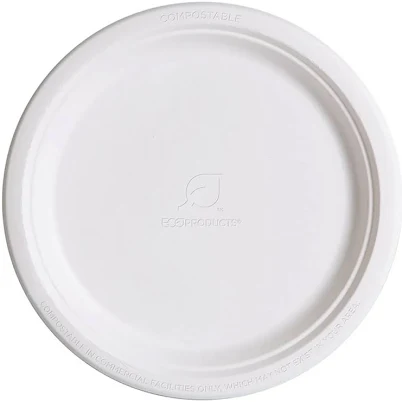
- molded sugarcane fiber (bagasse), uncoated
- A third party reports verifying it as PFAS-free
- Microplastic or fiber fragmentation during heating
2 hazards checked on this product, all on its full breakdown.
Total Home
Earth Essentials Compostable Dinner Plate
- compostable fiber/plant-based coating
- A third party reports verifying it as PFAS-free
- Coating degradation and leaching under use conditions
2 hazards checked on this product, all on its full breakdown.
- Bamboo fiber composite
- We found no PFAS statement from the brand
- Formaldehyde / VOCs
3 hazards checked on this product, all on its full breakdown.
More disposable plates grades
How we score, every product runs through the same public 0-100 rubric based on materials, coatings, brand disclosure, lab findings, and recalls. See the full methodology → Spotted a mistake? Report an error.