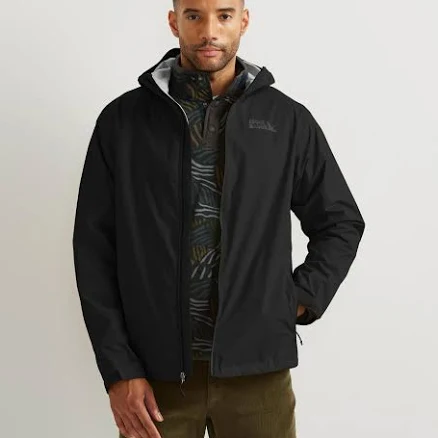
Eddie Bauer Men's RipPac Pro Rain Jacket
water-repellent coating rain jackets typically use PFAS; Eddie Bauer silent on coating chemistry.
Rain jackets require water-repellent coatings, traditionally PFAS-based. Eddie Bauer provides no public disclosure of water-repellent coating treatment type or PFAS status for this model.
Still want this one anyway? Check the price on Amazon. We’d swap it.
Material
Nylon with water-repellent coating water-repellent finish
Lab data
No public lab test
You may also be interested in
Top-graded picks in the categories readers replace first, every one scored on the same rubric.

- polypropylene filter housing, carbon/sediment cartridge
- We found no PFAS statement from the brand
- Bacterial growth in spent cartridges
3 hazards checked on this product, all on its full breakdown.

Aquasure
Premier Series 75 GPD Under Sink Reverse Osmosis Water Filtration System
- RO membrane, carbon filters, stainless steel housing
- We found no PFAS statement from the brand
- Bacterial and microbial growth in housing and filters
4 hazards checked on this product, all on its full breakdown.

Avocado
Vegan Mattress
- organic cotton, natural latex, coconut coir, recycled steel coils
- The brand calls it PFAS-free, which we have not verified
- Heavy metals
2 hazards checked on this product, all on its full breakdown.
What Eddie Bauer Men's RipPac Pro Rain Jacket is made of, ingredients and materials
The RipPac Pro is nylon with a water-repellent coating (water-repellent coating) finish applied to the surface. water-repellent coating coatings shed water without forming a complete waterproof barrier; this one is likely a fluorochemical treatment (PFAS-based) or possibly a newer silicone alternative, but Eddie Bauer has not disclosed which. Nylon itself is stable and does not leach; the risk centers on what the water-repellent coating sheds during use and care.
What’s concerning
Waterproof / stain-resistant treatment
Water-repellent coating treatments have historically used PFAS.
Category baseline
The starting point for this type of product, before anything specific to this product is counted.
No PFAS disclosure
No public statement from the brand about PFAS in this product.
water-repellent coating degradation and re-treatment chemical exposure
The fluorochemical water-repellent coating will wear off with washing and sun exposure over 1-3 years. Reapplication products (sprays or wash-in treatments) often contain the same PFAS or alternative fluorochemicals; repeated re-treatment increases cumulative exposure unless you switch to non-fluorinated reproofers.
Microfiber shedding from synthetic fabric
Nylon jackets release microfibers during washing and wear; this is a general environmental concern rather than a direct wearer safety hazard, but contributes to microplastic load in water systems. No product-specific mitigation is marketed.
What’s reassuring
Formaldehyde / VOCs
No formaldehyde release issues are established for Eddie Bauer nylon jackets. Nylon dyeing and finishing may involve formaldehyde in some supply chains, but this product carries no known warnings or certification indicating elevated risk.
Source, ATSDR ↗Azo dyes and colorant toxicity
No documented azo-dye or heavy-metal contamination in Eddie Bauer apparel. The brand sources from established suppliers; however, no third-party testing or Oeko-Tex certification is listed to confirm dye safety.
Flame retardants
This jacket is nylon, not polyester, and is not marketed as flame-resistant. No flame retardant additives are likely or required for a rain jacket; risk is minimal.
Source, EPA ↗How is this PFAS grade calculated?
The brand's record and disclosure
Eddie Bauer has not publicly committed to PFAS-free apparel or disclosed water-repellent coating chemistry for this model. The brand does not list environmental or chemical certifications (e.g., Bluesign, OEKO-TEX) prominently for outdoor jackets. No recalls or contamination incidents specific to this product are on record. This silence is typical of mainstream outdoor brands but leaves buyers without verification of coating type.
How it compares in its category
Most mainstream nylon rain jackets at this price point use PFAS-based water-repellent coating or fluorocarbon chemistry. Competitors like Patagonia increasingly offer Bluesign-certified nylon with PFC-free (Teflon-type coating-free or wax-based) repellents, though at higher cost. Eddie Bauer's lack of transparency puts it in the middle of the market; it is neither a budget outlier nor a premium eco-focused choice. If PFAS avoidance matters, brands explicitly marketing silicone or wax-based water-repellent coating represent lower concern options.
If you buy it
Wash in cool water and mild detergent; avoid fabric softeners and heat drying, which can strip or degrade the water-repellent coating. Do not tumble dry; hang to air-dry. Reapply water-repellent coating or reproof the jacket every 1-2 years depending on use frequency, or when water no longer beads on the surface. If you launder frequently or have PFAS sensitivity, consider whether you will tolerate the repeated coating contact and lack of brand assurance.
What is not known about PFAS in this product?
- Basis
- Model estimate, 45% confidence, not a lab result
- Lab test
- None on record for this exact product
- Brand statement
- Eddie Bauer has made a specific claim
Formulations change between production runs, so check the current label. How we grade.
More rain jackets grades
How we score, every product runs through the same public 0-100 rubric based on materials, coatings, brand disclosure, lab findings, and recalls. See the full methodology → Spotted a mistake? Report an error.