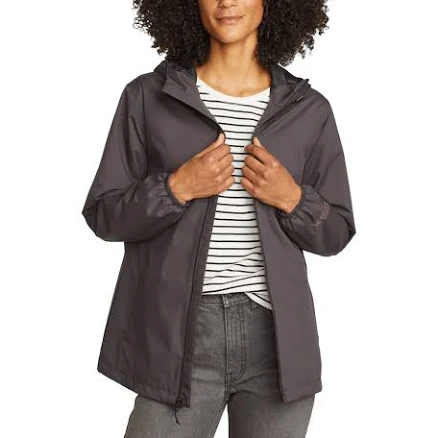
Eddie Bauer Women's Rainy Pass Water-Repellent Hooded Jacket
Water-repellent jackets often use PFAS. Eddie Bauer discloses nothing.
Eddie Bauer's Rainy Pass jacket uses water-repellent coating treatment but provides no PFAS disclosure or certification. Many water-repellent apparel brands rely on PFAS chemicals, making transparency essential here.
Still want this one anyway? Check the price on Amazon. We’d swap it.
Material
polyester with water-repellent coating water-repellent finish
Lab data
No public lab test
You may also be interested in
Top-graded picks in the categories readers replace first, every one scored on the same rubric.

- polypropylene filter housing, carbon/sediment cartridge
- We found no PFAS statement from the brand
- Bacterial growth in spent cartridges
3 hazards checked on this product, all on its full breakdown.

Aquasure
Premier Series 75 GPD Under Sink Reverse Osmosis Water Filtration System
- RO membrane, carbon filters, stainless steel housing
- We found no PFAS statement from the brand
- Bacterial and microbial growth in housing and filters
4 hazards checked on this product, all on its full breakdown.

Avocado
Vegan Mattress
- organic cotton, natural latex, coconut coir, recycled steel coils
- The brand calls it PFAS-free, which we have not verified
- Heavy metals
2 hazards checked on this product, all on its full breakdown.
What Eddie Bauer Women's Rainy Hooded Jacket is made of, ingredients and materials
This jacket is polyester with a water-repellent coating (water-repellent coating) finish applied to the surface. water-repellent coating coatings on consumer outerwear have historically relied on PFAS (PFAS "forever chemicals") to achieve water shedding without compromising breathability. Polyester itself is stable during normal wear, but the water-repellent coating treatment is the material of concern. Eddie Bauer has not disclosed whether this specific jacket uses PFAS-based or PFAS-free water-repellent coating chemistry.
What’s concerning
Waterproof / stain-resistant treatment
Water-repellent coating treatments have historically used PFAS.
Category baseline
The starting point for this type of product, before anything specific to this product is counted.
No PFAS disclosure
No public statement from the brand about PFAS in this product.
PFAS
Water-repellent jackets in this price and brand category typically use PFAS-based water-repellent coating, though Eddie Bauer has not confirmed this for this model. PFAS can migrate into skin or wash water, particularly with repeated laundering or abrasion.
Source, ATSDR ↗Microfiber shedding during wash
Synthetic polyester textiles release microfibers into wastewater during washing. Eddie Bauer jackets have not been specifically studied, but this is an established environmental concern for all polyester garments; use a washing bag or coarse filter to reduce release.
Coating degradation and unknown leachables from water-repellent coating reapplication
Over time, the water-repellent coating will wear off. Consumer re-treatment products often contain unregulated chemical blends; Eddie Bauer does not specify approved re-treatment methods, creating risk if users apply unknown coatings.
What’s reassuring
Formaldehyde / VOCs
Polyester apparel may contain formaldehyde-releasing resins used in fabric finishing. No specific recalls or reports exist for this Eddie Bauer model, but off-gassing risk is typical of virgin polyester outerwear and usually minimal after first wash.
Source, ATSDR ↗Heavy metals
Polyester is typically dyed with azo or reactive dyes; restricted azo dyes are regulated in many jurisdictions. No specific issues are documented for this brand or jacket, but this is a standard concern in polyester textile production.
Source, FDA ↗How is this PFAS grade calculated?
The brand's record and disclosure
Eddie Bauer does not publish a comprehensive restricted substances list or water-repellent chemistry disclosure for its apparel lines. The company has not made public commitments to phase out PFAS in textiles, nor does it offer PFAS-free alternatives prominently labeled as such. This silence is typical of many mainstream outdoor apparel brands but limits consumer ability to make informed choices at point of purchase.
How it compares in its category
Water-repellent jackets in the mid-market range (Eddie Bauer's positioning) rarely disclose water-repellent coating chemistry; premium outdoor brands like Patagonia and Arc'teryx have begun offering PFAS-free options, though at higher price points. Budget alternatives often use older PFAS formulations with fewer controls. Eddie Bauer sits in the murky middle, established brand without proactive disclosure, making direct comparison difficult.
If you buy it
Wash infrequently and in cool water to minimize any potential leaching of water-repellent coating chemicals into wastewater. Avoid machine drying on high heat, which can degrade the polyester and coating; hang dry instead. Do not tumble dry with heat or expose to prolonged direct sunlight, as this accelerates fabric breakdown. If water-repellency visibly degrades after 1-2 years of regular use, consider replacement rather than re-treating with home products.
What is not known about PFAS in this product?
- Basis
- Model estimate, 40% confidence, not a lab result
- Lab test
- None on record for this exact product
- Brand statement
- Eddie Bauer has made a specific claim
Formulations change between production runs, so check the current label. How we grade.
More rain jackets grades
How we score, every product runs through the same public 0-100 rubric based on materials, coatings, brand disclosure, lab findings, and recalls. See the full methodology → Spotted a mistake? Report an error.