Emsa Food Storage Container for sale
Skip until Emsa discloses materials or provides third-party testing.
Emsa food containers lack public PFAS disclosures or certifications. Without material specifications or lab data, PFAS risk cannot be reliably assessed.
We flunk more products than we pass. This one earned its grade. How we grade
Material
Plastic (polypropylene or unspecified polymer)
Brand disclosure
Brand is silent on PFAS
Lab data
No public lab test
You may also be interested in
Top-graded picks in the categories readers replace first, every one scored on the same rubric.

- polypropylene filter housing, carbon/sediment cartridge
- We found no PFAS statement from the brand
- Bacterial growth in spent cartridges
3 hazards checked on this product, all on its full breakdown.

Aquasure
Premier Series 75 GPD Under Sink Reverse Osmosis Water Filtration System
- RO membrane, carbon filters, stainless steel housing
- We found no PFAS statement from the brand
- Bacterial and microbial growth in housing and filters
4 hazards checked on this product, all on its full breakdown.

Avocado
Vegan Mattress
- organic cotton, natural latex, coconut coir, recycled steel coils
- The brand calls it PFAS-free, which we have not verified
- Heavy metals
2 hazards checked on this product, all on its full breakdown.
What Emsa Food Storage Container for sale is made of, ingredients and materials
Emsa food storage containers are stated as plastic, likely polypropylene (PP), a commodity thermoplastic chosen for food contact because it does not contain BPA or phthalate plasticizers by default. Polypropylene is inherently rigid and does not require the softening agents that trigger leaching concerns in softer plastics. However, without explicit confirmation from Emsa of the exact polymer type, additives (colorants, stabilizers, nucleating agents), or compliance certifications, the material profile remains incompletely disclosed.
What’s concerning
Category baseline
The starting point for this type of product, before anything specific to this product is counted.
No PFAS disclosure
No public statement from the brand about PFAS in this product.
Microplastics
Polypropylene containers can fragment under heat, mechanical stress, or extended UV exposure. Emsa does not publish durability standards or UV-stabilizer additives used. Repeated heating or stacking under pressure may accelerate degradation, especially in lids and hinges.
Source, EPA ↗Odor and off-gassing from processing aids
New plastic containers sometimes emit odors from residual monomers, processing aids, or antioxidants. Emsa containers may release faint plastic odor, especially when new or when exposed to heat. This is not definitively hazardous but indicates incomplete polymerization or additive management.
What’s reassuring
Base material not linked to PFAS
The main material recorded for this product is not one associated with PFAS.
BPA & bisphenols
Polypropylene itself does not contain BPA. No records of BPA or BPS contamination in Emsa containers; however, Emsa does not publish additive or colorant composition, so presence of trace contaminants or non-BPA phenolic additives cannot be ruled out without independent testing.
Source, FDA ↗Phthalate plasticizers
Polypropylene does not require phthalates to achieve rigidity. No phthalate concerns are documented for this product category or brand, but lack of material transparency leaves uncertainty about processing aids or recycled content sources.
Heavy metals
No heavy metal contamination is recorded for Emsa containers. Polypropylene formulations used in EU production typically meet migration limits under Regulation (EC) 10/2011, but Emsa does not disclose colorant suppliers or testing certificates.
Source, FDA ↗How is this PFAS grade calculated?
The brand's record and disclosure
Emsa, a German housewares manufacturer, does not publicly disclose detailed material composition, additive packages, or third-party testing for food-contact safety beyond CE marking in EU markets. The brand has not issued voluntary transparency statements on BPA, phthalate avoidance, or PFAS-free claims. No major recalls or contamination incidents are on record for Emsa food storage containers, but the lack of proactive disclosure limits independent verification of chemical hazard controls.
How it compares in its category
Polypropylene food storage containers are standard in the category and are generally lower-concern for chemical migration compared to PVC or polycarbonate alternatives. Major competitors (Pyrex glass, stainless steel, or certified BPA-free plastics from brands like Rubbermaid or OXO) often provide clearer material and additive transparency. Emsa's silence on specifications places it in a middle tier, not flagged for known hazards, but also not ahead of peers in consumer reassurance.
If you buy it
Do not use Emsa containers in the microwave unless the lid is labeled microwave-safe; polypropylene softens above 100-110°C. Avoid prolonged storage of fatty foods, high-acid liquids (vinegar, citrus), or alcohol, which can leach additives from some polymer batches. Do not expose to direct sunlight for extended periods, as UV can degrade polymer structure and release byproducts. Replace containers if the plastic becomes discolored, brittle, or develops an odor.
What is not known about PFAS in this product?
- Basis
- Model estimate, 45% confidence, not a lab result
- Lab test
- None on record for this exact product
- Brand statement
- Emsa has made none
Formulations change between production runs, so check the current label. How we grade.
What are the PFAS-free alternatives to Emsa Food Storage Container for sale?
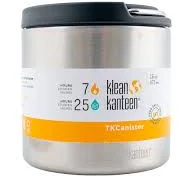
Klean Kanteen
Double Wall Vacuum Insulated Stainless Steel Food Canister Container with Leak Proof Lid
- Stainless steel body, silicone gasket lid seal
- The brand calls it PFAS-free, which we have not verified
- Silicone gasket degradation
3 hazards checked on this product, all on its full breakdown.
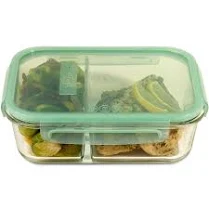
- borosilicate glass
- We found no PFAS statement from the brand
- Leaching from glass matrix or lid seals
2 hazards checked on this product, all on its full breakdown.
- stainless steel
- We found no PFAS statement from the brand
- Nickel leaching (from stainless steel alloy)
4 hazards checked on this product, all on its full breakdown.
More lunch boxes grades
How we score, every product runs through the same public 0-100 rubric based on materials, coatings, brand disclosure, lab findings, and recalls. See the full methodology → Spotted a mistake? Report an error.