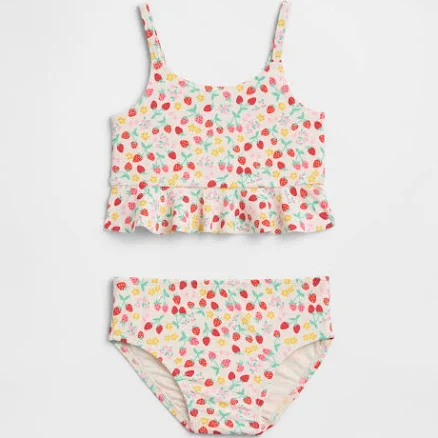
Gap Factory Babygap Swim Two-Piece
Avoid until Gap discloses water-repellent coating composition; water-repellent swimwear often uses PFAS.
This children's swim two-piece uses water-resistant polyester typical of kids' swimwear, but Gap does not disclose specific water-repellent coating chemistry. Swimwear water-repellents historically rely on PFAS compounds.
The better-graded swap
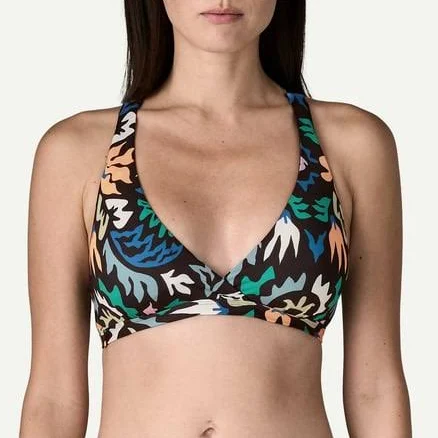
Patagonia
Patagonia Women's Bottom Turn Racerback Bikini Top
90/100 safety
Same rubric that flunked this product. The swap earned Excellent.
Still want this one anyway? Check the price on Amazon. We’d swap it.
Material
Polyester blend swim fabric with water-repellent coating water-repellent finish
Brand disclosure
Brand is silent on PFAS
Lab data
No public lab test
What Gap Factory Babygap Swim Two-Piece is made of, ingredients and materials
This product is polyester blended swim fabric with a water-repellent coating (water-repellent coating) finish applied to the surface. Polyester itself is a stable synthetic polymer with low leaching risk under normal wear. The water-repellent coating is the chemical wildcard, it creates water-beading on the fabric but its exact chemistry is undisclosed by Gap. water-repellent coating finishes on children's swimwear historically relied on PFAS-based chemistries, though some manufacturers have transitioned to alternatives not linked to PFAS.
What’s concerning
Category baseline
The starting point for this type of product, before anything specific to this product is counted.
No PFAS disclosure
No public statement from the brand about PFAS in this product.
Waterproof / stain-resistant treatment
Water-repellent coating treatments have historically used PFAS.
PFAS
Not confirmed for this specific product, but water-repellent coating finishes on polyester swimwear have been documented to contain PFOA, PFOS, or other legacy PFAS compounds in third-party testing of similar products. Gap's silence on chemistry means this hazard cannot be ruled out.
Source, ATSDR ↗Azo dyes (if dark colorants used)
Polyester swimwear often uses azo dyes for color fastness in water. Gap does not publicly specify whether this product meets restricted azo dye standards (ZDHC Gateway, REACH, or similar). Risk is low if compliance is implicit, but undisclosed.
Formaldehyde / VOCs
Some water-repellent coating and elasticity-recovery finishes use formaldehyde-based crosslinkers. Gap does not disclose formaldehyde content. Levels in finished swimwear are usually low, but new items may off-gas slightly; pre-wash mitigates this.
Source, ATSDR ↗Microplastics
Polyester swimwear sheds microfibers during washing and wear. This is an environmental concern rather than direct consumer toxicity, but relevant to informed choice. Mesh or knit blends shed more readily than dense weaves.
Source, EPA ↗What’s reassuring
Antimony in polyester fiber
Polyester production can involve antimony catalysts; residual antimony in finished fiber is typically below health-concern thresholds and no established hazard has been reported for Babygap products. Standard swimwear use poses no known exposure pathway.
The full breakdown
The brand's record and disclosure
Gap Inc. has not publicly committed to PFAS-free water-repellent coating chemistry or disclosed which water-repellent system this product uses. The company does not appear on lists of brands with formal PFAS phase-out pledges (unlike Patagonia, REI, or Fjallraven). Gap's Babygap line has no documented recalls related to chemical hazards, but the silence on water-repellent coating composition reflects a broader industry pattern of opaque chemical disclosure in children's apparel.
How it compares in its category
Most mass-market children's swimwear uses water-repellent coating finishes; Babygap is typical in this respect. Brands explicitly marketing PFAS-free or PFOA-free water-repellent coating (e.g., Speedo with certain lines, some store brands now labeling this) offer more transparency but remain uncommon in budget segments. Gap's pricing and availability position it as a middle-market option without the chemical transparency of premium or eco-focused competitors.
If you buy it
Wash before first wear to remove loose finishes and reduce initial exposure. Rinse after chlorine or saltwater exposure to limit fabric degradation. Do not routinely machine-dry on high heat; air-dry to preserve water-repellent coating longevity and avoid unnecessary off-gassing. Replace when elastic weakens or fabric loses water-repellency (typically 1-2 years of seasonal use), as reapplying water-repellent coating finishes at home is not practical for consumers.
What we don’t know
- Basis
- Model estimate, 45% confidence, not a lab result
- Lab test
- None on record for this exact product
- Brand statement
- Gap has made none
Formulations change between production runs, so check the current label. How we grade.
Better-graded alternatives in Swimwear
Patagonia
Women's Bottom Turn Racerback Bikini Top
- Nylon/polyester blend with elastane (standard swimwear)
- The brand calls it PFAS-free, which we have not verified
- Elastane (spandex) degradation under heat or chlorine
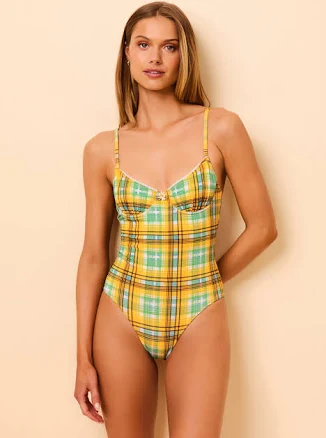
Solid & Striped
Taylor One Piece Seersucker Plaid
- Cotton/cotton-blend seersucker plaid
- We found no PFAS statement from the brand
- Azo dyes and colorfast stability
2 hazards checked on this product. See all of them.
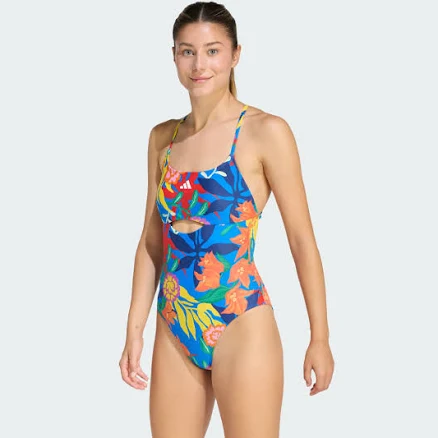
Adidas
Women's Mexicana Florals Tie-Back Swimsuit
- Polyester/nylon swimsuit fabric, likely uncoated or standard finish
- Azo dyes and synthetic colorants
4 hazards checked on this product. See all of them.
More swimwear grades
How we score, every product runs through the same public 0-100 rubric based on materials, coatings, brand disclosure, lab findings, and recalls. See the full methodology → Spotted a mistake? Report an error.