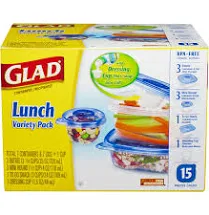
Glad Food Storage Containers, Lunch Variety Pack
Lower-concern plastic containers; no PFAS-typical triggers identified.
Glad food storage containers are polypropylene with no known Teflon-family coating coatings or PFAS-associated treatments. Brand makes no PFAS claims, but the material and design suggest lower risk than nonstick or water-repellent products.
We flunk more products than we pass. This one earned its grade. How we grade
Material
polypropylene plastic
Brand disclosure
Brand is silent on PFAS
Lab data
No public lab test
What Glad Food Storage Containers, Lunch is made of, ingredients and materials
Glad Food Storage Containers are polypropylene (PP, #5 plastic), a thermoplastic polymer chosen for food contact because it resists moisture and has a higher melting point (~130°C / 266°F) than many food-grade plastics. Polypropylene does not contain BPA or BPS by design, and it is FDA-cleared for direct food contact. The material itself is relatively stable under normal refrigeration and room-temperature storage, though like all plastics it can degrade with repeated heating or prolonged exposure to fatty/acidic foods.
What’s concerning
Category baseline
The starting point for this type of product, before anything specific to this product is counted.
No PFAS disclosure
No public statement from the brand about PFAS in this product.
Monomer or oligomer leaching from polypropylene
Under normal cold or room-temperature storage, polypropylene leaches minimal monomer. Risk rises substantially if containers are heated repeatedly, microwaved, or exposed to fatty or acidic foods for extended periods. Glad does not disclose monomer migration testing for this product line.
Microplastic shedding or degradation
Repeated mechanical stress (washing, stacking, lid removal) or sunlight exposure can cause surface micro-abrasion in polypropylene. Risk is low in normal indoor use but increases if containers are reused heavily or stored outdoors.
What’s reassuring
Base material not linked to PFAS
The main material recorded for this product is not one associated with PFAS.
BPA & bisphenols
Polypropylene (#5) is not formulated with BPA or BPS. No contamination reports exist for Glad Food Storage Containers specific to these compounds.
Source, FDA ↗Phthalate plasticizers
Polypropylene does not typically contain phthalates as softeners; they are more common in PVC and some flexible plastics. No reports of phthalate contamination in Glad polypropylene containers are on record.
Coating or additive leaching (colorants, UV stabilizers)
Glad Food Storage Containers are typically translucent or opaque polypropylene without reported decorative coatings or heavy-metal pigments. No recalls or safety alerts related to additive migration are established, though full ingredient disclosure is not publicly available.
The full breakdown
The brand's record and disclosure
Glad (Clorox subsidiary) does not publicly disclose detailed PFAS testing or sourcing practices for food containers, though the parent company has faced scrutiny on environmental chemicals in other product lines. No confirmed recalls or contamination incidents specific to Glad Food Storage Containers have been established in public safety databases. The brand is well-known for food storage products but has not pursued third-party certifications (e.g., NSF, BPA-Free verification) that would strengthen transparency around chemical content.
How it compares in its category
Polypropylene food containers are among the most common and lowest-concern plastics for cold and room-temperature storage. They compare favorably to polystyrene (#6) and polyvinyl chloride (#3) in terms of chemical stability, and are more heat-resistant than polyethylene terephthalate (#1 PET). Alternatives such as glass or stainless steel avoid plastic leaching entirely but are bulkier and more fragile; polypropylene containers remain a practical middle ground for lunch packs and meal prep.
If you buy it
Do not expose containers to heat above 100°C (212°F) or use in microwave unless explicitly labeled microwave-safe, as polypropylene can warp and may leach small amounts of monomer if degraded by heat. Store fatty, acidic, or oily foods in glass or ceramic when possible, especially long-term, since polypropylene is permeable to lipophilic compounds. Replace containers if lids crack, become cloudy, or show visible wear; degradation increases leaching risk. Hand-wash rather than machine-wash to extend lifespan and avoid heat stress.
What we don’t know
- Basis
- Model estimate, 72% confidence, not a lab result
- Lab test
- None on record for this exact product
- Brand statement
- Glad has made none
Formulations change between production runs, so check the current label. How we grade.
Better-graded alternatives in Lunch Boxes
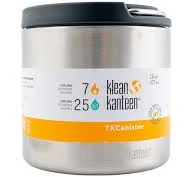
Klean Kanteen
Double Wall Vacuum Insulated Stainless Steel Food Canister Container with Leak Proof Lid
- Stainless steel body, silicone gasket lid seal
- The brand calls it PFAS-free, which we have not verified
- Silicone gasket degradation
3 hazards checked on this product. See all of them.
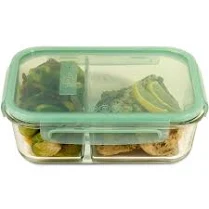
Snapware
Meal Box Glass
- borosilicate glass
- We found no PFAS statement from the brand
- Leaching from glass matrix or lid seals
2 hazards checked on this product. See all of them.
OXO
Steel Pop Big Square Short - 2.8 Qt/2.6 l
- Stainless steel container, no surface treatment
- Lid/gasket polymer leaching
3 hazards checked on this product. See all of them.
More lunch boxes grades
How we score, every product runs through the same public 0-100 rubric based on materials, coatings, brand disclosure, lab findings, and recalls. See the full methodology → Spotted a mistake? Report an error.