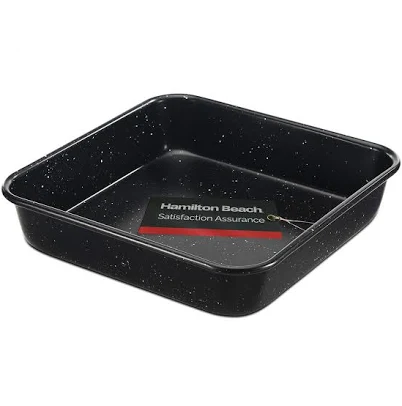
Hamilton Beach Square Nonstick Easy Release Carbon Steel Cake Pan, Is It Non-Toxic?
Skip; nonstick coating type not disclosed by brand.
Hamilton Beach does not say what non-stick coating is on this carbon steel cake pan, and makes no PFAS statement.
The better-graded swap
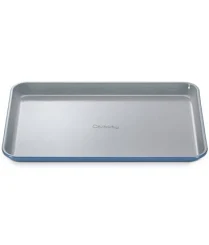
Caraway
Caraway Nonstick Ceramic Medium Baking Sheet
100/100 safety
Same rubric that flunked this product. The swap earned Excellent.
Still want this one anyway? Check the price on Amazon. We’d swap it.
Material
Carbon steel with nonstick coating (type unspecified)
Brand disclosure
Brand is silent on PFAS
Lab data
No public lab test
You may also be interested in
Top-graded picks in the categories readers replace first, every one scored on the same rubric.

- polypropylene filter housing, carbon/sediment cartridge
- We found no PFAS statement from the brand
- Bacterial growth in spent cartridges
3 hazards checked on this product, all on its full breakdown.

Aquasure
Premier Series 75 GPD Under Sink Reverse Osmosis Water Filtration System
- RO membrane, carbon filters, stainless steel housing
- We found no PFAS statement from the brand
- Bacterial and microbial growth in housing and filters
4 hazards checked on this product, all on its full breakdown.

Avocado
Vegan Mattress
- organic cotton, natural latex, coconut coir, recycled steel coils
- The brand calls it PFAS-free, which we have not verified
- Heavy metals
2 hazards checked on this product, all on its full breakdown.
Is Hamilton Beach Square Steel Cake Pan non-toxic? What it is made of
This pan is carbon steel (iron-carbon alloy) with an applied nonstick coating whose chemical identity Hamilton Beach does not disclose publicly. Carbon steel itself is stable and food-safe, but the nonstick layer's composition, durability, and thermal stability are unknown without disclosure. If the coating is Teflon-type coating-based (common in budget nonstick), overheating above ~500°F can release fluorinated fumes; if ceramic or other polymer, different degradation profiles apply. The "easy release" marketing suggests a nonstick finish, but absence of material specification prevents precise hazard assessment.
What’s concerning
Category baseline
The starting point for this type of product, before anything specific to this product is counted.
No PFAS disclosure
No public statement from the brand about PFAS in this product.
Non-stick, chemistry undisclosed
Marketed as non-stick without stating the coating chemistry.
Teflon-type coating fume inhalation risk (nonstick degradation)
Coating type is undisclosed, so Teflon-type coating presence cannot be ruled out. Overheating or physical damage to the coating could release fluorinated fumes, particularly if users exceed recommended temperature limits or use metal utensils despite guidance.
Coating flaking and ingestion
Any nonstick coating degrades with age and mechanical stress. If flaking occurs, small particles may enter food; while small amounts of ingested coating are typically non-toxic, recurrent exposure is undesirable and signals the pan is unsafe to continue using.
Thermal stability of undisclosed coating at high temperatures
Generic nonstick cookware studies show that coatings not explicitly rated for high heat (e.g., above 500°F) degrade faster and may release volatile compounds. Hamilton Beach does not provide a certified safe upper temperature limit for this pan's coating.
Brand transparency and accountability gap
Absence of material disclosure, third-party certifications, or published testing results limits consumer ability to assess true risk and hold the brand accountable if hazards emerge. This is a structural weakness in consumer protection, not a chemical hazard per se, but it increases practical risk.
What’s reassuring
Iron leaching from carbon steel base
Carbon steel itself is not a material linked to PFAS. Iron leaching into acidic foods (e.g., tomato-based recipes) is a normal and generally benign occurrence; some view minor iron contribution as beneficial for dietary intake, though this is not a primary safety concern.
How is this PFAS grade calculated?
The brand's record and disclosure
Hamilton Beach is a major small-appliance manufacturer with no public PFAS phase-out commitment or material transparency initiative on record for cookware. The company does not disclose nonstick coating type, manufacturing certifications, or independent testing results for this product line. No product recalls specific to this pan model have been reported in CPSC or FDA databases as of current knowledge. Silent stance on PFAS and coating chemistry is typical for mid-market cookware brands and reflects industry-wide lack of voluntary transparency.
How it compares in its category
Carbon steel nonstick pans occupy a price-conscious middle ground between cast iron (no coating risk, higher maintenance) and aluminum nonstick (lighter weight, potential leaching concerns). Among square cake pans specifically, Hamilton Beach's offering is functionally standard; however, competitors like Le Creuset and Staub disclose ceramic or enamel coatings explicitly, while budget brands rarely do. This product's lack of coating transparency is a relative weakness compared to brands willing to specify material composition, though performance and durability are broadly comparable to similar price-point items.
If you buy it
Avoid preheating above 400-425°F and never allow the pan to sit empty on high heat, as these conditions accelerate nonstick coating degradation and increase fume risk if Teflon-type coating is present. Hand-wash with soft sponges and avoid metal utensils, scouring pads, or dishwasher use to preserve the coating's integrity. Inspect regularly for flaking, discoloration, or worn spots; replace if coating visibly degrades. Store without stacking other pans directly on the cooking surface to prevent scratches and coating loss over time.
What is not known about PFAS in this product?
- Basis
- Model estimate, 45% confidence, not a lab result
- Lab test
- None on record for this exact product
- Brand statement
- Hamilton Beach has made none
Formulations change between production runs, so check the current label. How we grade.
What are the PFAS-free alternatives to Hamilton Beach Square Nonstick Easy Release Carbon Steel Cake Pan?
- ceramic nonstick coating
- A third party reports verifying it as PFAS-free
- Ceramic coating degradation over time
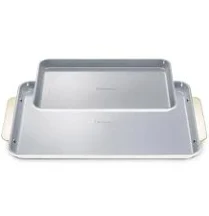
- ceramic nonstick coating
- A third party reports verifying it as PFAS-free
- Coating degradation and durability
2 hazards checked on this product, all on its full breakdown.
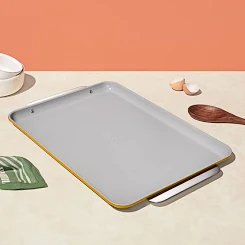
- ceramic nonstick coating
- The brand calls it PFAS-free, which we have not verified
- Ceramic coating degradation and particle shedding
3 hazards checked on this product, all on its full breakdown.
More bakeware grades
How we score, every product runs through the same public 0-100 rubric based on materials, coatings, brand disclosure, lab findings, and recalls. See the full methodology → Spotted a mistake? Report an error.