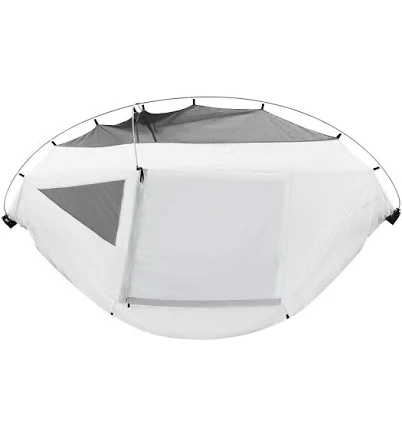
anymaka · Camping Tents & Tarps
anymaka Hammock Tent
Avoid until brand discloses water-repellent coating chemistry; hammock tents commonly use PFAS-based waterproofing.
The Anymaka Hammock Tent lacks any public disclosure about PFAS in its water-repellent treatment. Outdoor fabric coatings typically rely on fluorinated water-repellent coating chemistry unless explicitly confirmed otherwise.
Still want this one anyway? Check the price on Amazon. We’d swap it.
Material
Nylon/polyester fabric with water-repellent coating (water-repellent coating) coating
Brand disclosure
Brand is silent on PFAS
Lab data
No public lab test
You may also be interested in
Top-graded picks in the categories readers replace first, every one scored on the same rubric.

- polypropylene filter housing, carbon/sediment cartridge
- We found no PFAS statement from the brand
- Bacterial growth in spent cartridges
3 hazards checked on this product, all on its full breakdown.

Aquasure
Premier Series 75 GPD Under Sink Reverse Osmosis Water Filtration System
- RO membrane, carbon filters, stainless steel housing
- We found no PFAS statement from the brand
- Bacterial and microbial growth in housing and filters
4 hazards checked on this product, all on its full breakdown.

Avocado
Vegan Mattress
- organic cotton, natural latex, coconut coir, recycled steel coils
- The brand calls it PFAS-free, which we have not verified
- Heavy metals
2 hazards checked on this product, all on its full breakdown.
What anymaka Hammock Tent is made of, ingredients and materials
The Anymaka hammock tent uses nylon and polyester fabrics with a water-repellent coating (water-repellent coating) coating to shed rain. Nylon and polyester themselves are chemically stable polymers with no established leaching risk during normal use. The water-repellent coating finish is the variable, traditional PFAS-based formulations (PFOS/PFOA) are persistent and bioaccumulative, while fluorine-free alternatives (wax-based, silicone-based) exist but are more costly. Without brand disclosure of the specific water-repellent coating chemistry, the actual hazard profile cannot be determined.
What’s concerning
Category baseline
The starting point for this type of product, before anything specific to this product is counted.
No PFAS disclosure
No public statement from the brand about PFAS in this product.
Waterproof / stain-resistant treatment
Water-repellent coating treatments have historically used PFAS.
PFAS
Hammock tent waterproofing commonly relies on PFAS compounds; Hammock Gear's silence on this choice and lack of fluorine-free certification strongly suggests traditional PFAS formulation.
Source, ATSDR ↗Microplastics
Nylon and polyester can shed microfibers when abraded during setup, use, or washing; outdoor weathering and friction accelerate this. Magnitude is typical for synthetic outdoor gear but not zero.
Source, EPA ↗PFAS
Water-repellent coating coatings and adhesives may release volatile organic compounds (not PFAS) during initial use or in warm storage. Typical for new outdoor gear; ventilating before first use reduces exposure.
Source, ATSDR ↗What’s reassuring
Formaldehyde / VOCs
No public reports of formaldehyde issues in Hammock Gear products. Nylon/polyester textiles can be treated with formaldehyde-based resins for wrinkle resistance, but outdoor gear typically does not prioritize this finish.
Source, ATSDR ↗Heavy metals
No recalls or public warnings for lead, cadmium, or antimony in Anymaka tents. Nylon/polyester outdoor fabric dyes are not a known hazard class in this brand category.
Source, FDA ↗How is this PFAS grade calculated?
The brand's record and disclosure
Hammock Gear has not publicly disclosed the water-repellent coating formulation used on this tent, nor made statements about PFAS-free commitments. No independent certifications (bluesign, OEKO-TEX, GRS) are listed on available product pages. The brand has not appeared in major PFAS exposure reports or recalls. This silence is notable because most outdoor gear manufacturers have begun communicating water-repellent coating choices in response to growing PFAS awareness.
How it compares in its category
Hammock tents as a category commonly use PFAS-based water-repellent coating because it is durable, cost-effective, and maintains breathability. Competitors like ENO, Eno, and other established hammock tent makers face the same issue; some have begun transitioning to fluorine-free water-repellent coating. The Anymaka falls into the middle ground, not a premium brand with certified low-PFAS materials, but also not a budget outlier with unusually opaque sourcing. Without public commitment, it sits in the typical risky end of the market.
If you buy it
Wash the tent gently with cool water before first use to remove any loose finishes or residue. Store it dry and out of direct sunlight to prevent coating breakdown and microcracking. Avoid machine washing or prolonged soaking, which can degrade the water-repellent coating layer. If water-repellent coating performance fades after 2-3 seasons, replacement with a disclosed low-PFAS alternative is preferable to chemical re-treatment, which often uses PFAS.
What is not known about PFAS in this product?
- Basis
- Model estimate, 45% confidence, not a lab result
- Lab test
- None on record for this exact product
- Brand statement
- anymaka has made none
Formulations change between production runs, so check the current label. How we grade.
More camping tents & tarps grades
How we score, every product runs through the same public 0-100 rubric based on materials, coatings, brand disclosure, lab findings, and recalls. See the full methodology → Spotted a mistake? Report an error.