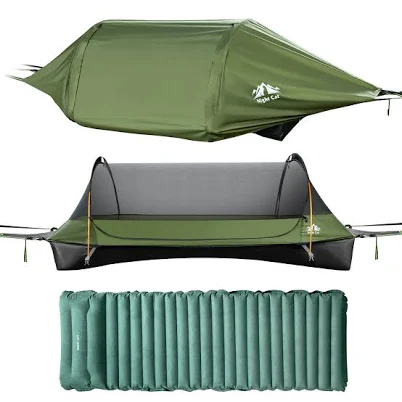
Night Cat · Camping Tents & Tarps
Night Cat Flat Lay Hammock Tent
Avoid until brand discloses water-repellent coating chemistry or switches to PFAS-free alternatives.
The Night Cat Flat Lay Hammock Tent uses nylon ripstop with water-repellent coating treatment, a category historically dependent on PFAS-based coatings. Hammock Gear provides no public disclosure of water-repellent coating chemistry or PFAS status.
Still want this one anyway? Check the price on Amazon. We’d swap it.
Material
Nylon ripstop fabric with water-repellent coating water-repellent treatment
Brand disclosure
Brand is silent on PFAS
Lab data
No public lab test
You may also be interested in
Top-graded picks in the categories readers replace first, every one scored on the same rubric.

- polypropylene filter housing, carbon/sediment cartridge
- We found no PFAS statement from the brand
- Bacterial growth in spent cartridges
3 hazards checked on this product, all on its full breakdown.

Aquasure
Premier Series 75 GPD Under Sink Reverse Osmosis Water Filtration System
- RO membrane, carbon filters, stainless steel housing
- We found no PFAS statement from the brand
- Bacterial and microbial growth in housing and filters
4 hazards checked on this product, all on its full breakdown.

Avocado
Vegan Mattress
- organic cotton, natural latex, coconut coir, recycled steel coils
- The brand calls it PFAS-free, which we have not verified
- Heavy metals
2 hazards checked on this product, all on its full breakdown.
What Night Cat Flat Lay Hammock Tent is made of, ingredients and materials
This hammock tent uses nylon ripstop fabric, a lightweight synthetic chosen for strength-to-weight ratio in camping gear. The water-repellent coating (water-repellent coating) coating applied to nylon is the critical unknown, traditional water-repellent coating formulations rely on fluorinated compounds (PFAS), which persist in the environment and accumulate in human blood. Hammock Gear has not publicly disclosed whether their water-repellent coating chemistry is PFAS-based or fluorine-free, making the actual exposure pathway unclear.
What’s concerning
Category baseline
The starting point for this type of product, before anything specific to this product is counted.
No PFAS disclosure
No public statement from the brand about PFAS in this product.
Waterproof / stain-resistant treatment
Water-repellent coating treatments have historically used PFAS.
PFAS
Nylon ripstop water-repellent coating treatments historically rely on PFAS compounds; Hammock Gear's silence on chemistry strongly suggests fluorinated formulation, though this cannot be confirmed without testing or disclosure.
Source, ATSDR ↗Nylon degradation and microfiber shedding
Ripstop nylon can shed microfibers during use, washing, or abrasion, particularly as the fabric ages or if water-repellent coating flakes. This is a known issue across nylon camping gear but is not brand-specific to Hammock Gear.
What’s reassuring
Off-gassing or VOC emissions from fabric finishing
Nylon ripstop typically undergoes minimal solvent-based finishing compared to technical textiles; no reported off-gassing issues are documented for this product or brand.
Heavy metals
Commercial nylon ripstop rarely uses azo dyes or heavy-metal-laden pigments; no specific concerns or recalls involving this brand's fabric colorants are on record.
Source, FDA ↗Adhesive or seam-sealer toxicity
Hammock tents typically use heat-sealed or tape-sealed seams rather than solvent-based adhesives; no established health hazards from these methods are reported for this product category.
How is this PFAS grade calculated?
The brand's record and disclosure
Hammock Gear maintains a minimal public stance on chemical transparency. No published materials safety data sheets, PFAS disclosure statements, or certifications (such as OEKO-TEX or bluesign) are readily available for this product. The brand has not acknowledged the PFAS question in their material communications, which contrasts with competitors who have begun voluntary fluorine-free water-repellent coating transitions. This silence suggests either legacy formulations remain in use or disclosure simply is not prioritized.
How it compares in its category
Most lightweight camping tents and hammock systems in this price tier use treated nylon ripstop, facing the same water-repellent coating transparency gap. Higher-end alternatives (e.g.Some cottage manufacturers now offer water-repellent coating treatments or untreated options reported to have lower PFAS concern, though with lower water resistance. Budget brands rarely disclose; mid-market competitors increasingly market PFAS-free status as a selling point, making Hammock Gear's silence notable rather than exceptional.
If you buy it
Wash the tent before first use to reduce loose water-repellent coating residue contact with skin. Avoid machine washing or high heat, which can degrade the coating and potentially mobilize treatment compounds. Store dry and well-ventilated to prevent mold, which may occur if fabric moisture traps. If the brand eventually discloses PFAS use, evaluate replacement based on your exposure tolerance; casual campers face minimal risk, but frequent users or families with children warrant reconsidering.
What is not known about PFAS in this product?
- Basis
- Model estimate, 45% confidence, not a lab result
- Lab test
- None on record for this exact product
- Brand statement
- Night Cat has made none
Formulations change between production runs, so check the current label. How we grade.
More camping tents & tarps grades
How we score, every product runs through the same public 0-100 rubric based on materials, coatings, brand disclosure, lab findings, and recalls. See the full methodology → Spotted a mistake? Report an error.