Hefty · Disposable Food Containers
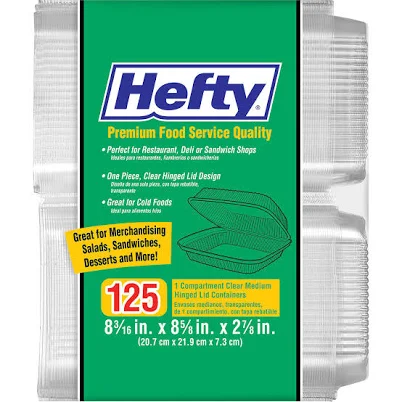
Hefty Clear Hinged Tray 8" x 8" 125 ct.
Grease-resistant food trays often contain PFAS, no disclosure suggests risk.
Clear hinged polystyrene trays typically include grease-resistant coatings. Hefty makes no PFAS disclosure, leaving ingredient sourcing and composition unknown.
The better-graded swap
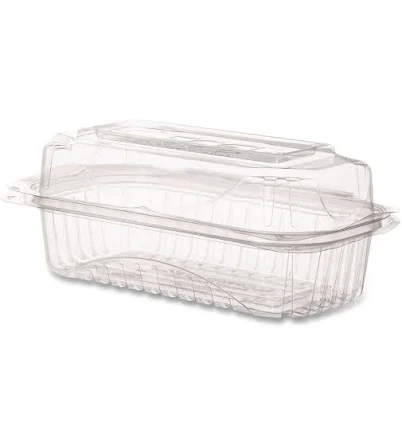
Eco-Products
Eco-Products Compostable Clear Clamshell Hinged Food
100/100 safety
Same rubric that flunked this product. The swap earned Excellent.
Still want this one anyway? Check the price on Amazon. We’d swap it.
Material
polystyrene (PS) with unclear grease-resistant coating
Brand disclosure
Brand is silent on PFAS
Lab data
No public lab test
You may also be interested in
Top-graded picks in the categories readers replace first, every one scored on the same rubric.

- polypropylene filter housing, carbon/sediment cartridge
- We found no PFAS statement from the brand
- Bacterial growth in spent cartridges
3 hazards checked on this product, all on its full breakdown.

Aquasure
Premier Series 75 GPD Under Sink Reverse Osmosis Water Filtration System
- RO membrane, carbon filters, stainless steel housing
- We found no PFAS statement from the brand
- Bacterial and microbial growth in housing and filters
4 hazards checked on this product, all on its full breakdown.

Avocado
Vegan Mattress
- organic cotton, natural latex, coconut coir, recycled steel coils
- The brand calls it PFAS-free, which we have not verified
- Heavy metals
2 hazards checked on this product, all on its full breakdown.
What Hefty Clear Hinged Tray 8" x 8" 125 ct. is made of, ingredients and materials
Hefty Clear Hinged Trays are polystyrene (PS, #6 plastic), a rigid foam or solid polymer commonly used for food takeout and bakery packaging. The 'grease-resistant' coating on these trays is likely a Teflon-family coating finish applied to prevent oil and moisture penetration, which typically contains PFAS compounds. Polystyrene itself is stable at room temperature but degrades when exposed to heat, oils, or prolonged sunlight, potentially releasing styrene monomer and other breakdown products into food.
What’s concerning
Category baseline
The starting point for this type of product, before anything specific to this product is counted.
No PFAS disclosure
No public statement from the brand about PFAS in this product.
Waterproof / stain-resistant treatment
Water-repellent coating treatments have historically used PFAS.
Styrene monomer leaching
Polystyrene naturally sheds trace styrene monomer, especially when contacted by fatty foods, oils, or acids. Heating accelerates this; room-temperature use with dry foods minimizes exposure.
Grease-resistant coating degradation and particle shedding
Teflon-family coating coatings on food trays are prone to chipping, cracking, or peeling over time and with washing, potentially releasing coating particles into food. Single-use and immediate disposal mitigate this risk.
Styrene and additive migration into fatty/oily foods
Polystyrene additives (including plasticizers and stabilizers) migrate preferentially into fatty, acidic, or alcoholic foods. Bakery items with oils, sauces, and cheese-based foods pose higher risk than dry crackers or vegetables.
Microplastics
Physical stress (stacking, handling, temperature swings) causes microcracking in polystyrene, potentially releasing small particles into food during storage or handling. Risk increases if trays are reused or stored for extended periods.
Source, EPA ↗How is this PFAS grade calculated?
The brand's record and disclosure
Hefty (owned by Reynolds Consumer Products) does not publicly disclose the composition of grease-resistant coatings on its food trays. The company has not published statements on PFAS elimination, transition timelines, or third-party testing results for these products. Industry-wide, food service manufacturers have faced pressure from state regulations (California, Vermont, New York) to eliminate PFAS in food contact materials, but Hefty's compliance status and product reformulation timelines remain opaque to consumers.
How it compares in its category
Clear hinged polystyrene trays are among the most common single-use food packaging in North America and consistently rank high in PFAS risk due to their grease-resistant coatings. Uncoated alternatives (cardboard clamshells, plain polystyrene without treatment) carry lower PFAS exposure but sacrifice grease barrier performance. Compostable or paper-based hinged containers (often from brands marketing PFAS-free status) are increasingly available but cost more and may still use fluorinated coatings.
If you buy it
Reserve these trays for cold or room-temperature foods only; do not microwave or fill with hot items, as heat accelerates polystyrene degradation and potential coating leaching. Do not reuse for food storage; these are designed as single-use items and washing may compromise coating integrity. If you regularly purchase takeout in these trays, consider requesting uncoated or labeled PFAS-free alternatives from vendors, or transfer food to glass or ceramic immediately upon arrival.
What is not known about PFAS in this product?
- Basis
- Model estimate, 45% confidence, not a lab result
- Lab test
- None on record for this exact product
- Brand statement
- Hefty has made none
Formulations change between production runs, so check the current label. How we grade.
What are the PFAS-free alternatives to Hefty Clear Hinged Tray 8" x 8" 125 ct.?
Eco-Products
Compostable Clear Clamshell Hinged Food
- Compostable resin (PLA/PBAT blend, plant-based)
- A third party reports verifying it as PFAS-free
- Thermal degradation and chemical release at use temperatures
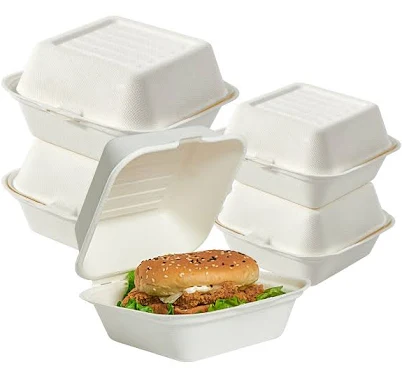
- Sugarcane bagasse (compostable fiber)
- We found no PFAS statement from the brand
- Bleaching agents and residual processing chemicals
3 hazards checked on this product, all on its full breakdown.
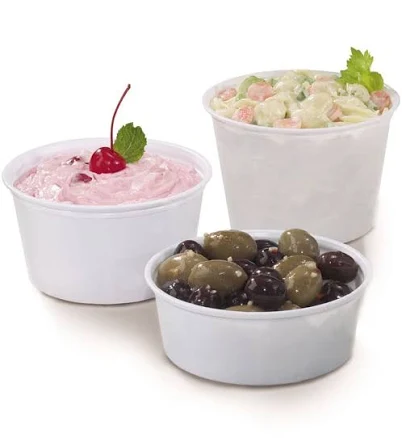
- polypropylene (PP) container, uncoated
- We found no PFAS statement from the brand
- Microplastics
2 hazards checked on this product, all on its full breakdown.
More disposable food containers grades
How we score, every product runs through the same public 0-100 rubric based on materials, coatings, brand disclosure, lab findings, and recalls. See the full methodology → Spotted a mistake? Report an error.