Hefty · Disposable Food Containers
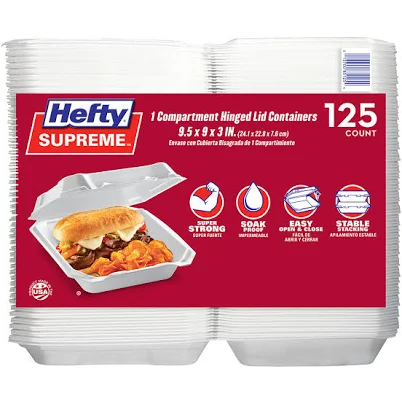
Hefty Supreme Foam Hinged Lid Container
Skip, foam food packaging frequently uses fluorinated coatings.
Hefty makes no PFAS statements for this foam container. Foam food packaging commonly receives grease-resistant treatments that may contain PFAS, raising concern due to lack of transparency.
The better-graded swap
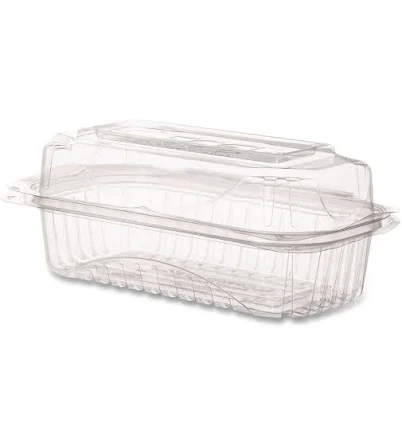
Eco-Products
Eco-Products Compostable Clear Clamshell Hinged Food
100/100 safety
Same rubric that flunked this product. The swap earned Excellent.
Still want this one anyway? Check the price on Amazon. We’d swap it.
Material
Polystyrene foam with unspecified surface coating
Brand disclosure
Brand is silent on PFAS
Lab data
No public lab test
You may also be interested in
Top-graded picks in the categories readers replace first, every one scored on the same rubric.

- polypropylene filter housing, carbon/sediment cartridge
- We found no PFAS statement from the brand
- Bacterial growth in spent cartridges
3 hazards checked on this product, all on its full breakdown.

Aquasure
Premier Series 75 GPD Under Sink Reverse Osmosis Water Filtration System
- RO membrane, carbon filters, stainless steel housing
- We found no PFAS statement from the brand
- Bacterial and microbial growth in housing and filters
4 hazards checked on this product, all on its full breakdown.

Avocado
Vegan Mattress
- organic cotton, natural latex, coconut coir, recycled steel coils
- The brand calls it PFAS-free, which we have not verified
- Heavy metals
2 hazards checked on this product, all on its full breakdown.
What Hefty Supreme Foam Hinged Lid Container is made of, ingredients and materials
Hefty Supreme containers are polystyrene (PS #6) foam, a petroleum-based plastic chosen for insulation and cushioning in food service. The unspecified surface coating is the critical unknown, foam food packaging commonly receives fluorinated coatings (aqueous film-forming foams or AFFF-derived treatments) to repel grease and moisture. These coatings are the primary source of PFAS migration into food, especially fatty or acidic items. The coating chemistry is not disclosed on the package or by Hefty in publicly available materials.
What’s concerning
Category baseline
The starting point for this type of product, before anything specific to this product is counted.
No PFAS disclosure
No public statement from the brand about PFAS in this product.
Waterproof / stain-resistant treatment
Water-repellent coating treatments have historically used PFAS.
PFAS
Polystyrene foam food packaging widely uses fluorinated surface treatments for grease resistance. Hefty does not disclose coating type; PFAS contamination of fatty or acidic foods is probable with prolonged contact.
Source, ATSDR ↗Polystyrene degradation and additive leaching
Polystyrene foam breaks down over time, especially when exposed to heat, light, or fatty foods. Unreacted monomers and processing aids (including styrene) can migrate into food; Hefty's formulation specifics are not published.
Microplastic fragmentation
Foam containers fragment easily during handling, storage, and transport. Particles can contaminate food and environment; this is inherent to the material and unavoidable with this product.
Unspecified surface coating toxicity
The coating composition is not disclosed. Beyond PFAS, coatings may contain other solvents or slip agents that could leach into high-fat foods; ingredient transparency is absent.
What’s reassuring
BPA & bisphenols
Polystyrene foam typically does not contain BPA; no public record of BPA in Hefty foam products. However, other unidentified additives may be present in the proprietary foam formulation.
Source, FDA ↗How is this PFAS grade calculated?
The brand's record and disclosure
Hefty (owned by Huhtamaki) has not publicly committed to PFAS-free food packaging or disclosed coating formulations for this product line. No third-party certifications (such as Green Seal or similar) are listed on product materials. The company maintains a largely silent stance on PFAS in foam products despite years of public concern. This contrasts with competitors who have begun voluntary disclosure or transition announcements for food-contact foam.
How it compares in its category
Polystyrene foam hinged containers remain the cheapest single-use food packaging option but carry the highest PFAS risk in the disposable category. Uncoated paperboard clamshells and molded fiber containers avoid fluorinated coatings entirely. Polypropylene (PP) hinged containers, while still petroleum-based, are less commonly treated with PFAS coatings and are more widely available from major brands. Glass and stainless steel alternatives eliminate this hazard entirely but require reusable systems.
If you buy it
Avoid using for fatty, acidic, or hot foods where PFAS leaching is most likely. Do not microwave; polystyrene softens at 70-90 degrees C and may leach additives. Keep contact time brief and use for room-temperature dry foods only if necessary. Replace immediately if the container shows discoloration, cracking, or surface degradation. Better practice, select uncoated fiber or PP alternatives from brands with published PFAS commitments.
What is not known about PFAS in this product?
- Basis
- Model estimate, 45% confidence, not a lab result
- Lab test
- None on record for this exact product
- Brand statement
- Hefty has made none
Formulations change between production runs, so check the current label. How we grade.
What are the PFAS-free alternatives to Hefty Supreme Foam Hinged Lid Container?
Eco-Products
Compostable Clear Clamshell Hinged Food
- Compostable resin (PLA/PBAT blend, plant-based)
- A third party reports verifying it as PFAS-free
- Thermal degradation and chemical release at use temperatures
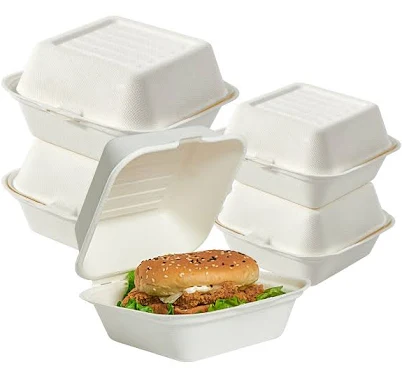
- Sugarcane bagasse (compostable fiber)
- We found no PFAS statement from the brand
- Bleaching agents and residual processing chemicals
3 hazards checked on this product, all on its full breakdown.
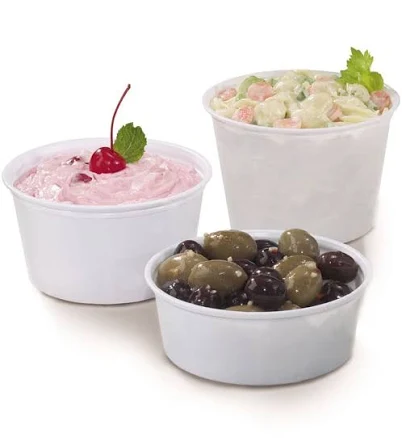
- polypropylene (PP) container, uncoated
- We found no PFAS statement from the brand
- Microplastics
2 hazards checked on this product, all on its full breakdown.
More disposable food containers grades
How we score, every product runs through the same public 0-100 rubric based on materials, coatings, brand disclosure, lab findings, and recalls. See the full methodology → Spotted a mistake? Report an error.