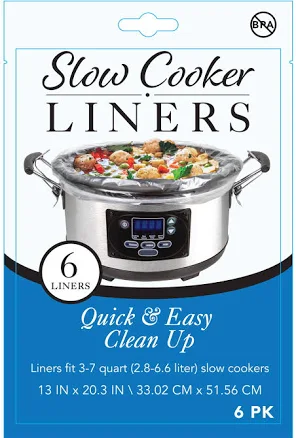
Slow Cooking Liners
Brand no-added-PFAS claim, unverified by us.
The brand describes its baking tools as unbleached, non-toxic and with no added PFAS. We record that as an unverified brand claim. The paper's grease-resistant treatment is still counted, because its chemistry is not stated.
Brand says: “The brand describes its baking tools as unbleached, non-toxic and with no added PFAS.”
We flunk more products than we pass. This one earned its grade. How we grade
Material
Unbleached parchment paper
Brand disclosure
Brand claims PFAS-free
Lab data
No public lab test
You may also be interested in
Top-graded picks in the categories readers replace first, every one scored on the same rubric.

- polypropylene filter housing, carbon/sediment cartridge
- We found no PFAS statement from the brand
- Bacterial growth in spent cartridges
3 hazards checked on this product, all on its full breakdown.

Aquasure
Premier Series 75 GPD Under Sink Reverse Osmosis Water Filtration System
- RO membrane, carbon filters, stainless steel housing
- We found no PFAS statement from the brand
- Bacterial and microbial growth in housing and filters
4 hazards checked on this product, all on its full breakdown.

Avocado
Vegan Mattress
- organic cotton, natural latex, coconut coir, recycled steel coils
- The brand calls it PFAS-free, which we have not verified
- Heavy metals
2 hazards checked on this product, all on its full breakdown.
What Slow Cooking Liners is made of, ingredients and materials
Slow cooker liners are unbleached parchment paper, a cellulose-based material that has undergone minimal chemical processing compared to bleached alternatives. Unbleached parchment avoids chlorine-based bleaching agents and typically contains no added PFAS coatings to achieve water resistance, relying instead on the natural density of the paper itself. At slow cooker temperatures (typically 170-210 degrees Fahrenheit), unbleached parchment is chemically stable and unlikely to break down or migrate compounds into food.
What’s concerning
Category baseline
The starting point for this type of product, before anything specific to this product is counted.
Thermal degradation and smoke release
If liner edges contact slow cooker heating elements or food is heated above 250 degrees Fahrenheit (above typical slow cooker range), unbleached parchment can char or produce smoke. Proper fit and adherence to manufacturer temperature limits minimizes this risk.
Microplastic or fiber shedding into food
Paper liners can degrade slightly at the edges during extended cooking, potentially introducing cellulose fibers into food. Risk is low in typical slow-cooker use but increases with repeated or rough handling before use.
What’s reassuring
Brand-stated PFAS-free
The brand states this product is PFAS-free. We have not verified the claim.
Base material not linked to PFAS
The main material recorded for this product is not one associated with PFAS.
Ink or printing residue from packaging
Products typically use soy-based inks on packaging; no reports of transfer from box printing to liners. Ensure liners are stored in original packaging and handled with dry hands.
Chlorine residue from pulp processing
Unbleached parchment explicitly avoids chlorine-based bleaching, eliminating this hazard class entirely. This is a primary safety advantage over standard bleached parchment liners.
Residual processing solvents or sizing compounds
No published test results or reports of solvent residue in parchment liners. Unbleached paper typically undergoes fewer chemical processing steps, reducing this risk versus mainstream alternatives.
How is this PFAS grade calculated?
The brand's record and disclosure
The brand is a long-established brand focused on chemical-free household products with a documented no-added-PFAS commitment. The company has published manufacturing transparency statements and holds certifications from organizations such as the Forest Stewardship Council (FSC), indicating responsible sourcing. No recalls or adverse safety incidents specific to this product are on record in public databases. Their PFAS claim remains unverified by independent third-party testing in publicly available reports.
How it compares in its category
Most slow cooker liners on the market use bleached parchment or include silicone or Teflon-type coating coatings to enhance water resistance and non-stick performance. Unbleached parchment without added coatings shows lower concern, though it may require slightly more careful handling and is not as durable across repeated uses. This product avoids the chemical processing typical of mainstream alternatives, making it a preferred choice for consumers prioritizing minimal chemical exposure.
If you buy it
Use these liners within the manufacturer's stated temperature range and replace them if visible degradation (tearing, discoloration from food) occurs. Do not use liners as a substitute for properly sizing the slow cooker, as overfilling can cause paper edges to contact heating elements. Store in a cool, dry place away from direct sunlight to maintain paper integrity. These liners are single-use; discard after cooking and do not attempt to wash and reuse.
What is not known about PFAS in this product?
- Basis
- Model estimate, 78% confidence, not a lab result
- Lab test
- None on record for this exact product
- Brand statement
- has made a specific claim
Formulations change between production runs, so check the current label. How we grade.
More slow cooker liners grades
How we score, every product runs through the same public 0-100 rubric based on materials, coatings, brand disclosure, lab findings, and recalls. See the full methodology → Spotted a mistake? Report an error.