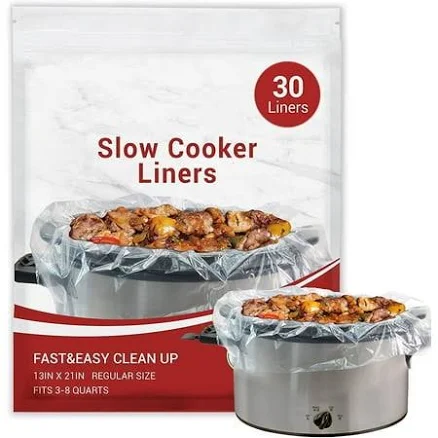
Slow Cooker Liners
Skip until the brand discloses coating; slow cooker liners often have PFAS treatments.
These polyethylene film liners prevent food contact with the pot interior. Doesn't disclose the coating or treatment applied for grease and heat resistance, a common PFAS entry point.
The better-graded swap
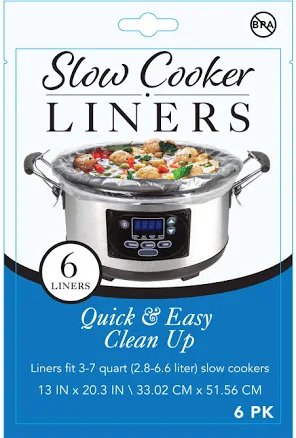
Slow Cooking Liners
90/100 safety
Same rubric that flunked this product. The swap earned Excellent.
Still want this one anyway? Check the price on Amazon. We’d swap it.
Material
Polyethylene (PE) film liner with unspecified coating/treatment
Brand disclosure
Brand is silent on PFAS
Lab data
No public lab test
You may also be interested in
Top-graded picks in the categories readers replace first, every one scored on the same rubric.

- polypropylene filter housing, carbon/sediment cartridge
- We found no PFAS statement from the brand
- Bacterial growth in spent cartridges
3 hazards checked on this product, all on its full breakdown.

Aquasure
Premier Series 75 GPD Under Sink Reverse Osmosis Water Filtration System
- RO membrane, carbon filters, stainless steel housing
- We found no PFAS statement from the brand
- Bacterial and microbial growth in housing and filters
4 hazards checked on this product, all on its full breakdown.

Avocado
Vegan Mattress
- organic cotton, natural latex, coconut coir, recycled steel coils
- The brand calls it PFAS-free, which we have not verified
- Heavy metals
2 hazards checked on this product, all on its full breakdown.
What Slow Cooker Liners is made of, ingredients and materials
Slow cooker liners are polyethylene (PE) film, a low-density plastic designed to line the ceramic pot and catch drippings. PE itself is chemically stable and does not leach BPA or phthalates under normal conditions. However, the product lists an unspecified 'coating or treatment' that improves heat and grease resistance. This coating composition is not disclosed on packaging or the brand website, making it impossible to rule out PFAS or other proprietary additives.
What’s concerning
Category baseline
The starting point for this type of product, before anything specific to this product is counted.
No PFAS disclosure
No public statement from the brand about PFAS in this product.
Non-stick, chemistry undisclosed
Marketed as non-stick without stating the coating chemistry.
PFAS
The brand does not disclose the chemical identity of the coating used to make these liners heat and grease resistant. Heat-resistant food-contact film coatings commonly contain PFAS (e.g., Teflon-type coating, PFOA-related compounds) to withstand sustained temperatures and oil exposure. Without disclosure, this hazard cannot be ruled out or quantified.
Source, ATSDR ↗Microplastic shedding if liner is torn or degraded
PE film liners can fragment if punctured by food, cookware, or repeated folding. Fragments small enough to ingest are classified as microplastics. The unspecified coating may increase fragility or alter degradation pathways; no data on the brand's product durability under slow-cooker conditions is publicly available.
PE thermal degradation and odor release above rated temperature
PE begins to soften and can emit faint plastic odor around 250-300F if stressed or in contact with oil. The brand's packaging does not clearly specify a maximum temperature; users may exceed recommended limits on the high setting, risking off-gassing and potential ingestion of volatile compounds.
Migration of unknown additives or breakdown products into food
The unstated coating composition raises the risk that additives (antioxidants, stabilizers, UV absorbers, or slip agents) or their thermal breakdown products may migrate into fatty or acidic slow-cooked foods. PE itself is stable, but the coating is the unknown vector.
What’s reassuring
No independent testing or certification on record
Slow cooker liners carry no visible third-party certifications (FDA Section 177 compliance statement, NSF, OEKO-TEX, or similar). This is standard for the category, but it means no independent lab has published data on leaching, coating identity, or durability for this specific product.
How is this PFAS grade calculated?
The brand's record and disclosure
The brand has not published a public statement on PFAS use in kitchen products or materials. The company offers no third-party certifications (e.g., OEKO-TEX, FDA 177 full compliance data) for these liners. The brand is not known for transparency initiatives on microplastics or chemical treatments in single-use food contact items. This silence is significant because slow cooker liners specifically require treatments to withstand prolonged heat and oil contact, a known driver of PFAS adoption in food-contact films.
How it compares in its category
Slow cooker liners are convenience products with no direct non-plastic alternative; traditional methods use the bare ceramic pot. Compared to other PE-based food storage films, slow cooker liners face higher thermal stress (200-300F sustained, vs. ambient-temp storage), which increases the risk that untested coatings may leach or degrade. Higher-end brands (e.g., Reynolds, Some generic store brands) similarly do not disclose coating chemistry, making this category a known gap in consumer transparency industry-wide.
If you buy it
Use liners only on the low or medium setting (below 250F) and never leave them in direct contact with the heating element or lid condensation drips back into food. Replace the liner after every use; do not reuse. Store unused liners in a cool, dark place away from fats or oils that can degrade PE over time. If you observe discoloration, stickiness, or odor from the liner, discard the batch and request the brand's ingredient disclosure before repurchasing.
What is not known about PFAS in this product?
- Basis
- Model estimate, 45% confidence, not a lab result
- Lab test
- None on record for this exact product
- Brand statement
- has made none
Formulations change between production runs, so check the current label. How we grade.
What are the PFAS-free alternatives to Slow Cooker Liners?
Slow Cooking Liners
- Unbleached parchment paper
- The brand calls it PFAS-free, which we have not verified
- Thermal degradation and smoke release
2 hazards checked on this product, all on its full breakdown.
Slow Cooker Liners - 4 Pack
- Plastic (polyethylene or similar polymer liner)
- We found no PFAS statement from the brand
- Microplastic shedding during heating
2 hazards checked on this product, all on its full breakdown.
Find an alternative on Amazon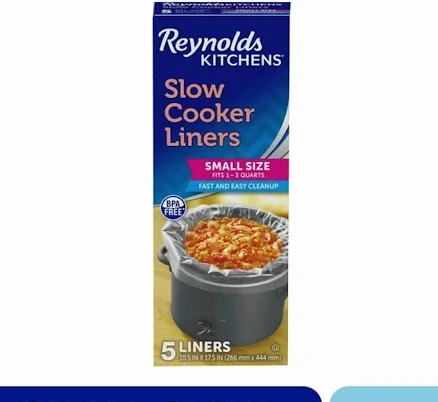
- polyethylene/plastic liner
- Polyethylene integrity failure (tearing, leaching)
3 hazards checked on this product, all on its full breakdown.
Find an alternative on AmazonMore slow cooker liners grades
How we score, every product runs through the same public 0-100 rubric based on materials, coatings, brand disclosure, lab findings, and recalls. See the full methodology → Spotted a mistake? Report an error.