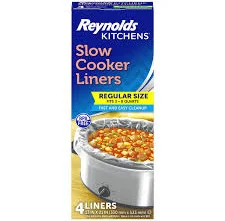
Reynolds Regular Size Slow Cooker Liners
Skip until Reynolds discloses coating; grease-resistant liners often contain PFAS.
Reynolds' polyethylene liners repel grease and moisture without revealing coating chemistry. Grease-resistant food-contact liners commonly rely on PFAS-based treatments.
The better-graded swap
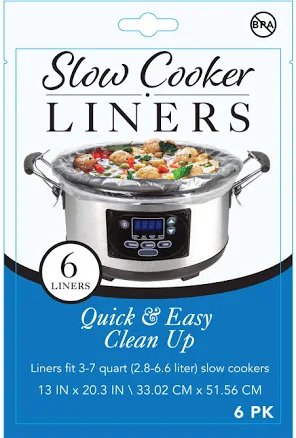
Slow Cooking Liners
90/100 safety
Same rubric that flunked this product. The swap earned Excellent.
Still want this one anyway? Check the price on Amazon. We’d swap it.
Material
polyethylene film with grease-resistant coating
Lab data
No public lab test
You may also be interested in
Top-graded picks in the categories readers replace first, every one scored on the same rubric.

- polypropylene filter housing, carbon/sediment cartridge
- We found no PFAS statement from the brand
- Bacterial growth in spent cartridges
3 hazards checked on this product, all on its full breakdown.

Aquasure
Premier Series 75 GPD Under Sink Reverse Osmosis Water Filtration System
- RO membrane, carbon filters, stainless steel housing
- We found no PFAS statement from the brand
- Bacterial and microbial growth in housing and filters
4 hazards checked on this product, all on its full breakdown.

Avocado
Vegan Mattress
- organic cotton, natural latex, coconut coir, recycled steel coils
- The brand calls it PFAS-free, which we have not verified
- Heavy metals
2 hazards checked on this product, all on its full breakdown.
What Reynolds Regular Size Slow Cooker Liners is made of, ingredients and materials
Reynolds Regular Size Slow Cooker Liners are polyethylene film with a grease-resistant coating applied to the inner surface. Polyethylene itself is a stable, food-contact plastic below its melting point (~250°F), but the unnamed grease-resistant treatment is the critical unknown. Slow cookers typically operate at 170-210°F depending on setting, so thermal stress is moderate; however, fatty foods and prolonged contact can degrade coatings or cause migration of additives into food. Kroger has not publicly disclosed the coating chemistry (silicone, wax, or potentially PFAS-based), leaving a transparency gap.
What’s concerning
Category baseline
The starting point for this type of product, before anything specific to this product is counted.
No PFAS disclosure
No public statement from the brand about PFAS in this product.
Waterproof / stain-resistant treatment
Water-repellent coating treatments have historically used PFAS.
Coating migration (unknown additives)
The grease-resistant coating composition is not disclosed. Fatty or acidic foods in a slow cooker can promote migration of coating additives into food, but risk is low at typical slow-cooker temperatures (170-210°F) if the coating is stable.
Thermal degradation of polyethylene film
Polyethylene softens above 212°F. Slow cookers on high setting may approach or briefly exceed this; localized thinning or rupture of the liner could occur with prolonged use or over-fill, though this is more a functionality failure than a chemical hazard.
PFAS
Grease-resistant treatments on single-use liners often rely on fluorinated compounds, but Kroger has not stated whether this product uses PFAS, silicone, or other chemistries. This is flagged as a PFAS vector pending disclosure.
Source, ATSDR ↗What’s reassuring
Microplastic release from coating wear
No reports of microplastic shedding from Kroger slow cooker liners. However, physical wear of coatings over time and reuse (if attempted) could theoretically release small particles; single-use design mitigates this risk.
How is this PFAS grade calculated?
The brand's record and disclosure
Kroger (the manufacturer listed here) has no established public position on PFAS in food-contact products and has not released ingredient statements for this liner's coating. No independent recalls or safety warnings are on record for this specific product. Kroger is a major retailer with private-label manufacturing but does not actively promote third-party testing or certification (e.g., FDA migration studies) for its slow cooker liners. The silence on coating composition is typical for the category but reflects minimal consumer-facing safety communication.
How it compares in its category
Slow cooker liners are a convenience product with inherent material trade-offs. Uncoated polyethylene would allow grease to leak; grease-resistant coatings solve this but introduce unknown additives. Reynolds and Kroger liners occupy the budget segment and are not marketed as PFAS-free, unlike some premium alternatives (e.g., some parchment-lined or silicone-based options). Most major brands in this category do not disclose coating chemistry, so Kroger is neither worse nor notably better than competitors, though the absence of certification or testing data is the norm rather than a red flag.
If you buy it
Use liners only in slow cookers set to low (170-180°F) or high (190-210°F) for the intended cooking duration; do not repurpose for oven use or direct heat above 212°F. Replace liners if the coating visibly flakes, becomes sticky, or shows discoloration. Avoid prolonged storage of cooked fatty foods in the cooker while lined; transfer to glass or ceramic containers after cooking. Do not reuse a liner; these are single-use products and repeated heating increases the risk of coating breakdown.
What is not known about PFAS in this product?
- Basis
- Model estimate, 45% confidence, not a lab result
- Lab test
- None on record for this exact product
- Brand statement
- Reynolds has made a specific claim
Formulations change between production runs, so check the current label. How we grade.
What are the PFAS-free alternatives to Reynolds Regular Size Slow Cooker Liners?
Slow Cooking Liners
- Unbleached parchment paper
- The brand calls it PFAS-free, which we have not verified
- Thermal degradation and smoke release
2 hazards checked on this product, all on its full breakdown.
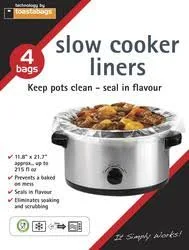
Slow Cooker Liners - 4 Pack
- Plastic (polyethylene or similar polymer liner)
- We found no PFAS statement from the brand
- Microplastic shedding during heating
2 hazards checked on this product, all on its full breakdown.
Find an alternative on Amazon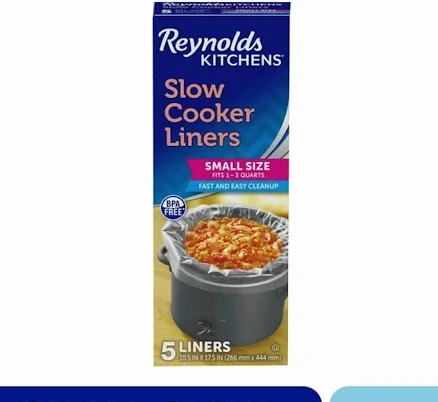
- polyethylene/plastic liner
- Polyethylene integrity failure (tearing, leaching)
3 hazards checked on this product, all on its full breakdown.
Find an alternative on AmazonMore slow cooker liners grades
How we score, every product runs through the same public 0-100 rubric based on materials, coatings, brand disclosure, lab findings, and recalls. See the full methodology → Spotted a mistake? Report an error.