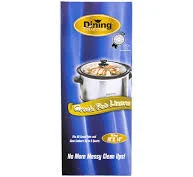
Dining Collection Slow Cooker Liner 10 ct
Skip until Kroger discloses liner composition and treatment.
Kroger's liners lack public material or coating disclosures. Single-use cookware liners commonly have nonstick or heat-resistant coatings that may contain PFAS.
The better-graded swap
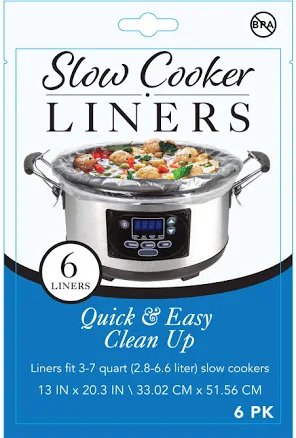
Slow Cooking Liners
90/100 safety
Same rubric that flunked this product. The swap earned Excellent.
Still want this one anyway? Check the price on Amazon. We’d swap it.
Material
Plastic slow cooker liners (composition unspecified)
Brand disclosure
Brand is silent on PFAS
Lab data
No public lab test
You may also be interested in
Top-graded picks in the categories readers replace first, every one scored on the same rubric.

- polypropylene filter housing, carbon/sediment cartridge
- We found no PFAS statement from the brand
- Bacterial growth in spent cartridges
3 hazards checked on this product, all on its full breakdown.

Aquasure
Premier Series 75 GPD Under Sink Reverse Osmosis Water Filtration System
- RO membrane, carbon filters, stainless steel housing
- We found no PFAS statement from the brand
- Bacterial and microbial growth in housing and filters
4 hazards checked on this product, all on its full breakdown.

Avocado
Vegan Mattress
- organic cotton, natural latex, coconut coir, recycled steel coils
- The brand calls it PFAS-free, which we have not verified
- Heavy metals
2 hazards checked on this product, all on its full breakdown.
What Dining Collection Slow Cooker Liner 10 ct is made of, ingredients and materials
Kroger's slow cooker liners are plastic bags with an unspecified polymer base and coating system. The material composition is not disclosed on packaging or via Kroger's public documentation, which is unusual for food-contact items. Single-use slow cooker liners in this category typically use polyethylene or polypropylene substrates with Teflon-family coating or silicone coatings to achieve non-stick and heat-resistance properties. Without transparency about which polymer, adhesive, or release agent is used, consumers cannot assess leaching risk or degradation temperature limits.
What’s concerning
Category baseline
The starting point for this type of product, before anything specific to this product is counted.
No PFAS disclosure
No public statement from the brand about PFAS in this product.
PFAS
If Teflon-family coating are present as non-stick coatings, breakdown products other than PFAS (oligomers, unreacted monomers) may leach into food under heat or acidic conditions. Kroger has not ruled this out or disclosed the coating system.
Source, ATSDR ↗BPA & bisphenols
If the liner uses polycarbonate or epoxy-lined polyester, BPA or BPS may be present. Slow cooker use involves sustained heat (6-8 hours), which accelerates migration of estrogenic compounds into foods, particularly acidic or fatty ones. No test data is available for this specific product.
Source, FDA ↗Phthalate plasticizers
Generic polyethylene or polypropylene used in food-contact liners may include phthalates as flexibilizers to prevent cracking. These are endocrine disruptors; migration increases with prolonged heat exposure.
Adhesive and release-agent residues
Slow cooker liners require adhesives to bond layers and release agents to enable non-stick function. Neither is itemized on Kroger's product label, and residual monomers or additives can leach during cooking, especially in liquid-heavy dishes.
What’s reassuring
Base material not linked to PFAS
The main material recorded for this product is not one associated with PFAS.
Microplastic shedding from thermal cycling
No recalls or studies on Kroger liners exist. However, repeated heating and cooling of thin plastic bags causes micro-fracturing; fragments may enter food. This is a class-wide concern, not brand-specific, but unmitigated by Kroger's lack of material durability standards.
How is this PFAS grade calculated?
The brand's record and disclosure
Kroger has not published material safety data sheets, ingredient disclosures, or PFAS statements for this product line. The company has faced criticism over private-label food contact material transparency but has not responded with category-wide material audits or reformulation announcements specific to slow cooker liners. Kroger's broader sustainability and chemical policy documents do not address single-use cooking liners. This silence is notable because major retailers like Costco and Walmart have begun disclosing fluorochemical use in food contact applications.
How it compares in its category
Most disposable slow cooker liners on the market (including store brands and name brands like Reynolds) do not disclose full chemical composition. Reusable silicone and ceramic slow cooker liners present lower concern because their materials are well-characterized and require no coating systems. Glass or stainless steel inserts eliminate the single-use plastic problem entirely. Kroger's 10-count pack is priced competitively but offers no safety or environmental advantage over competitors, and less transparency than some.
If you buy it
Do not exceed the maximum temperature rating stated on the package; most liners show concern at temperatures above 400F, which can be below some slow cooker peaks. Do not reuse liners; they are single-use and degradation after first heating is invisible. Inspect for visible tears or clouding before each use, as coating breakdown may accelerate leaching. If you choose reusable alternatives, silicone liners rated to 450F+ or ceramic inserts eliminate the composition guessing game.
What is not known about PFAS in this product?
- Basis
- Model estimate, 35% confidence, not a lab result
- Lab test
- None on record for this exact product
- Brand statement
- has made none
Formulations change between production runs, so check the current label. How we grade.
What are the PFAS-free alternatives to Dining Collection Slow Cooker Liner 10 ct?
Slow Cooking Liners
- Unbleached parchment paper
- The brand calls it PFAS-free, which we have not verified
- Thermal degradation and smoke release
2 hazards checked on this product, all on its full breakdown.
More slow cooker liners grades
How we score, every product runs through the same public 0-100 rubric based on materials, coatings, brand disclosure, lab findings, and recalls. See the full methodology → Spotted a mistake? Report an error.