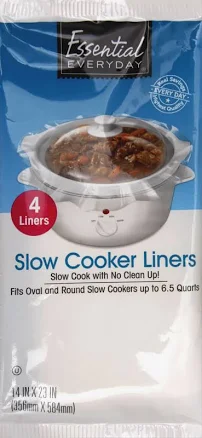
Essential Everyday · Slow Cooker Liners
Dierberg Essential Everyday Slow Cooker Liner
Skip; slow cooker liners prone to PFAS coatings, Glad silent.
These plastic film liners are typically treated with water and grease-resistant coatings that may contain PFAS. Glad won't disclose the coating chemistry or PFAS status.
The better-graded swap
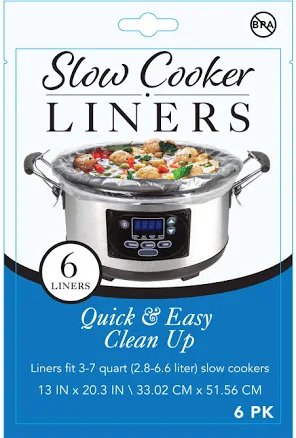
Slow Cooking Liners
90/100 safety
Same rubric that flunked this product. The swap earned Excellent.
Still want this one anyway? Check the price on Amazon. We’d swap it.
Material
Plastic film liner, coating unspecified
Brand disclosure
Brand is silent on PFAS
Lab data
No public lab test
You may also be interested in
Top-graded picks in the categories readers replace first, every one scored on the same rubric.

- polypropylene filter housing, carbon/sediment cartridge
- We found no PFAS statement from the brand
- Bacterial growth in spent cartridges
3 hazards checked on this product, all on its full breakdown.

Aquasure
Premier Series 75 GPD Under Sink Reverse Osmosis Water Filtration System
- RO membrane, carbon filters, stainless steel housing
- We found no PFAS statement from the brand
- Bacterial and microbial growth in housing and filters
4 hazards checked on this product, all on its full breakdown.

Avocado
Vegan Mattress
- organic cotton, natural latex, coconut coir, recycled steel coils
- The brand calls it PFAS-free, which we have not verified
- Heavy metals
2 hazards checked on this product, all on its full breakdown.
What Dierberg Essential Everyday Cooker Liner is made of, ingredients and materials
Dierberg Essential Everyday slow cooker liners are plastic film, coating unspecified. Slow cooker liners are typically coated with non-stick or water-resistant treatments to prevent sticking and leaking; these coatings often contain PFAS (PFAS "forever chemicals") to achieve durability in wet, heated environments. Without disclosure from Essential Everyday or Dierberg, the specific resin, coating chemistry, and migration risk cannot be confirmed, but the product category itself is flagged for PFAS concern.
What’s concerning
Category baseline
The starting point for this type of product, before anything specific to this product is counted.
No PFAS disclosure
No public statement from the brand about PFAS in this product.
Non-stick, chemistry undisclosed
Marketed as non-stick without stating the coating chemistry.
PFAS
Slow cooker liners require durable water and heat resistance; PFAS is the standard industrial coating for this function. Without material disclosure, presence cannot be ruled out and is typical for the category.
Source, ATSDR ↗Plastic film migration at elevated temperature
Slow cooker environments (wet, 180-300°F sustained) can accelerate leaching of both the base resin and any coatings. No specific test data for this product exists on record; risk depends on resin type and coating durability, both undisclosed.
Coating degradation and particle shedding
Plastic liners exposed to repeated heat and moisture cycles may develop micro-tears, peeling, or particulate shedding into food. No manufacturer guidance on product lifespan or safe reuse limit is documented for Essential Everyday liners.
Opacity and unidentified resin type
The resin base is not specified; slow cooker liners commonly use polyethylene, polypropylene, or proprietary blends. Resin type affects both leaching behavior and heat tolerance; absence of clarity prevents assessment of migration risk.
What’s reassuring
BPA & bisphenols
No specific data exists indicating BPA or BPS in Essential Everyday liners. Many food-contact plastics have moved away from BPA, but without material specification, exposure cannot be confirmed as absent.
Source, FDA ↗How is this PFAS grade calculated?
The brand's record and disclosure
Essential Everyday is a Dierberg private label with no publicly available safety certifications, material disclosures, or PFAS stance documentation. The brand does not publish safety data sheets, testing results, or composition transparency. No known recalls have been associated with this specific product, but the absence of disclosure, rather than evidence of safety, characterizes the brand's transparency record.
How it compares in its category
Slow cooker liners as a category carry inherent PFAS risk because plastic film must be treated to withstand moisture and heat without degrading or sticking. Premium alternatives (e.g., ReusableLiners, uncoated parchment or silicone) disclose materials more explicitly and avoid fluorinated coatings. Essential Everyday's silence on coating composition places it at the lower end of transparency; competitors vary widely, but disclosure gaps are common across budget-tier liners.
If you buy it
Do not assume the liner is heat-safe above slow cooker operating range (typically 180-300°F); follow package guidance. Do not reuse liners across multiple cycles; degradation under prolonged heat and moisture may increase coating migration. Inspect for tears, cloudiness, or discoloration before each use. Store in a cool, dry place; do not leave liners in the slow cooker between uses.
What is not known about PFAS in this product?
- Basis
- Model estimate, 45% confidence, not a lab result
- Lab test
- None on record for this exact product
- Brand statement
- Essential Everyday has made none
Formulations change between production runs, so check the current label. How we grade.
What are the PFAS-free alternatives to Dierberg Essential Everyday Slow Cooker Liner?
Slow Cooking Liners
- Unbleached parchment paper
- The brand calls it PFAS-free, which we have not verified
- Thermal degradation and smoke release
2 hazards checked on this product, all on its full breakdown.
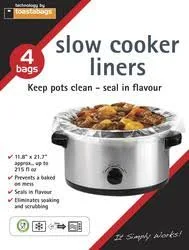
Slow Cooker Liners - 4 Pack
- Plastic (polyethylene or similar polymer liner)
- We found no PFAS statement from the brand
- Microplastic shedding during heating
2 hazards checked on this product, all on its full breakdown.
Find an alternative on Amazon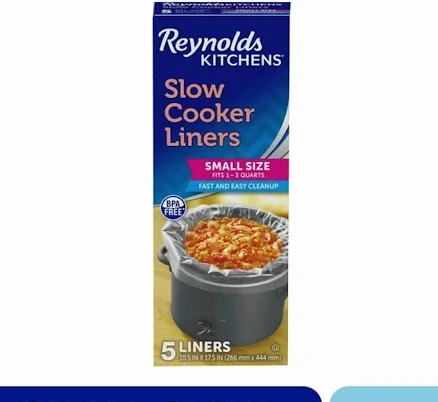
- polyethylene/plastic liner
- Polyethylene integrity failure (tearing, leaching)
3 hazards checked on this product, all on its full breakdown.
Find an alternative on AmazonMore slow cooker liners grades
How we score, every product runs through the same public 0-100 rubric based on materials, coatings, brand disclosure, lab findings, and recalls. See the full methodology → Spotted a mistake? Report an error.