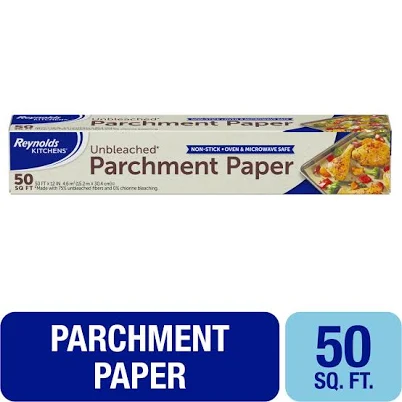
Reynolds · Parchment Paper & Baking Liners
Reynolds Kitchens Unbleached Parchment Paper Roll
Unbleached paper likely uses silicone; PFAS risk unclear without disclosure.
Reynolds unbleached parchment uses silicone coating for heat and moisture resistance. Brand does not disclose PFAS presence or absence; silicone formulations vary widely in PFAS content.
The better-graded swap
If You Care
If You Care Baking Paper, Parchment, 70 Square Feet
90/100 safety
Same rubric that flunked this product. The swap earned Excellent.
Still want this one anyway? Check the price on Amazon. We’d swap it.
Material
unbleached paper with silicone coating
Lab data
No public lab test
You may also be interested in
Top-graded picks in the categories readers replace first, every one scored on the same rubric.

- polypropylene filter housing, carbon/sediment cartridge
- We found no PFAS statement from the brand
- Bacterial growth in spent cartridges
3 hazards checked on this product, all on its full breakdown.

Aquasure
Premier Series 75 GPD Under Sink Reverse Osmosis Water Filtration System
- RO membrane, carbon filters, stainless steel housing
- We found no PFAS statement from the brand
- Bacterial and microbial growth in housing and filters
4 hazards checked on this product, all on its full breakdown.

Avocado
Vegan Mattress
- organic cotton, natural latex, coconut coir, recycled steel coils
- The brand calls it PFAS-free, which we have not verified
- Heavy metals
2 hazards checked on this product, all on its full breakdown.
What Reynolds Kitchens Unbleached Paper Roll is made of, ingredients and materials
Reynolds Kitchens Unbleached Parchment Paper is cellulose paper (unbleached, so it avoids chlorine-based whitening agents) coated with silicone for non-stick and heat resistance. The silicone coating is the critical unknown, silicone itself is generally inert, but manufacturers sometimes use PFAS-containing additives to enhance water and grease repellency. Without third-party testing or brand transparency, the exact formulation cannot be verified. Unbleached paper may contain minor residual processing chemicals, but this is lower-risk than the coating composition.
What’s concerning
Waterproof / stain-resistant treatment
Water-repellent coating treatments have historically used PFAS.
Category baseline
The starting point for this type of product, before anything specific to this product is counted.
No PFAS disclosure
No public statement from the brand about PFAS in this product.
Silicone coating stability and thermal degradation
Silicone coatings can break down or migrate into food when subjected to prolonged high heat (above 450F) or repeated heating cycles. No test data is available for this specific Reynolds product, but degradation risk increases with age and use intensity.
PFAS
The brand does not disclose the silicone formulation or confirm absence of PFAS. Silicone coatings sometimes incorporate fluorine-containing compounds for enhanced repellency, raising PFAS exposure risk, assessed separately as Poor (25/100). Without testing or certification, this cannot be ruled out.
Source, ATSDR ↗What’s reassuring
Microparticle shedding
No reports of visible silicone particles or coating flaking from this product under normal use. However, degraded or worn coatings pose a theoretical risk of small fragments entering food, particularly if the product is creased, torn, or reused excessively.
Additives in paper bleach or sizing agents
Unbleached paper minimizes exposure to chlorine residues, but papermaking may still involve minor chemical processing (sizing, additives for smoothness). Reynolds does not disclose these agents. Risk is lower than bleached alternatives but not zero.
Mold or bacterial contamination from storage
Parchment paper rolls stored in humid environments may develop mold or microbial growth on the paper surface or within the roll. This is a storage and maintenance issue, not a manufacturing defect, but can occur if the product is left opened or in damp conditions.
How is this PFAS grade calculated?
The brand's record and disclosure
Reynolds Kitchens (owned by Conagra Brands) does not publicly disclose whether their parchment paper coating contains PFAS or fluorine-based substances. The brand has not published safety data sheets specific to PFAS content, nor has it obtained certifications like PFOA-free labeling. No major recalls or safety warnings have been issued for this product line. The silence on PFAS composition, however, leaves significant uncertainty for consumers seeking lower concern alternatives.
How it compares in its category
Unbleached parchment paper is generally preferred over bleached versions because it avoids chlorine residues. However, many parchment competitors (including some Reynolds lines and eco-brands) also lack PFAS disclosure. Alternatives such as silicone baking mats and uncoated kraft paper sidestep the silicone-coating question entirely, though they have different heat and reusability profiles. This product is middle-of-the-road for parchment; neither exceptional nor clearly riskier than standard brands in the absence of comparative testing.
If you buy it
Use this product for baking and moderate-heat cooking (up to roughly 420-450F per manufacturer guidance), not for high-temperature stovetop cooking. Replace the roll every 6-12 months or when visible degradation (discoloration, peeling coating) appears. Store in a cool, dry place to prevent mold or coating breakdown. For extended high-heat applications, consider alternatives like silicone baking mats or cast iron. Avoid reusing pieces excessively, as repeated heating and folding can degrade the silicone layer and increase leaching risk.
What is not known about PFAS in this product?
- Basis
- Model estimate, 45% confidence, not a lab result
- Lab test
- None on record for this exact product
- Brand statement
- Reynolds has made a specific claim
Formulations change between production runs, so check the current label. How we grade.
What are the PFAS-free alternatives to Reynolds Kitchens Unbleached Parchment Paper Roll?
- silicone-coated parchment paper
- The brand calls it PFAS-free, which we have not verified
- Paper degradation and particulate shedding
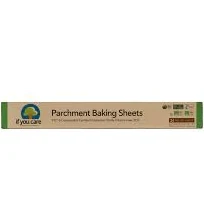
- unbleached paper with silicone coating
- The brand calls it PFAS-free, which we have not verified
- Silicone coating degradation at high heat
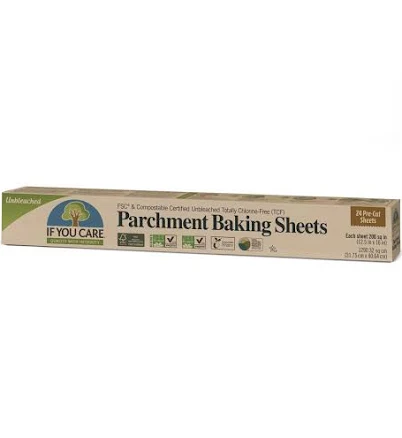
- bleached paper with silicone coating
- The brand calls it PFAS-free, which we have not verified
- Paper degradation and fragmentation
More parchment paper & baking liners grades
How we score, every product runs through the same public 0-100 rubric based on materials, coatings, brand disclosure, lab findings, and recalls. See the full methodology → Spotted a mistake? Report an error.