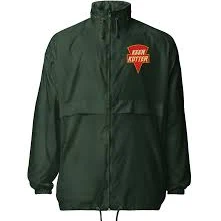
KEEN KUTTER Windbreaker Jacket (Hunter), Keen Kutter USA
PFAS risk unclear; no disclosure from Keen on finish chemistry.
Windbreakers typically use water-repellent coating coatings that may contain PFAS, but Keen discloses nothing about this jacket's water treatment. Public information insufficient to confirm safety.
Still want this one anyway? Check the price on Amazon. We’d swap it.
Material
synthetic fabric with water-repellent finish
Brand disclosure
Brand is silent on PFAS
Lab data
No public lab test
You may also be interested in
Top-graded picks in the categories readers replace first, every one scored on the same rubric.

- polypropylene filter housing, carbon/sediment cartridge
- We found no PFAS statement from the brand
- Bacterial growth in spent cartridges
3 hazards checked on this product, all on its full breakdown.

Aquasure
Premier Series 75 GPD Under Sink Reverse Osmosis Water Filtration System
- RO membrane, carbon filters, stainless steel housing
- We found no PFAS statement from the brand
- Bacterial and microbial growth in housing and filters
4 hazards checked on this product, all on its full breakdown.

Avocado
Vegan Mattress
- organic cotton, natural latex, coconut coir, recycled steel coils
- The brand calls it PFAS-free, which we have not verified
- Heavy metals
2 hazards checked on this product, all on its full breakdown.
What KEEN KUTTER Windbreaker Keen Kutter USA is made of, ingredients and materials
This windbreaker uses synthetic fabric (likely polyester or nylon blend) with a water-repellent coating (water-repellent coating) finish applied to the outer layer. water-repellent coating coatings are where PFAS compounds typically hide in water-resistant apparel, though Keen has not disclosed their specific chemistry. The synthetic base itself is standard for this product class and low-risk for leaching, but the finish degradation over time and washing is the primary exposure vector.
What’s concerning
Waterproof / stain-resistant treatment
Water-repellent coating treatments have historically used PFAS.
Category baseline
The starting point for this type of product, before anything specific to this product is counted.
No PFAS disclosure
No public statement from the brand about PFAS in this product.
PFAS
Conventional water-repellent coating finishes on synthetic windbreakers typically rely on fluorinated compounds. Keen has not disclosed their finish chemistry, so PFAS presence cannot be ruled out. Exposure is highest during application manufacturing and washing; wearing the jacket poses minimal direct risk unless the finish is abraded or degraded.
Source, ATSDR ↗Synthetic microfiber shedding and degradation
Polyester and nylon windbreakers shed microfibers during washing and wear, especially when the water-repellent coating degrades and exposes the raw synthetic layer. This is not unique to Keen but a property of the material class; shedding increases with age and washing frequency.
What’s reassuring
Formaldehyde / VOCs
No public recalls or reports of formaldehyde misuse in Keen outerwear. Modern polyester and nylon base fabrics rarely contain problematic formaldehyde unless heavily treated for wrinkle resistance, which is uncommon in windbreakers. Finish coatings are not typically formaldehyde-based.
Source, ATSDR ↗Azo dyes (color fastness and amine release)
The Hunter color is a natural dye class (earth tones) less likely to use restricted azo compounds than bright reds or oranges. No established azo dye violations reported for Keen apparel, and the brand is not known for high-risk color chemistry.
Antimony in polyester fiber
Antimony trioxide is used as a catalyst in polyester production but is tightly bound in the polymer matrix and does not leach during normal use or washing. No evidence of problematic antimony release from Keen synthetic apparel.
How is this PFAS grade calculated?
The brand's record and disclosure
Keen is silent on PFAS use in their water-repellent finishes and does not publish water-repellent coating chemistry or commit to alternatives with lower concern for PFAS in publicly available materials. The brand holds no known third-party certifications (Bluesign, GOTS, or OEKO-TEX) that would signal rigorous chemical screening. This lack of transparency is typical across mainstream outdoor apparel brands, but it means you cannot verify what finish chemistry is in this jacket.
How it compares in its category
Most mainstream windbreakers at this price point use conventional PFAS-based water-repellent coating finishes. Brands offering PFAS-free alternatives (Patagonia, Arc'teryx with fluorocarbon-free options) tend to cost more and are explicitly marketed. Keen's silence aligns with the industry norm but offers no reassurance; this jacket sits in the undisclosed-risk category shared by most mass-market water-resistant outerwear.
If you buy it
Wash in cool water and avoid heat drying, which accelerates water-repellent coating breakdown and potential release of finish particles. Do not use fabric softeners or high-temperature tumble dryers. Expect the water-repellent finish to degrade after 50-100 washes; when beading stops, the protective layer has worn away and the exposure window has effectively closed. Store dry and avoid prolonged sun exposure, which degrades synthetics over time.
What is not known about PFAS in this product?
- Basis
- Model estimate, 45% confidence, not a lab result
- Lab test
- None on record for this exact product
- Brand statement
- Keen has made none
Formulations change between production runs, so check the current label. How we grade.
More rain jackets grades
How we score, every product runs through the same public 0-100 rubric based on materials, coatings, brand disclosure, lab findings, and recalls. See the full methodology → Spotted a mistake? Report an error.